



The Emergence of Boundary-Crossing Leaders in Major Corporations
The Emergence of Boundary-Crossing Leaders in Major Corporations
Recent research conducted by Request Inc., based in Shinjuku, Tokyo, reveals a striking reality regarding leadership in Japan's large corporations. An analysis of behavior data from approximately 338,000 employees across more than 980 companies indicates that those who are capable of transcending institutional norms to create new value—termed 'boundary-crossing leaders'—account for an estimated 0.05% to 0.1% of all employees.
Why are Boundary-Crossing Leaders Necessary Now?
Japanese corporations, particularly those with over 1,000 employees, have traditionally thrived on systems of role allocation and operational efficiency. However, the rapid changes in market dynamics and increasing uncertainties have given rise to challenges that cannot be addressed merely by relying on existing institutional frameworks.
Despite this pressing need, many organizations exhibit structural biases that impede the development of boundary-crossing leaders. The existing leader profiles can be categorized as follows:
1. Institutionally Dependent (Approx. 50%): Effective within established frameworks but vulnerable to change.
2. Fence-Sitters (Approx. 25-30%): Lack initiative in setting their own policies, often swayed by external circumstances.
3. Undefined Role (Approx. 17-20%): No clear decision-making criteria, leading to unstable performance.
The scarcity of talent capable of creating innovative value beyond institutional limits is increasingly pronounced, resulting in diminished adaptability in the face of change.
Redefining Leadership Qualities
A true leader embodies several essential traits: the ability to deeply understand institutional value while leveraging its benefits, along with the capacity to exceed constraints and create novel value. Such boundary-crossing is not merely an exceptional act but should be viewed as a core responsibility of a leader. Institutions are historical artifacts shaped by past challenges and opportunities, necessitating a profound comprehension of their context to effectively evolve through reconnections and redesign rather than outright disruption.
Background on the Findings
As companies streamline role allocations for reliable value delivery, they often neglect a critical process necessary for leadership: transitioning from experience to abstracting facts, constructing historical frameworks, and envisioning unknown scenarios. This oversight leads to a more pronounced presence of institutional dependents and fence-sitters, exacerbating the rarity of boundary-crossing leaders.
Estimating Leader Profiles
From the analysis, the employee profiles classify as follows:
- - Boundary-Crossing Leaders (Approx. 0.05-0.1%): Individuals who harness institutional frameworks while innovating beyond them.
- - Disruptors (Approx. 2-3%): Those who bravely tear down existing structures to initiate innovation, albeit in isolation.
- - Institutionally Dependent (Approx. 50%): Emphasizing results within existing procedures but lacking flexibility to external changes.
- - Fence-Sitters (Approx. 25-30%): Reactive to external influences, failing to set their own direction.
- - Undefined Role (Approx. 17-20%): Potential for growth is hindered by vague criteria, resulting in inconsistent performance.
Such structural biases only aggravate the scarcity of leaders capable of creating value across institutional boundaries.
Defining Criteria
The key characteristics defining the various leader types include:
1. Boundary-Crossing: Comprehends and utilizes frameworks to create new value that extends beyond existing constraints. Extremely rare, often found in a few individuals within an organization.
2. Disruptive: Willingly dismantles tradition to forge innovative paths but often lacks collaborative skills.
3. Dependent: Succeeds within established protocols but is unable to adapt to change.
4. Fickle: Aligns with external trends and lacks independent policy-setting.
5. Undefined Roles: Exhibits potential, yet lacks clarity in role definition and consistency in outcomes.
The Need for Leadership Development
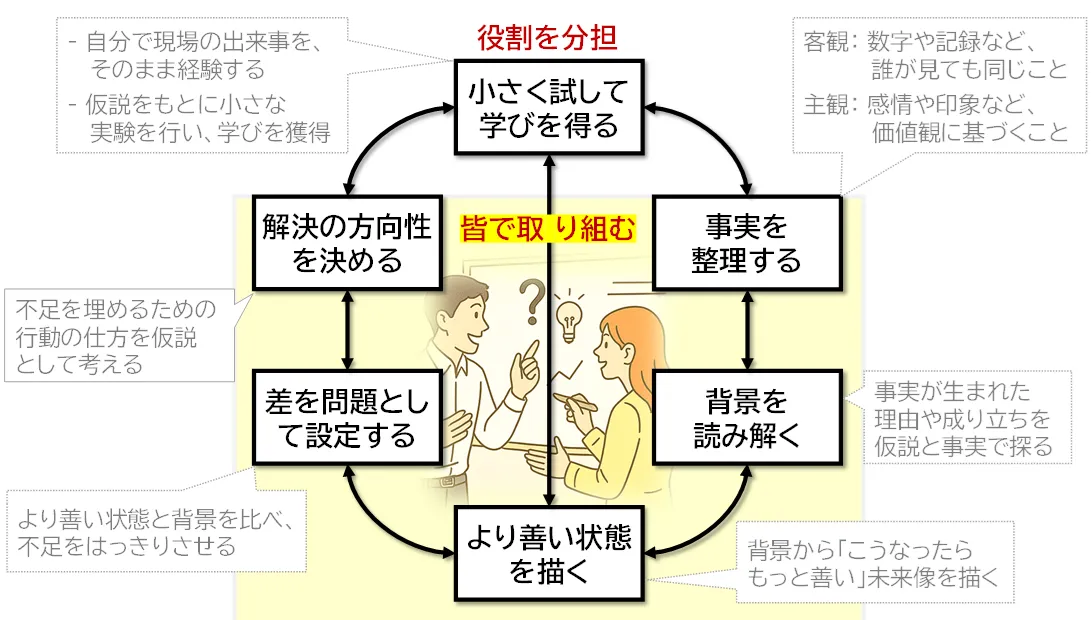
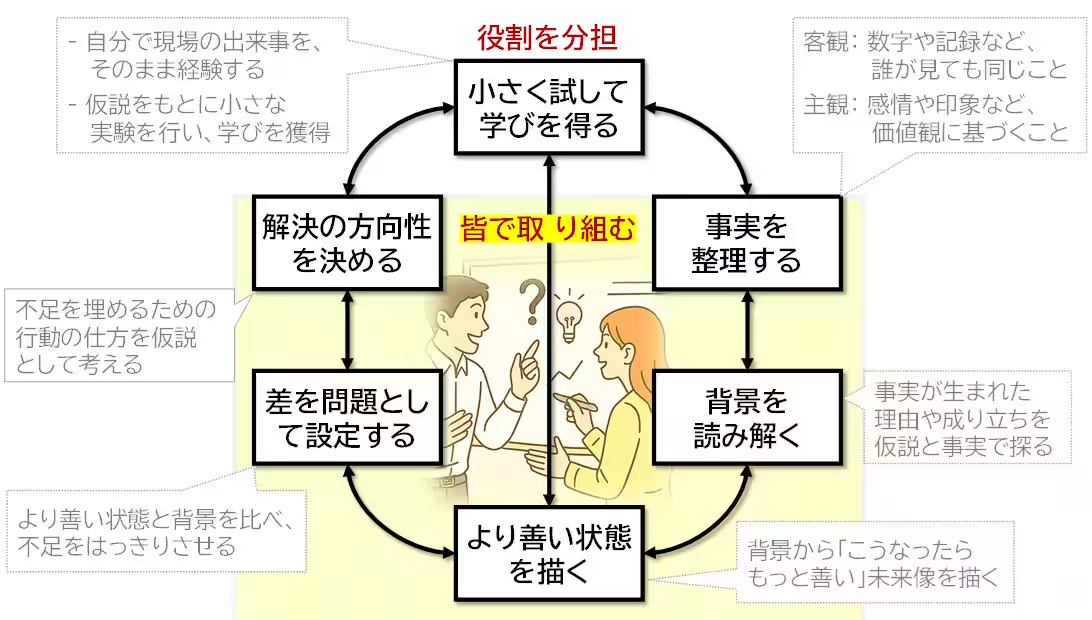
This research highlights four essential competency areas vital for boundary-crossing leaders:
1. Insightful Observation: Integrating objective and subjective evaluations.
2. Structured Understanding: Mapping the historical context of institutional frameworks.
3. Imagining the Unknown: Developing hypotheses and visualizing possibilities.
4. Building Safe Relationships: Cultivating trust and mediation skills necessary for risk-taking.
Intentionally fostering these capabilities is crucial for the sustainable evolution of large corporations. It is essential that future leaders learn not only to excel within established systems but also to create innovative paths that transcend those boundaries. This leadership model aims to visualize this rarity and offer a clear framework for nurturing these qualities.
- ---
About Request Inc.
Request Inc. has been at the forefront of developing human capital by leveraging organizational behavior science, and has supported over 980 companies in optimizing their workforce strategies. For more information, please visit Request Inc..
Contact Information
Email: [email protected]
Address: 4F Keio Flent Shinjuku 3-4-8, Shinjuku, Tokyo 160-0022
Representative: Tomoyasu Kohata, CEO
Corporate Website: Request Group

Topics Business Technology)

【About Using Articles】
You can freely use the title and article content by linking to the page where the article is posted.
※ Images cannot be used.
【About Links】
Links are free to use.