



Survey Reveals Trends in Japanese Grave Purchases for 2026
Survey Insights on Grave Purchases in Japan for 2026
In a recent survey conducted by the All Japan Quality Stone Dealers Association, key findings reveal sweeping changes in the preferences of grave buyers across Japan. The survey encompassed responses from 684 individuals who purchased graves between March 1 and May 31 this year. This year marks the 23rd edition of the survey, which has been conducted every spring since 2004.
Grave Purchase Preferences
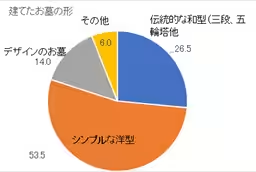
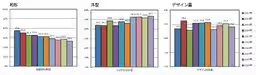
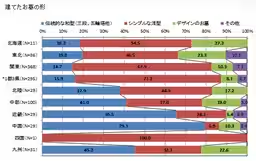
Among the newly established graves, a significant 53.5% chose simple Western-style gravestones, contrasting with the 26.5% who opted for traditional Japanese styles. The remainder, 14.0%, selected uniquely designed graves. This shift illustrates a growing trend towards modern designs, indicating that traditional styles are on the decline, down 11.1% since 2017, while simple styles have risen by 9.4%.
Location-Based Trends
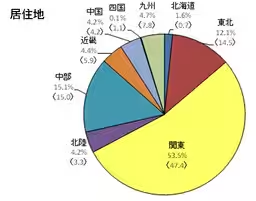
Regionally, interest in traditional Japanese graves remains high in western Japan, particularly in the Chugoku region, which boasts a staggering 79.3% traditional style adoption. However, eastern Japan trends heavily towards Western-style graves, with Tokyo and its surrounding prefectures seeing 71.2% favoring simple designs.
Design graves are especially prevalent in Hokkaido at 27.3%, with regional preferences clearly demarcated across Japan. For instance, while the design graves find popularity in the north, they align with the modern aesthetics of urban audiences, setting a heartening contrast against the traditionally rich styles of the west.
Average Cost Analysis
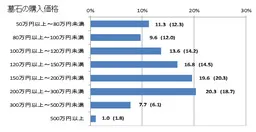
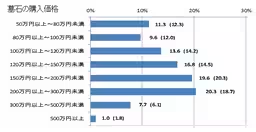
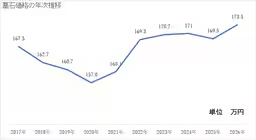
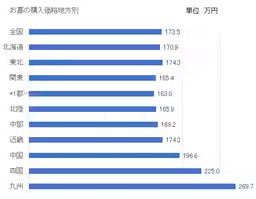
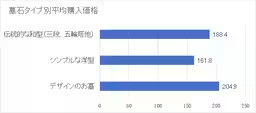
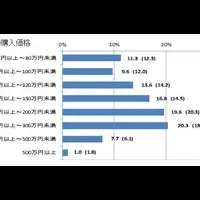
When exploring financial aspects, the average price for gravestones has increased to ¥1,735,000, up from last year's ¥1,695,000. Significant variances across regions were noted: Kyushu's average price sits at ¥2,697,000, ranking it as the most expensive in Japan, while the Tokyo area remained at the lowest, averaging ¥1,630,000. This disparity of ¥1,067,000 reminds us of the cultural and economic factors influencing grave prices across regions.
Factors Influencing Buying Decisions
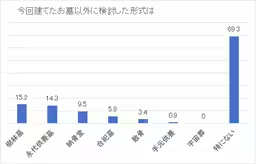
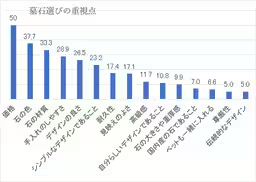
When selecting gravestones, purchasers prioritized factors such as price (50%), stone color (37.7%), stone quality (33.3%), ease of maintenance (28.9%), and design aesthetic (26.5%). Interestingly, nearly 70% of respondents stated they had not considered non-stone options, revealing a strong affinity for traditional materials in grave selection.
Emotional Connections to Graves
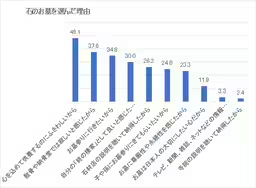
The survey also addressed the emotional undertones connected to grave purchasing decisions. A notable 48.1% of respondents expressed that they chose stone graves as a fitting way to honor their deceased loved ones, feeling discomfort regarding alternatives like scattering ashes or using columbariums.
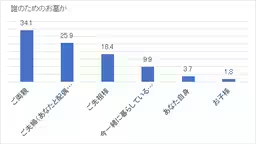
Responses regarding whom the graves were designated for revealed that 34.1% were intended for their parents, 25.9% for spouses, and 18.4% for ancestors.
Visiting Patterns
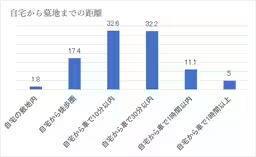
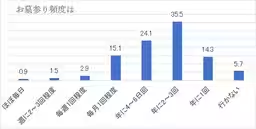
In terms of mourning ceremonies and visitation, findings showed that 64.8% of grave owners live within a 30-minute drive from the cemetery, facilitating regular visits. Additionally, nearly 60% reported visiting graves two to six times a year, aligning visits with seasonal observances and anniversaries.
Conclusion
The findings of this survey illuminate how cultural and emotional resonances shape the landscape of grave purchasing in Japan. As consumer tastes gravitate towards simplified design and increased prices reflect deeper economic influences, these transitions herald a new era in honoring the departed while preserving the values of family and tradition.
Topics People & Culture)
【About Using Articles】
You can freely use the title and article content by linking to the page where the article is posted.
※ Images cannot be used.
【About Links】
Links are free to use.