



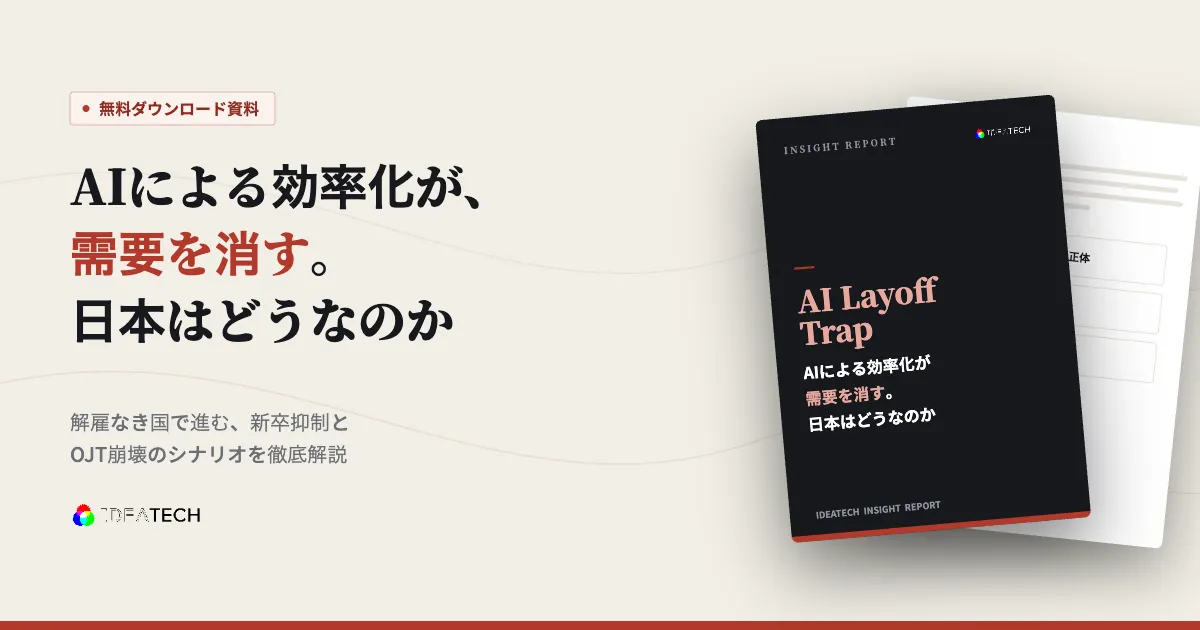
How AI Efficiency Could Reduce Overall Economic Demand in Japan
Exploring the AI Layoff Trap: Impacts on Japan's Economy
In recent discussions among economists, a report titled "AI Layoff Trap" has emerged, shedding light on how companies’ adoption of AI for cost-cutting measures could inadvertently diminish social demand for goods and services. This phenomenon reflects a classic prisoner's dilemma, illustrating that while such strategies may seem rational for individual firms, they can collectively lead to declining economic vitality, particularly in markets like Japan. This guide aims to unpack these dynamics and present practical approaches to counteract this trend.
Understanding the AI Layoff Trap
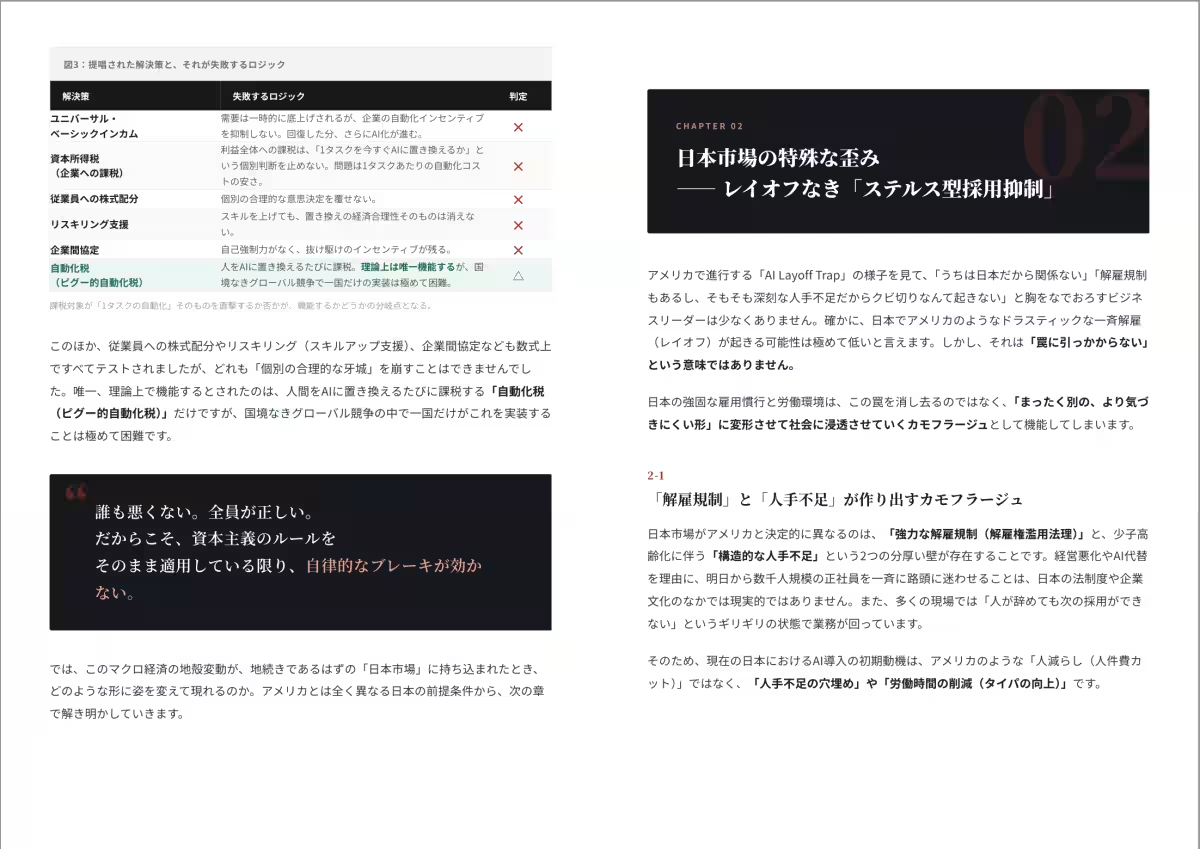
The report, produced by scholars from the University of Pennsylvania and Boston University, presents a mathematical model that outlines how businesses, in their quest for survival amid competitive pressures, make decisions that, while individually reasonable, can result in a significant reduction in demand across the economy. As laid-off workers also represent consumers, their loss affects overall purchasing power and contributes to a broader economic contraction. The implications for Japan, characterized by strict job security laws and a unique labor market, are especially concerning as companies may not resort to outright layoffs but instead engage in more subtle forms of employment suppression.
The Stealth Employment Oppression in Japan
In the Japanese context, the AI Layoff Trap manifests not as mass layoffs but through stealth employment suppression characterized by hiring freezes for new graduates and terminations of non-regular workers. This complicates the visibility of the crisis: when no one officially loses their job, the impacts on economic health become harder to perceive. However, the silent erosion of the youth's purchasing power and the creeping contraction of the economy pose significant risks akin to the analogy of boiling a frog slowly.
The Collapse of On-the-Job Training
Another aspect addressed in the report is the potential failure of on-the-job training (OJT) systems due to AI taking over foundational tasks such as data entry and initial project development work. This shift means that young workers, who traditionally develop critical skills through these foundational experiences, may find themselves at a disadvantage, leading to a decline in organizational capacity and an increasing divide in workforce skills.
Solutions to Break the Contraction Spiral
To counteract these trends, the guide proposes two main approaches:
1. Reforming Talent Development Models: Transitioning toward a framework that positions technology as an assistant to human workers. This includes rethinking training programs that prioritize immediate results over traditional entry-level experiences, enabling young talents to contribute quickly while still acquiring essential skills.
2. Aggressive Talent Acquisition: Implementing strategies to recruit young talents amidst a market with reduced employment opportunities. Companies that actively seek out and attract these skilled individuals, forgetting about prevailing trends of employment suppression, could differentiate themselves and drive innovation.
Conclusion
As we delve into the implications of the AI Layoff Trap, it becomes clear that while technological advancement heralds efficiency, it is not without its risks. Business leaders, HR professionals, and macroeconomic strategists need to engage with these ideas actively to safeguard against potential pitfalls in Japan's economy. Understanding how sensible corporate decisions may aggregate to diminish overall demand helps frame strategic thinking in a rapidly evolving labor market. To explore more about the AI Layoff Trap and its implications, download the full report here.


Topics Business Technology)

【About Using Articles】
You can freely use the title and article content by linking to the page where the article is posted.
※ Images cannot be used.
【About Links】
Links are free to use.