



Digital Access Concerns: A Study on Web Accessibility Policies Across Industries
Introduction
In recent years, the shift of essential services from traditional interfaces to online platforms has become increasingly evident. While this digital transition allows for greater convenience and accessibility, it also raises significant questions about how accessible these platforms truly are. A recent survey conducted by Tribeck Co., a Tokyo-based company, digs deep into the practices of 140 publicly listed companies across five critical sectors: pharmaceuticals, electric and gas utilities, transportation, information and communications, and banking, analyzing their web accessibility policies.
The Importance of Web Accessibility
Web accessibility is not merely a technical requirement; it holds profound implications for individuals relying on digital services for their daily lives. Accessibility directly impacts the ability of users to obtain vital information and services, particularly for those with disabilities or those facing various challenges. The critical role of digital resources necessitates that every individual has equitable access to them.
Key Findings
Survey Overview
- - Survey Name: Web Accessibility Policy and Standards Survey
- - Participants: 140 leading firms from five essential industries
- - Duration: August 21 - September 2, 2026
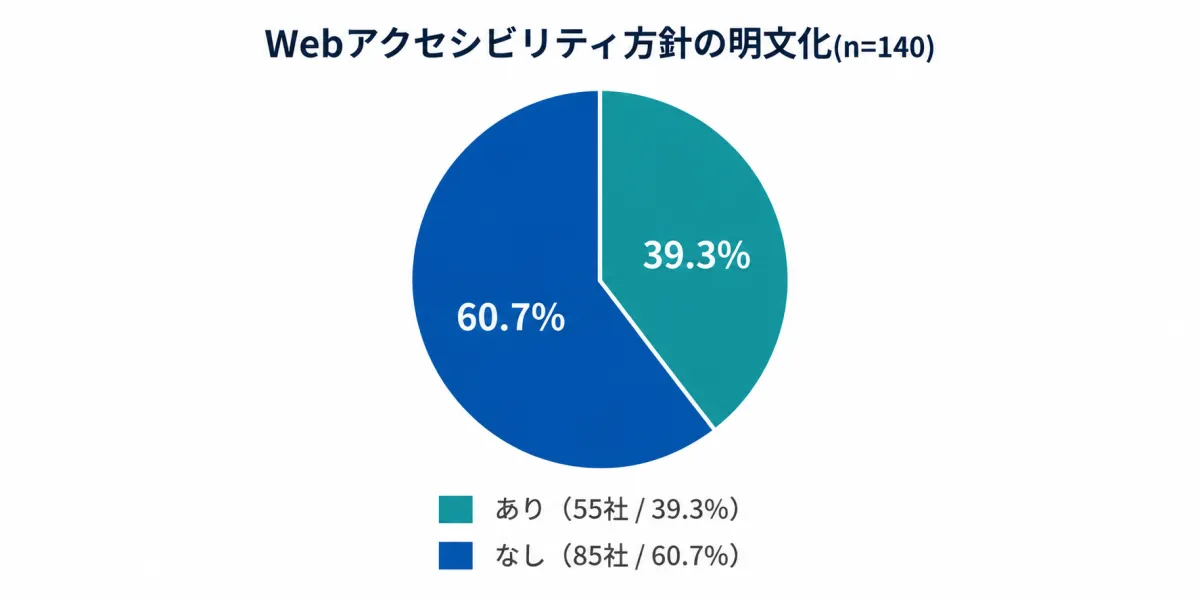
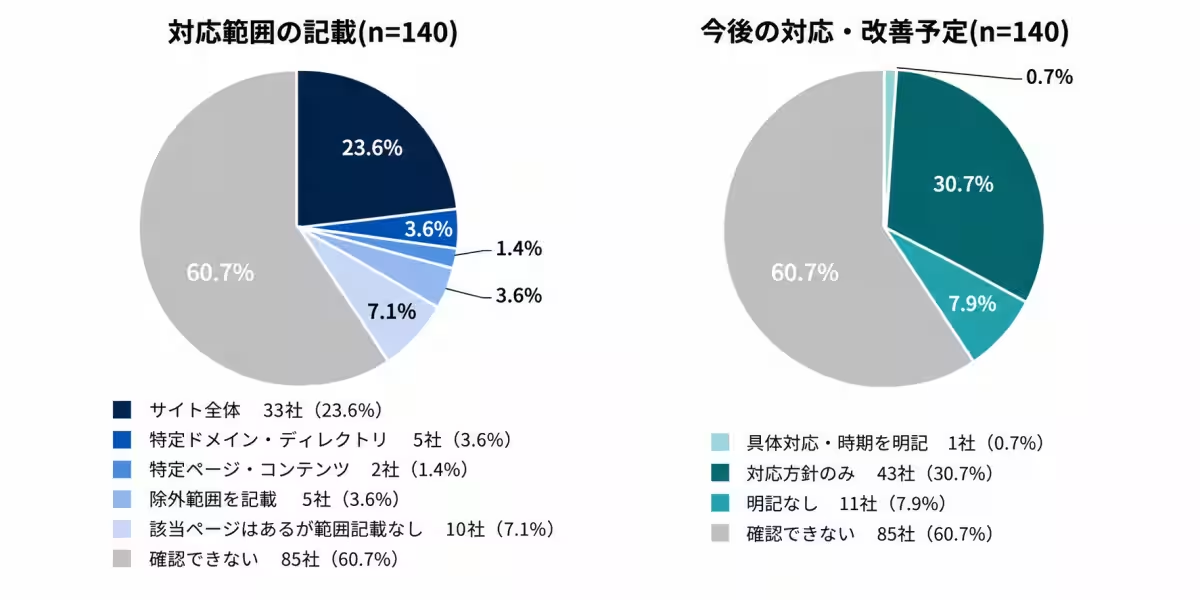
The results of the survey revealed some stark realities about the state of web accessibility across these industries. Surprisingly, only 39.3% of the surveyed companies have made their web accessibility policies explicit. In contrast, 60.7% of companies either do not have such information available or it remains obscured from public view.
Transparency Issues
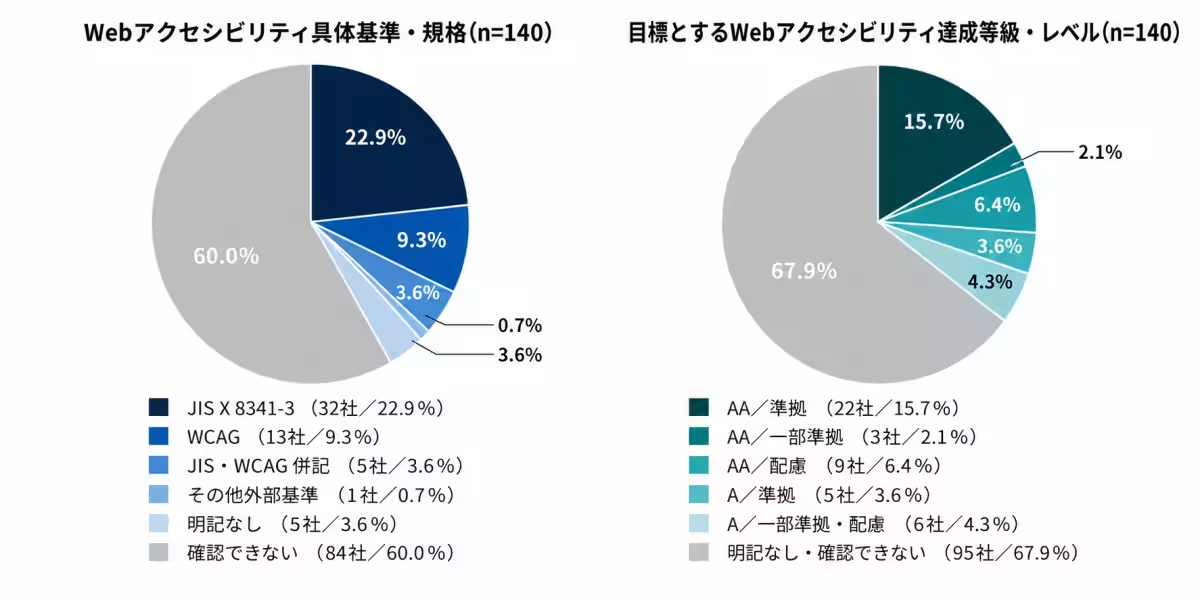
These findings reflect a troubling trend: for many companies, addressing web accessibility appears to be a low priority. Out of the 55 firms that specify their web accessibility policies, 51 (92.7%) reference external standards, while only 45 (81.8%) detail specific achievement levels. The lack of clear public documentation continues to hinder users from verifying companies’ commitments to accessibility.
Problematic Statistics
- - Access to Information: 85 companies reported either unavailability of clarity on their accessibility frameworks or did not disclose such policies.
- - Benchmarking Standards: Among the companies communicating standards, JIS X 8341-3 was cited by 32 firms, while WCAG was noted by 13.
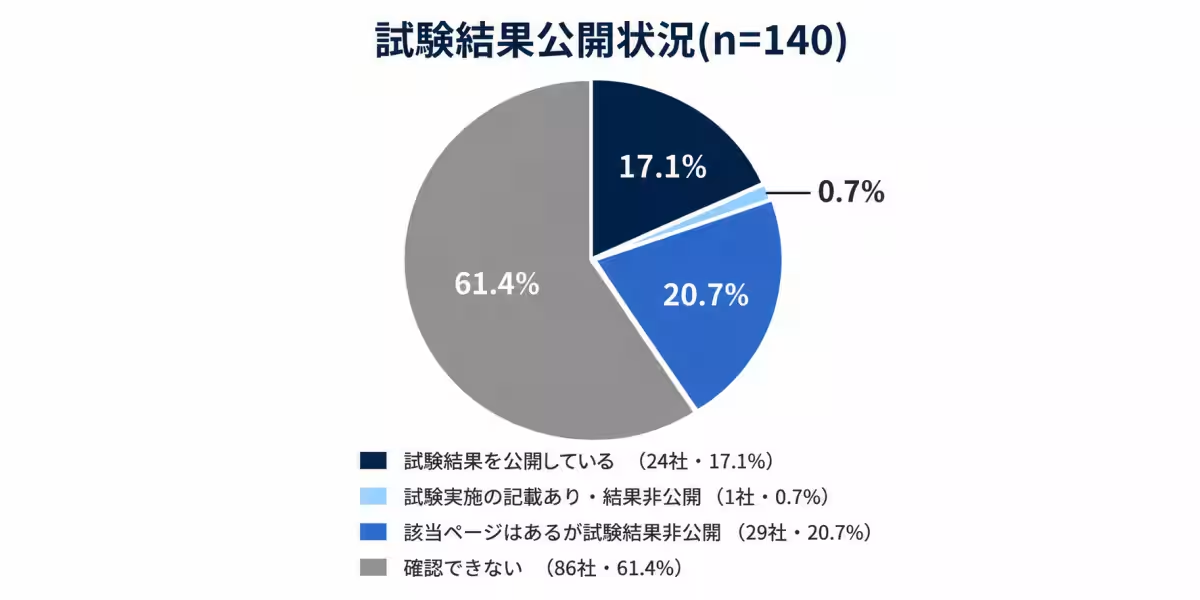
- - Testing Results Visibility: Only 24 firms (17.1%) disclose their testing results, raising questions about how many companies genuinely adhere to the benchmarks they've established.
Future Directions
Interestingly, while the numbers underscore significant shortcomings in transparency and public accountability, they also illuminate the path forward. A total of 45 companies indicate their future plans regarding web accessibility measures, although this still represents a minority of the surveyed population. Companies need to clearly define their commitment and set measurable goals.
Conclusion
In closing, the survey conducted by Tribeck Co. underscores a sense of urgency for businesses operating within these critical sectors to step up their game in terms of web accessibility. It is crucial not only for compliance but also for building inclusive digital experiences where everyone can access essential services without barriers. The findings are a reminder that as society embraces digital transformation, the focus cannot just be on moving services online but also ensuring that such services are available and usable by all, truly reflecting a commitment towards inclusivity.
As we move forward, it is imperative that accessibility becomes a standard practice embraced by all organizations, fundamentally ensuring that information and resources are within reach for every individual, regardless of their circumstances. Addressing these issues is not merely a question of obligation but a matter of ethical and social responsibility in today's digital landscape.
Topics Consumer Technology)




【About Using Articles】
You can freely use the title and article content by linking to the page where the article is posted.
※ Images cannot be used.
【About Links】
Links are free to use.