




Eternam and Juntendo University Collaborate on Anti-Aging Research for Skin Health
A New Dawn in Anti-Aging Research: Eternam and Juntendo University's Groundbreaking Findings
Introduction
As we continue to search for ways to maintain youthful skin, innovative research plays a crucial role in our understanding of aging. In an exciting collaboration, Eternam, a skincare company based in Shibuya, Tokyo, has joined forces with Juntendo University to delve into the potential benefits of umbilical cord-derived mesenchymal stem cell culture (UCMSC-CM) for skincare. The results of their study were presented at the 125th Japanese Dermatological Association Convention held from June 11 to June 14, 2026.
The Research Focus
The research was conducted under the auspices of the "Skin Anti-Aging Regenerative Medicine Course" at Juntendo University's Graduate School of Medicine. The primary aim was to investigate the anti-aging effects of UCMSC-CM on skin cells and to explore the underlying mechanisms.
UCMSC-CM contains a plethora of growth factors, cytokines, chemokines, extracellular vesicles, and miRNA, making it a rich cell-free secretome. This offers promising applications in skin regeneration, anti-inflammatory treatments, tissue repair, and, importantly, anti-aging strategies.
Background and Objective
As we age, the accumulation of senescent cells leads to various skin issues. While previous studies have focused on the functional analysis of UCMSC-CM, its specific anti-aging effects on human keratinocytes and the related gene expression programs had not been thoroughly organized. This study seeks to clarify the effects of UCMSC-CM on aging factors and gene expression in the skin, thereby aiding our understanding of the mechanisms underlying aging control.
Findings on Aging Factors and Inflammatory Cytokines
Cellular Senescence Characteristics
Cellular senescence is marked by irreversible cell growth cessation and the release of the senescence-associated secretory phenotype (SASP), which contributes to a range of diseases by altering tissue environments. Senescent cells increase with age and can be rapidly induced by stimuli such as UVA radiation and reactive oxygen species (ROS).
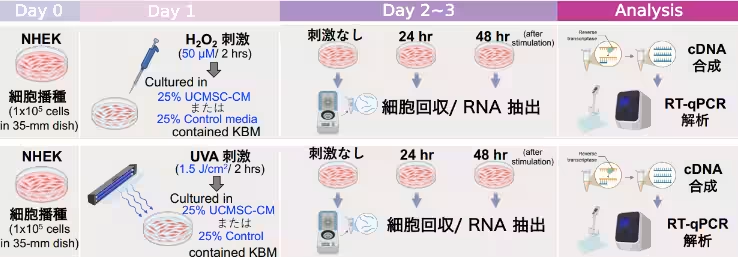
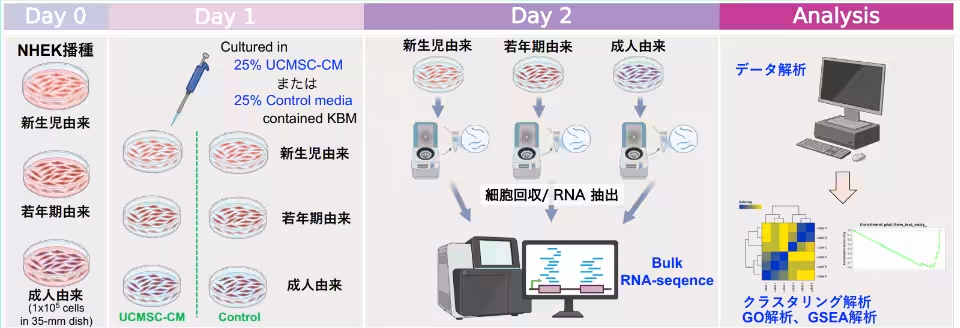
In this research, human epidermal keratinocytes were stimulated with H₂O₂ or UVA under specific conditions. Following this, the cells were cultured with either 25% UCMSC-CM or a control medium containing keratinocyte basal medium (KBM). The RNA was harvested from normal human epidermal keratinocytes (NHEKs) at baselines (0 hours), and 24 and 48 hours post-stimulation. Key markers for cell cycle arrest (CDKN1A and CDKN2A) and SASP-related cytokines (IL6, IL1A) were quantified using qPCR.
Results of Aging Factor Expression Suppression
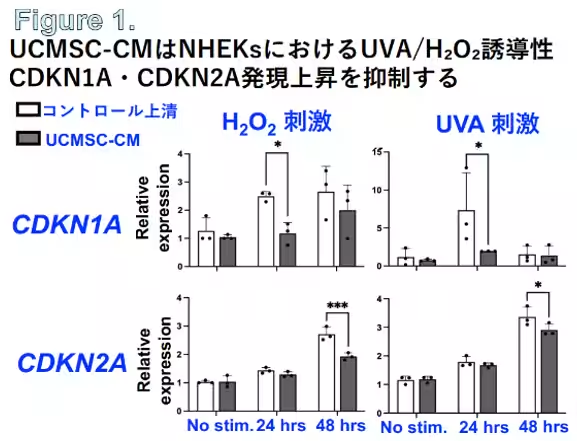
Interestingly, the addition of UCMSC-CM significantly inhibited the expression of p21 (CDKN1A) and p16 (CDKN2A)—both of which are critical markers for cellular division arrest—during both H₂O₂ and UVA-induced senescence. Notably, p21 suppression levels reached those equivalent to unstimulated cells, demonstrating UCMSC-CM's potential in countering the effects of oxidative stress.
Suppression of Inflammatory Cytokines
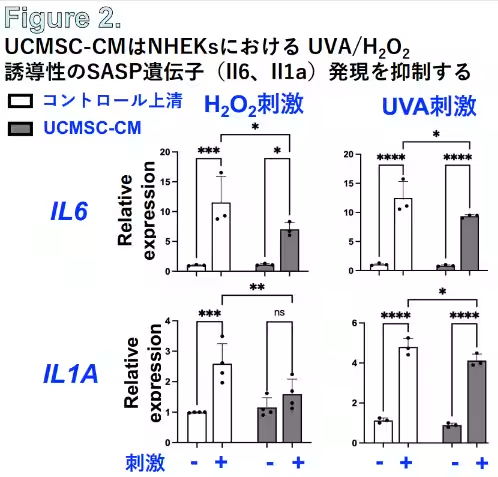
IL-6 and IL-1α, inflammatory cytokines known to contribute to collagen breakdown and diminished barrier function, were also significantly suppressed in keratinocytes treated with UCMSC-CM under both H₂O₂ and UVA-induced stress conditions.
Reduction of β-Galactosidase Accumulation
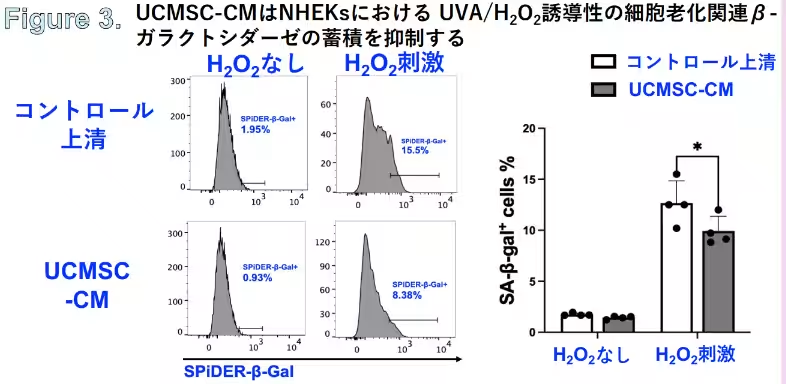
Data showed approximately a 7% reduction in the accumulation of β-galactosidase, a marker of cellular senescence, when employing the SPiDER-β-Gal detection kit in flow cytometry analyses.
Comprehensive Gene Analysis
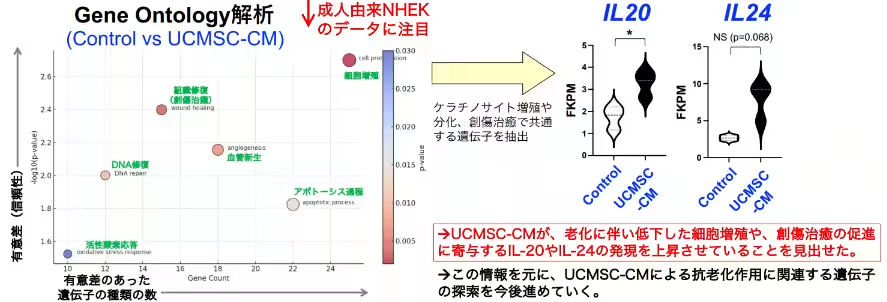
To analyze the broader impact of UCMSC-CM on gene expression, RNA was extracted following treatments with UCMSC-CM or control medium across neonatal (0 years), juvenile (12 years), and adult (52 years) epidermal cells. Results from Gene Ontology (GO) analyses revealed strong expressions of genes related to 'tissue repair' and 'cell proliferation' in adult-derived cells, particularly cytokines linked to wound healing and keratinocyte proliferation, such as IL-20 and IL-24.
Summary and Future Outlook
This collaborative research showcases the potent anti-aging capabilities of UCMSC-CM, which not only inhibits markers related to aging but also enhances gene expressions crucial for skin health, repair, and proliferation. These findings suggest the potential of UCMSC-CM to support the natural resilience of skin, even amidst the challenges posed by aging and environmental stressors.
In recent years, the focus in regenerative medicine has shifted towards studying the beneficial components secreted by cells, rather than the cells themselves. The insights gleaned from this study may pave the way for innovative approaches to restore health and beauty in skincare.
Eternam is committed to leveraging this knowledge to contribute to the fields of dermatology and regenerative medicine, ensuring a brighter future where concerns about aging can be met with confidence through continuous research and development in effective skincare solutions.
About Eternam
Eternam is a skincare brand born from regenerative medicine research, offering premium products like LIP serums and a specialized line for both medical facilities and general consumers. The brand name "Eternam" derives from Latin, meaning "eternal," reflecting its mission to deliver previously unattainable beauty. At Eternam, we aspire to be a source of confidence and empowerment in the pursuit of timeless beauty.



Topics Consumer Products & Retail)
【About Using Articles】
You can freely use the title and article content by linking to the page where the article is posted.
※ Images cannot be used.
【About Links】
Links are free to use.