



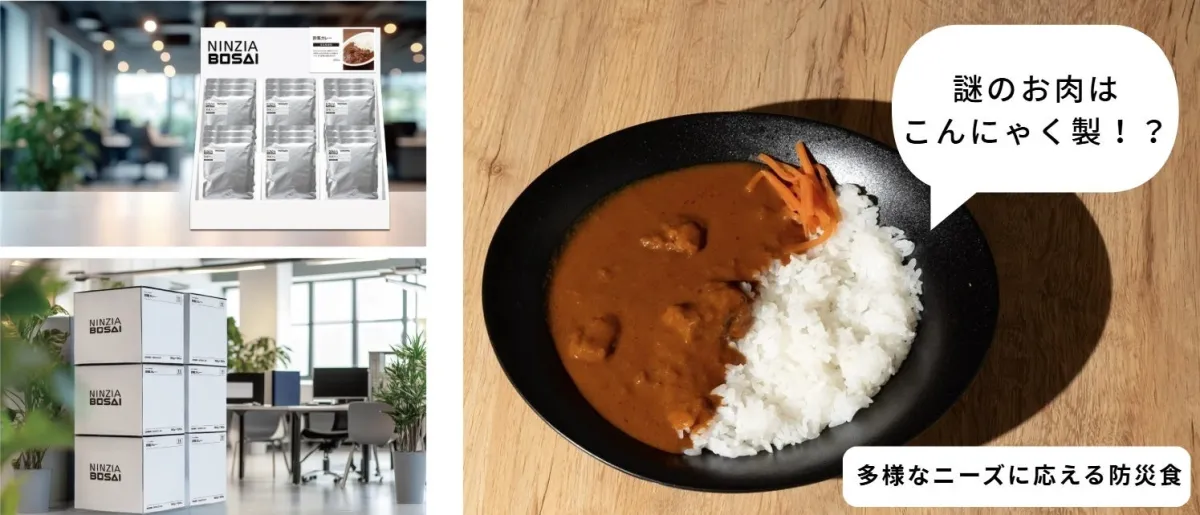
Revolutionizing Disaster Preparedness: NINZIA's Plant-Based Solutions
Following the Tradition of Disaster Preparedness with a Twist
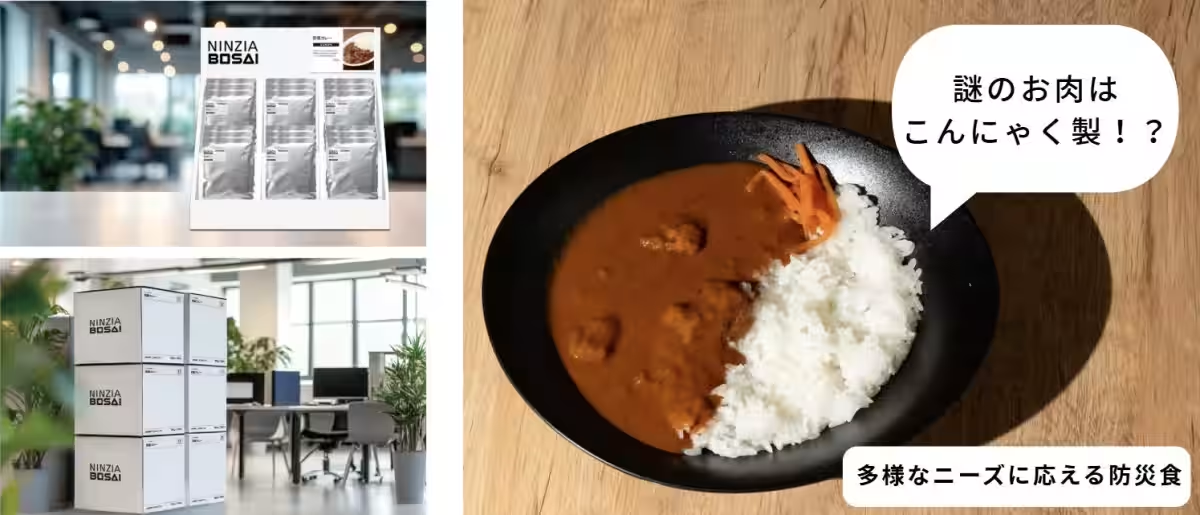
In recent years, the importance of disaster preparedness has gained significant attention, especially with the rise in frequency of natural disasters. However, the typical perception of disaster food is that it lacks flavor and is often unappetizing. NINZIA, a pioneering company based in Kobe, Japan, aims to shatter this misconception with their new line of disaster food products. The highlight of their offerings is the NINZIA BOSAI European-style curry, which utilizes advanced techniques to deliver a full-flavored, satisfying meal that is entirely plant-based.
A New Approach to Disaster Food
Traditional disaster meals often rely on animal fats that solidify at room temperature, necessitating time-consuming preparation methods such as rehydration with boiling water. This not only detracts from the meal experience but also raises concerns about food waste, especially since a significant portion of stored disaster food often ends up expiring and being discarded. According to recent studies conducted by NINZIA, nearly half of the respondents view disaster food as unappetizing, while over half struggle with managing expiration dates. These findings underline a pressing issue: food waste from expired stored goods.
NINZIA aims to transform the landscape of disaster meals by introducing the NINZIA BOSAI system. Instead of relying on conventional animal products, NINZIA incorporates entirely plant-based ingredients, including a rich broth and alternative proteins. This innovation prevents fat solidification and ensures a satisfying taste profile that caters not only to those in need during emergencies but also to everyday consumers.
The Active Rolling Stock System
To promote sustainability and minimize waste, NINZIA has developed an Active Rolling Stock system. Under this model, disaster meals are integrated into regular office dining options, encouraging employees to consume and replace stock, thereby keeping food fresh and usable. This system not only supports companies in mitigating disaster-related costs but also plays a crucial role in reducing overall food waste.
Starting on International Disaster Prevention Day (October 13), NINZIA will be rolling out their innovative products at the Center of Garage in Sumida, Tokyo, marking the first introduction of this model in the Greater Tokyo area. Attendees at the Food Tech Grand Prix, set to occur shortly before the official launch, will be among the first to sample these groundbreaking meals.
Addressing Challenges in Disaster Preparedness
The need for a reliable disaster preparedness strategy has never been more critical. A recent report indicates that around one-fourth of municipal stockpiles are outdated and need to be discarded, showcasing the hidden food loss problem in disaster management. Many businesses also face the challenge of staff being unaware of their company's preparedness plans, with 40% stating they do not know where supplies are stored.
In response, NINZIA's motto of “Showcasing, Tasting, Plant-Based” captures their initiative to create a sustainable stockpiling system that feels contemporary. The NINZIA curry is designed to be a versatile phase-free food product that can be enjoyed daily and during emergencies alike. This seamless integration into daily meal options encourages a natural rolling stock habit while allowing all employees to familiarize themselves with the stock locations for quick, effective responses during emergencies.
A Commitment Beyond Food
NINZIA is not just a health food company; it’s a firm rooted in gastronomic innovation. By harnessing the unique properties of konjac, a traditional Japanese plant known for its high fiber content, NINZIA aims to spread the joy of food, transcending dietary restrictions faced by many people due to health issues like diabetes or allergies.
Their proprietary material, NINZIA PASTE, exemplifies their commitment to innovation, allowing for a paste that retains its form in ways traditional konjac cannot. This flexibility offers exciting new possibilities for health snacks, plant-based seafood alternatives, and more delicious disaster food options.
Through these ventures, NINZIA hopes to share Japanese food technology with the world while fostering an inclusive food culture that encourages enjoyment and well-being for all. As the fallout from climate change and natural disasters becomes more pressing, solutions like NINZIA's will be instrumental in promoting sustainable approaches to disaster preparedness.


Topics Consumer Products & Retail)
【About Using Articles】
You can freely use the title and article content by linking to the page where the article is posted.
※ Images cannot be used.
【About Links】
Links are free to use.