



The Impact of Tariffs on Used Car Exports: Shifting Strategies in Business
The Impact of Tariffs on Used Car Exports: Shifting Strategies in Business
In the wake of the increasingly discussed Trump tariffs, the used car export industry is observing significant shifts. A recent study conducted by Happy Cars Inc., a used car purchasing company based in Kamakura, Kanagawa, explores how these tariffs are influencing businesses involved in the export of used vehicles. The survey focused on how companies are adapting their strategies amid these changes, particularly concerning shifts towards domestic sales.
Survey Overview
Between August 14 and August 17, 2025, Happy Cars conducted an online survey through PRIZMA, targeting 219 participants who were engaged in used car export businesses. The aim was to understand the sentiments among exporters regarding the ongoing tariff situation and the potential impacts on their operational strategies.
Heightened Anxiety: The Response to Tariffs
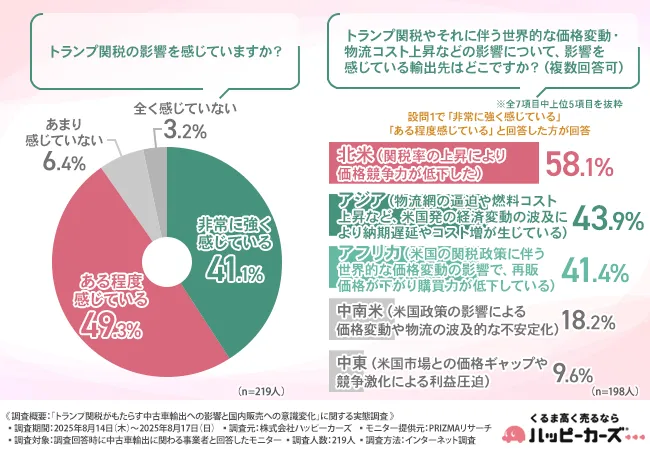
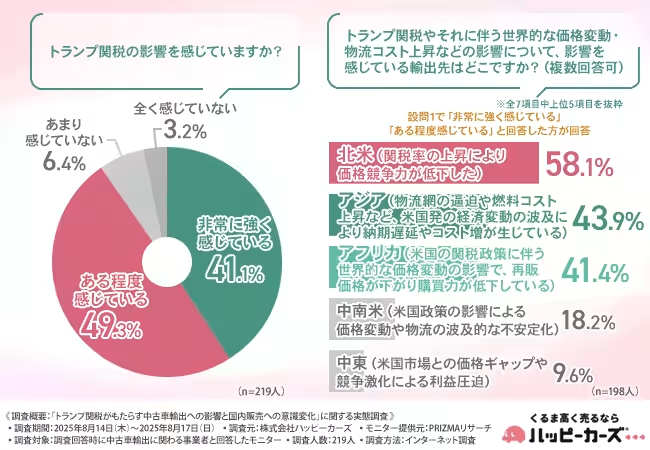
A staggering 90% of respondents reported feeling some level of impact due to the Trump tariffs, with over 41% indicating that they feel the effects strongly. This alarming figure suggests that a vast majority of exporters are facing tangible challenges, which range from pricing to logistics. When asked about specific regions where they felt the greatest impact, 58.1% cited North America, highlighting a drop in price competitiveness due to tariff increases. Other regions, such as Asia and Africa, also reported rising costs and delays linked to these global economic fluctuations.
Current Export Market Dynamics
The data revealed a significant reliance on North America for exports, with 39.3% of transactions occurring there, followed closely by 37.0% in Asia. This correlation indicates a precarious balance, as shifts in either area can dramatically affect business stability. Notably, the intertwined nature of the supply chains in North America and Asia presents risks that are difficult to mitigate.
Operational Challenges Under Pressure
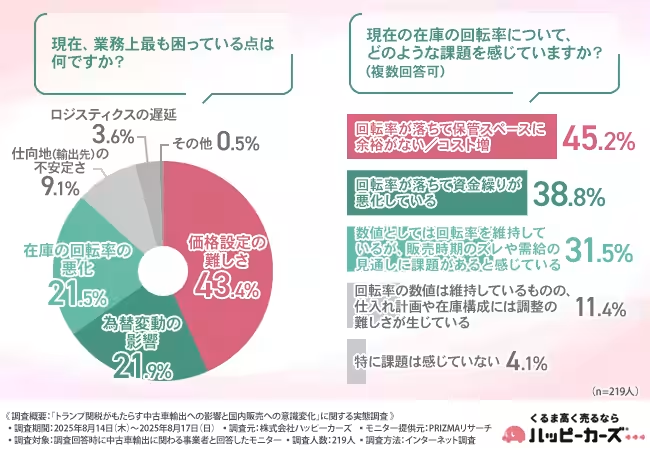
When asked about their current operational challenges, participants reported the complexity of setting prices as their most significant issue (43.4%), followed by foreign exchange fluctuations and inventory turnover problems. The landscape of used car procurement is complicated by rising logistics costs and tariff-induced pricing corrections, placing exporters in a vulnerable position where maintaining profitability becomes increasingly difficult.
Inventory management has emerged as a pressing concern, with many operators acknowledging that slower turnover is negatively impacting storage costs and cash flow. These findings underline the need for strategic reassessments regarding procurement and sales forecasting.
Strategic Shifts: Towards Domestic Sales
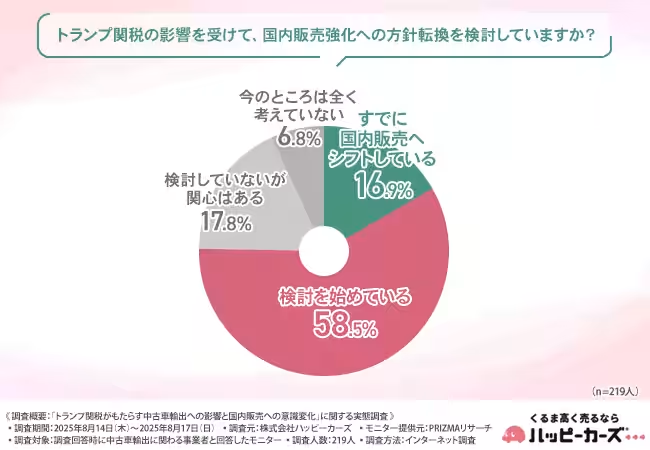
As the landscape changes, businesses are exploring divergent strategies, including expanding into domestic markets. Approximately 58.5% of respondents indicated they are contemplating a shift towards enhancing domestic sales. This sentiment is resonating across many exporters as they recognize the necessity of reducing vigilance on foreign dependency amid heightened tariff risks. Interestingly, a subset of companies has already begun this transition, taking proactive measures to strengthen their position in the domestic market.
Future Projections: Balancing Exports and Domestic Sales
Looking towards the future, there is a consensus that the balance between exports and domestic sales is shifting. Nearly half of the respondents believe that domestic sales will play a more dominant role going forward. However, a hybrid model that integrates both strategies appears to be the most viable pathway for maintaining flexibility while capitalizing on existing advantages in the export market.
The Quest for Effective Solutions
To counteract the mounting pressures, exporters are considering several strategic avenues. The most recognized measure was diversifying sales regions (44.8%), followed by negotiating lower purchase prices (39.7%) and shifting more focus to the domestic market (34.3%). These strategies not only aim to mitigate risks associated with sudden tariff rises but also underscore the necessity for adaptive business practices.
Emphasizing Competitiveness in Domestic Markets
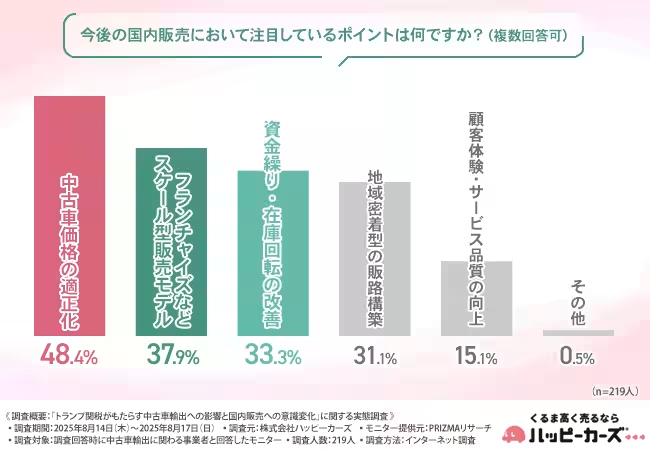
As the domestic market emerges as a focal point, attention is drawn to the need for fair pricing (48.4%) and efficient sales models (37.9%). The key challenge will be ensuring competitiveness while simultaneously managing costs effectively in this evolving landscape. Developing a scalable sales strategy that embraces local market nuances will likely determine success in appealing to a broader customer base.
Conclusion
In conclusion, the survey results bring to light a pervasive sense of urgency among businesses in the used car export sector as they navigate the complexities introduced by the Trump tariffs. With most respondents recognizing the impact on their operations, many are contemplating or actively implementing changes to pivot towards domestic sales alongside their export strategies. The response reflects an industry in transition, striving to adapt to external pressures while maintaining its core operations. As these companies explore new pathways and reevaluate strategies, the future of the used car export business, influenced by tariffs and market dynamics, will undoubtedly continue to evolve.




Topics Consumer Products & Retail)
【About Using Articles】
You can freely use the title and article content by linking to the page where the article is posted.
※ Images cannot be used.
【About Links】
Links are free to use.