



Japan Off-Site Building Association Transitions from Mobile Construction for Sustainable Housing
On December 12, 2025, the Japan Mobile Building Association officially changed its name to the Japan Off-Site Building Association. Originally, the term 'mobile construction' was used in the association's name to help raise awareness about its potential for modular building. However, to avoid confusion with structures like steel container homes and trailer houses, the organization opted for 'off-site construction' as a more accurate description.
In light of the critical labor shortages currently plaguing the construction industry, there is an increasing expectation for off-site production methods that allow for better quality control and cost management within stable manufacturing environments. As many artificial forests planted post-World War II are now reaching the end of their growth cycle, Japan's forestry sector is under pressure to utilize domestic timber sustainably. In response, developing a robust supply chain that supports local forestry through wooden construction is of utmost importance.
The Japan Off-Site Building Association has established itself around four core principles, represented by the acronym ROOF:
1. Regional (R): Building local supply chains that are grounded in the community.
2. Open (O): Utilizing accessible construction methods that encourage participation from all sectors.
3. Off-site (O): Improving construction timelines and quality amidst skilled labor shortages by embracing off-site manufacturing.
4. Forestry (F): Supporting sustainable forestry practices and collaborating closely with the industry.
As rain signifies potential disaster, the association's goal is to act like a roof, providing shelter and safety.
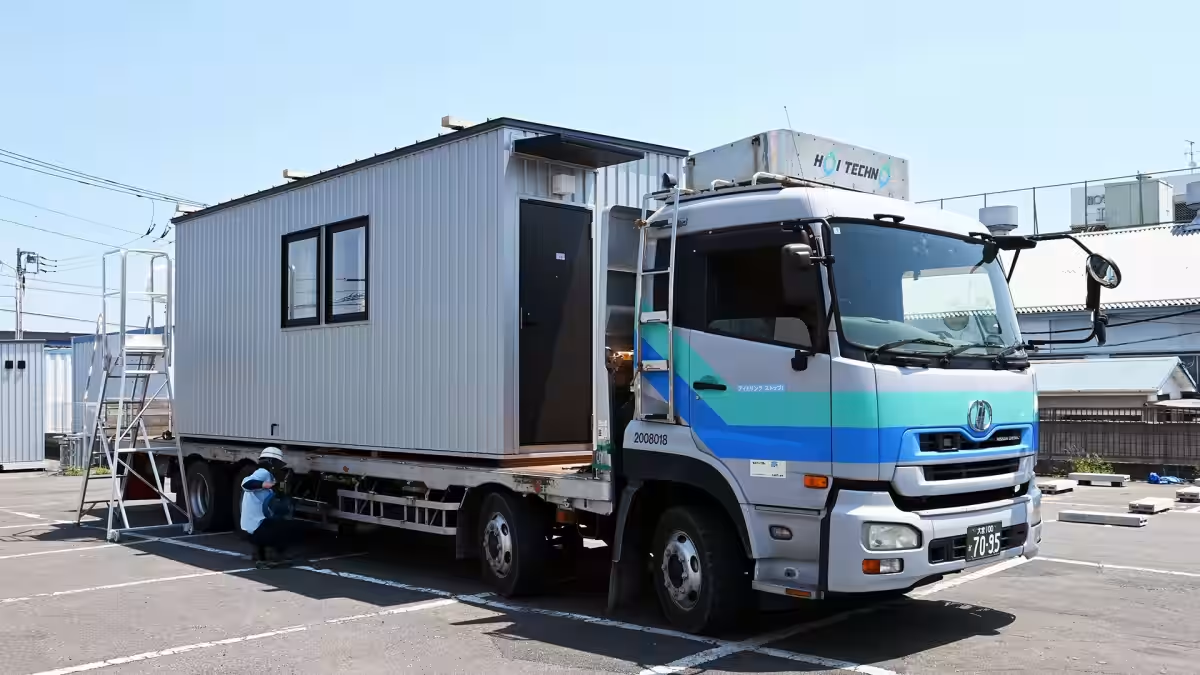
The focus moving forward will be on research, development, and practical implementation of production designs centered around off-site methods. Additionally, the organization will continue its research into mobile construction's potential for relocatable structures, which was a focal point at its inception.
Changes made to the name do not reflect any alterations to the association's address, director, or activities, and continued support is immensely appreciated.
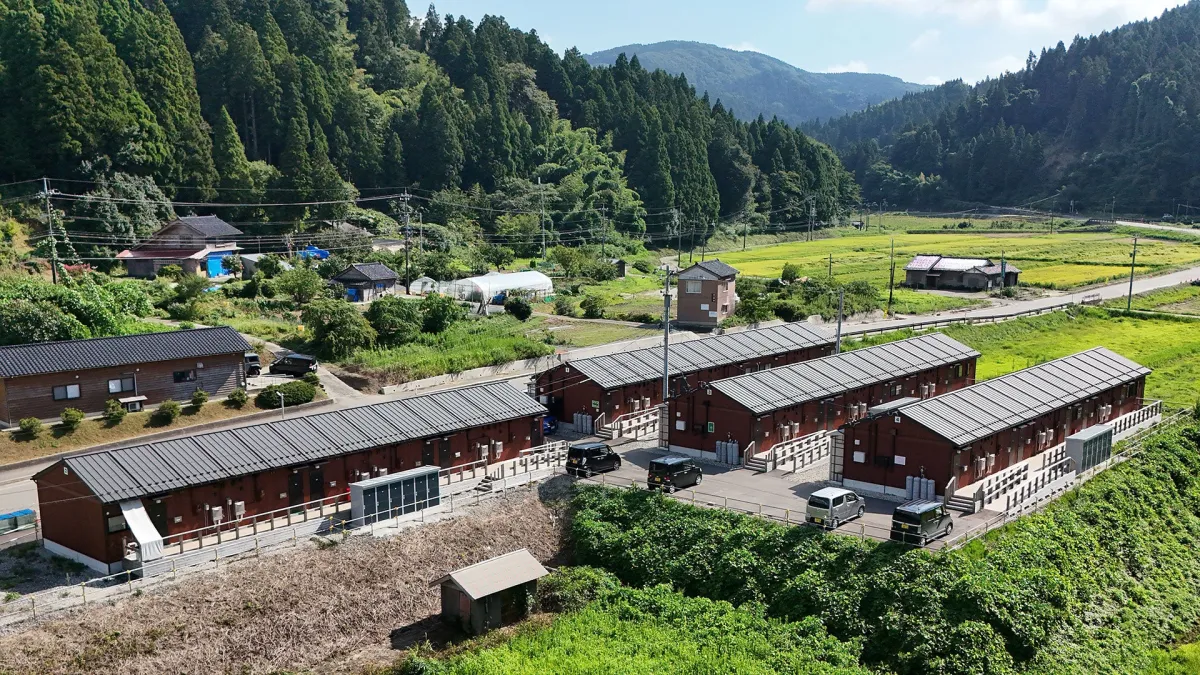
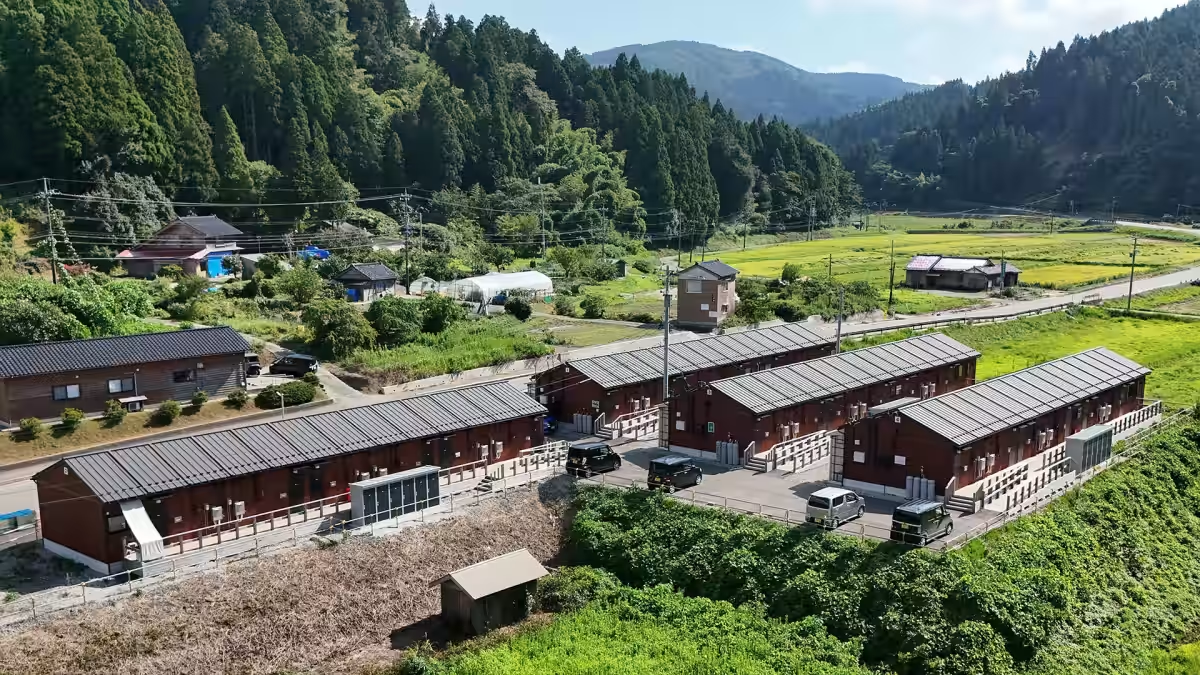
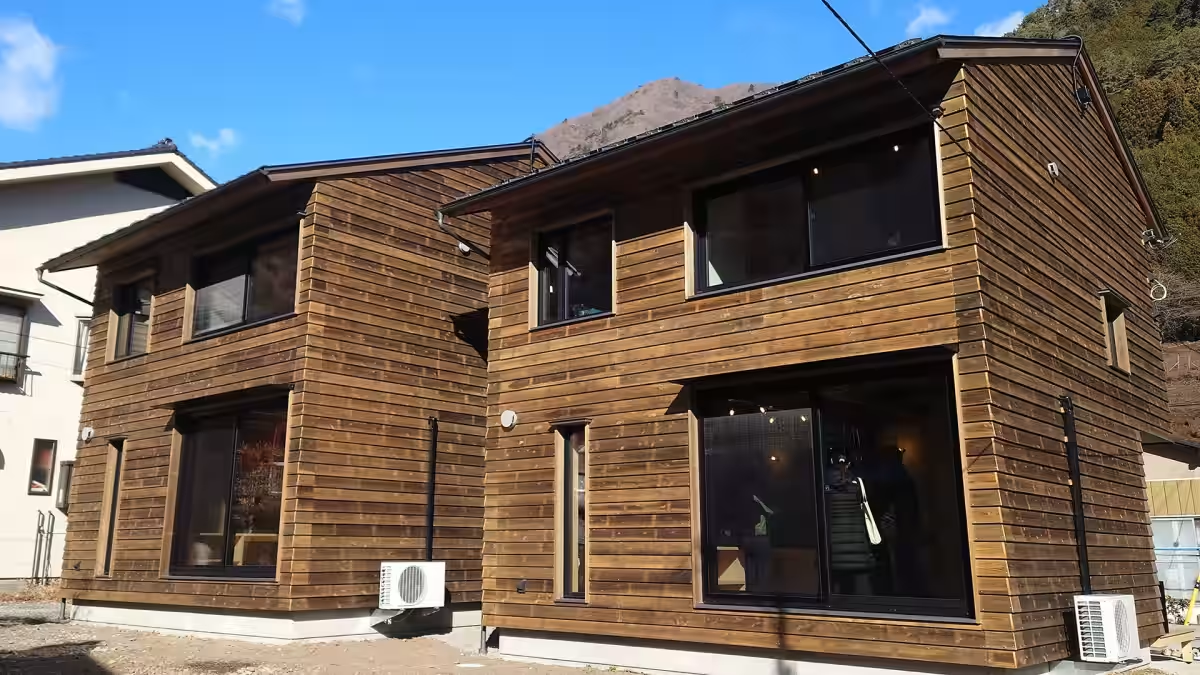
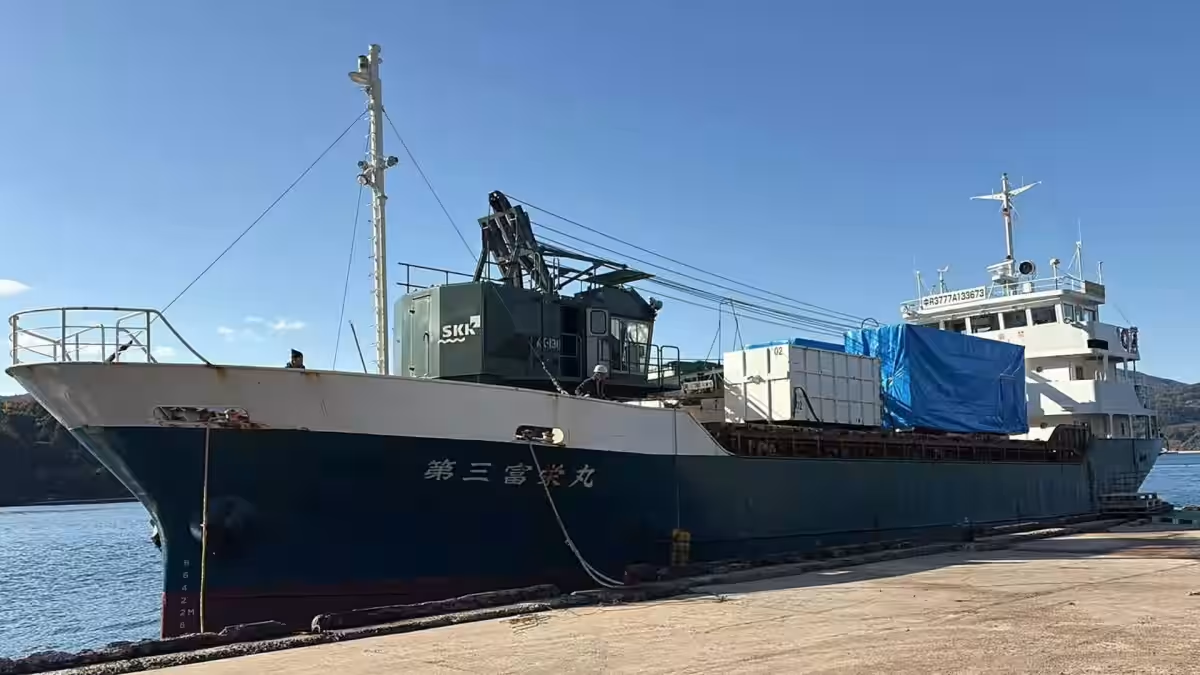
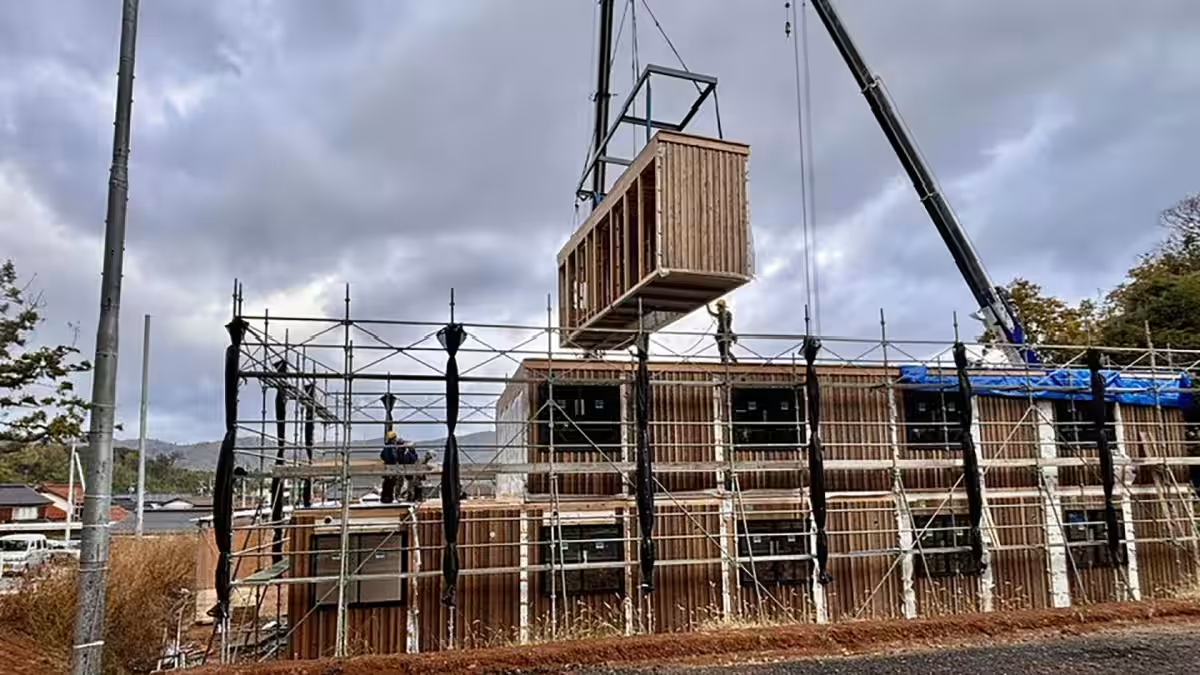
As stated by representative Nagasaka, during its establishment, the association initially concentrated on rapidly delivering emergency temporary housing created off-site to disaster areas and reusing these structures by relocating them after their initial purpose had been fulfilled. However, following the Noto Peninsula Earthquake in 2024, the demand for off-site manufactured permanent wooden temporary housing rose significantly, leading to new inquiries from various governmental bodies and local construction businesses.
Many inquiries revolve around the willingness to cooperate in supplying temporary housing if it could be manufactured off-site without deploying skilled labor to disaster sites. Additionally, interest has surged in understanding the technology and systems for producing residential units and commercial spaces off-site, not just temporary housing.
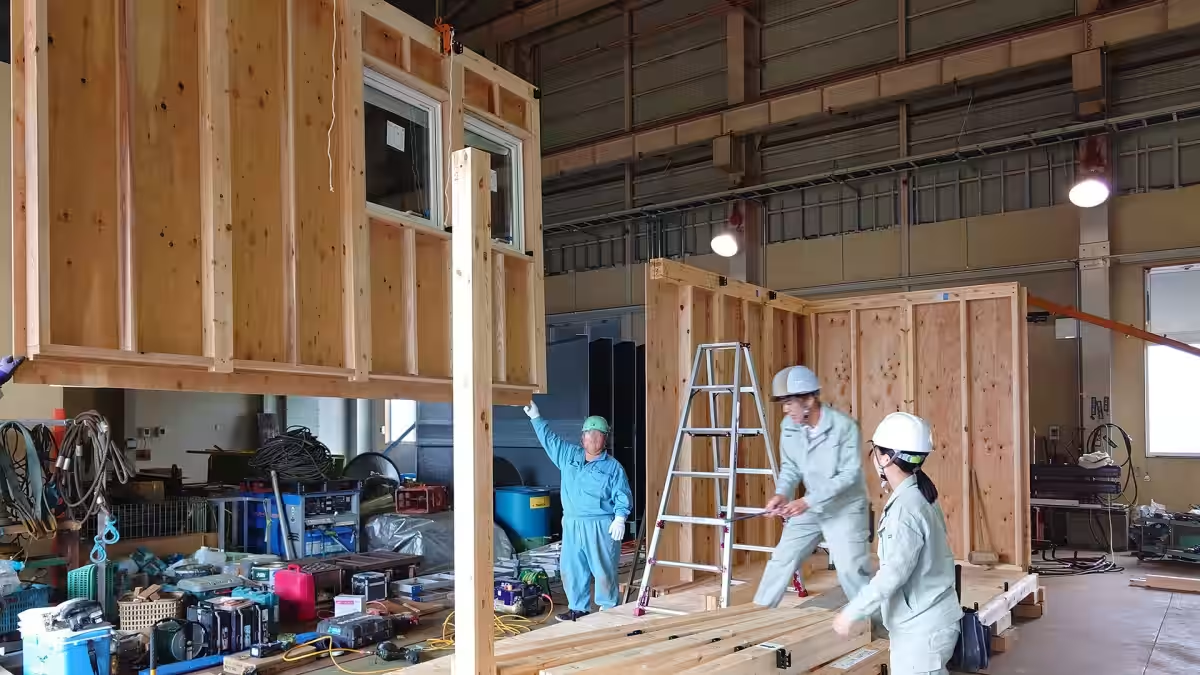
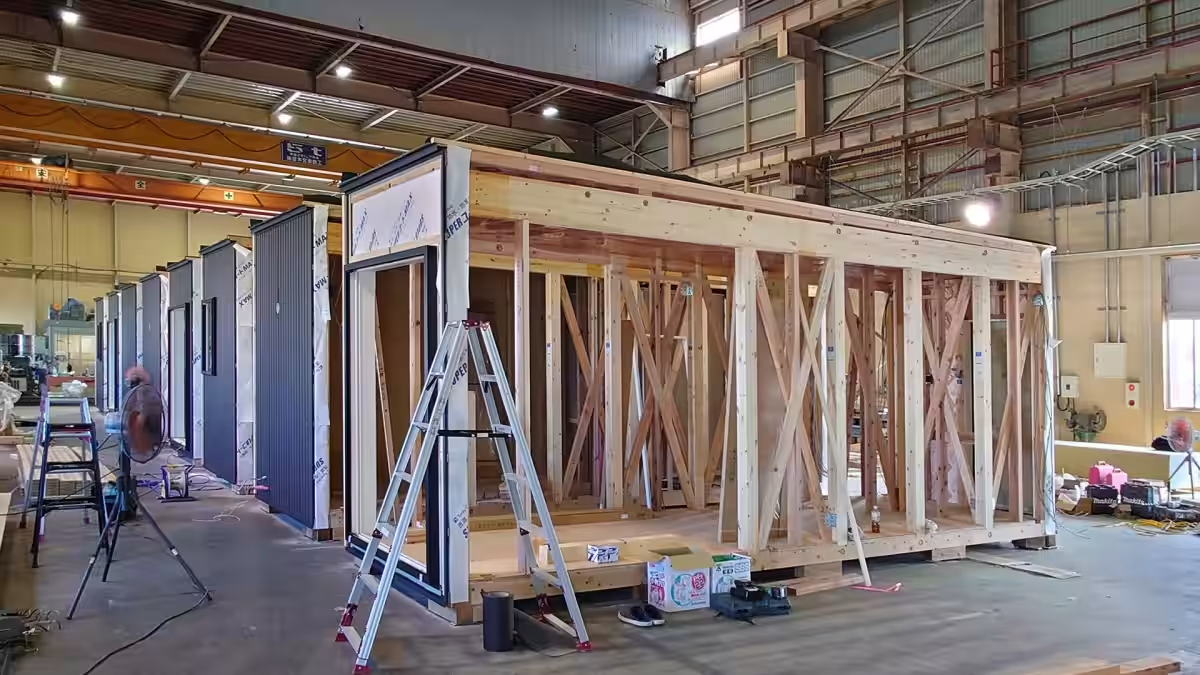
The current skilled labor shortages are a pressing challenge not only during emergencies but also in standard construction cycles. The necessity for industrialized wooden construction, with solutions that allow individuals without construction training to produce high-performance building units in factories, is more urgent than ever. This shift towards a decentralized off-site production chain is vital.
That’s why our name now reflects our commitment to off-site construction. Rest assured, the research and promotional efforts surrounding the potential portability of mobile construction will continue unabated. Furthermore, we plan to enhance our mission of disaster readiness by developing permanent, relocatable wooden emergency housing, in tandem with off-site manufacturing.
The core mission of the Japan Off-Site Building Association is to promote high-performance wooden construction and increase productivity and quality stability through the development and dissemination of off-site building technologies. This non-profit platform aims to contribute to sustainable wooden architecture amid Japan's declining population. The association will openly share the technologies and know-how essential for off-site production with local construction companies across the nation, facilitating reduced construction timelines, improved quality, labor shortage mitigation, heightened safety, and environmental impact reduction.
By connecting forestry (sourcing), wood processing (manufacturing), and construction material suppliers (distribution), the organization aims to advocate for the utilization of Japan's forest resources while simultaneously establishing a sustainable supply chain for off-site production.
Through the industrialization and digital transformation (DX) of wooden construction, we aspire to alleviate skilled labor shortages while creating and nurturing new talent in the industry.
In times of disaster, we intend to leverage the off-site production platform and supply chain, facilitating mutual cooperation among local construction companies nationwide to deliver large quantities of high-quality, permanent, and relocatable emergency housing and public disaster housing rapidly—ultimately enhancing the resilience of affected populations and expediting recovery efforts.
As a part of this transition, the organization has changed its domain and launched a new website:
The old domain will be decommissioned after a six-month transition period.
Overall, the Japan Off-Site Building Association is dedicated to driving innovation in sustainable wooden construction, ensuring a safer and more resilient future for communities across Japan.

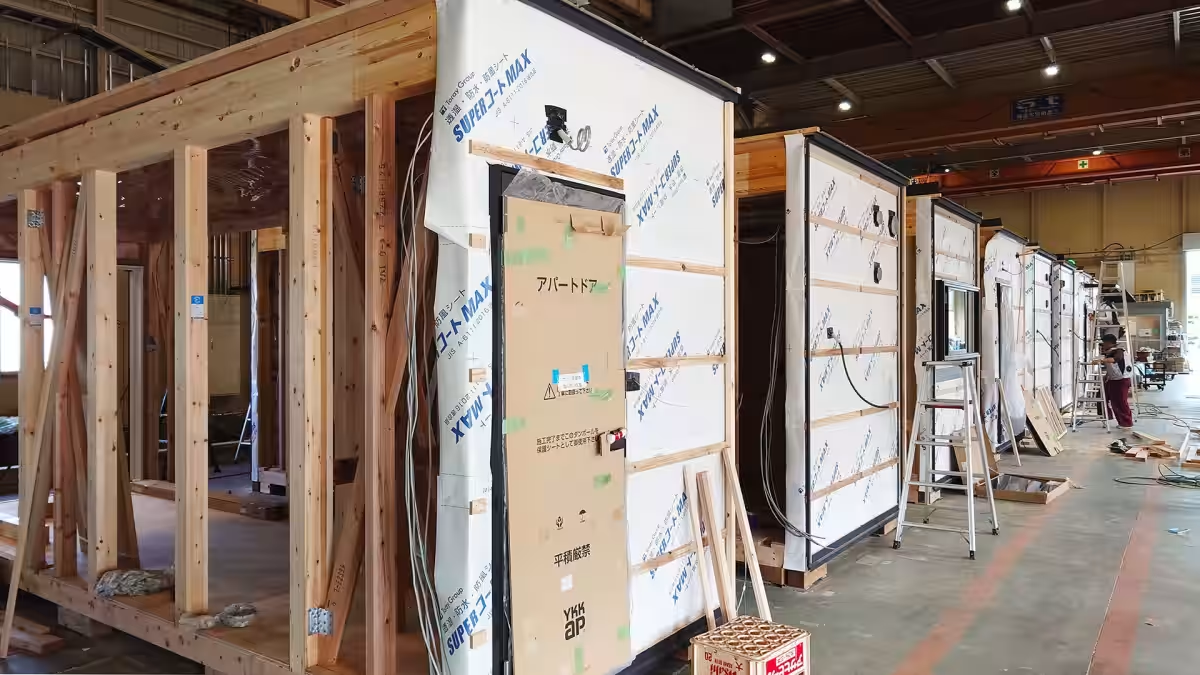
In light of the critical labor shortages currently plaguing the construction industry, there is an increasing expectation for off-site production methods that allow for better quality control and cost management within stable manufacturing environments. As many artificial forests planted post-World War II are now reaching the end of their growth cycle, Japan's forestry sector is under pressure to utilize domestic timber sustainably. In response, developing a robust supply chain that supports local forestry through wooden construction is of utmost importance.
The Japan Off-Site Building Association has established itself around four core principles, represented by the acronym ROOF:
1. Regional (R): Building local supply chains that are grounded in the community.
2. Open (O): Utilizing accessible construction methods that encourage participation from all sectors.
3. Off-site (O): Improving construction timelines and quality amidst skilled labor shortages by embracing off-site manufacturing.
4. Forestry (F): Supporting sustainable forestry practices and collaborating closely with the industry.
As rain signifies potential disaster, the association's goal is to act like a roof, providing shelter and safety.
The focus moving forward will be on research, development, and practical implementation of production designs centered around off-site methods. Additionally, the organization will continue its research into mobile construction's potential for relocatable structures, which was a focal point at its inception.
Changes made to the name do not reflect any alterations to the association's address, director, or activities, and continued support is immensely appreciated.
As stated by representative Nagasaka, during its establishment, the association initially concentrated on rapidly delivering emergency temporary housing created off-site to disaster areas and reusing these structures by relocating them after their initial purpose had been fulfilled. However, following the Noto Peninsula Earthquake in 2024, the demand for off-site manufactured permanent wooden temporary housing rose significantly, leading to new inquiries from various governmental bodies and local construction businesses.
Many inquiries revolve around the willingness to cooperate in supplying temporary housing if it could be manufactured off-site without deploying skilled labor to disaster sites. Additionally, interest has surged in understanding the technology and systems for producing residential units and commercial spaces off-site, not just temporary housing.
The current skilled labor shortages are a pressing challenge not only during emergencies but also in standard construction cycles. The necessity for industrialized wooden construction, with solutions that allow individuals without construction training to produce high-performance building units in factories, is more urgent than ever. This shift towards a decentralized off-site production chain is vital.
That’s why our name now reflects our commitment to off-site construction. Rest assured, the research and promotional efforts surrounding the potential portability of mobile construction will continue unabated. Furthermore, we plan to enhance our mission of disaster readiness by developing permanent, relocatable wooden emergency housing, in tandem with off-site manufacturing.
The core mission of the Japan Off-Site Building Association is to promote high-performance wooden construction and increase productivity and quality stability through the development and dissemination of off-site building technologies. This non-profit platform aims to contribute to sustainable wooden architecture amid Japan's declining population. The association will openly share the technologies and know-how essential for off-site production with local construction companies across the nation, facilitating reduced construction timelines, improved quality, labor shortage mitigation, heightened safety, and environmental impact reduction.
By connecting forestry (sourcing), wood processing (manufacturing), and construction material suppliers (distribution), the organization aims to advocate for the utilization of Japan's forest resources while simultaneously establishing a sustainable supply chain for off-site production.
Through the industrialization and digital transformation (DX) of wooden construction, we aspire to alleviate skilled labor shortages while creating and nurturing new talent in the industry.
In times of disaster, we intend to leverage the off-site production platform and supply chain, facilitating mutual cooperation among local construction companies nationwide to deliver large quantities of high-quality, permanent, and relocatable emergency housing and public disaster housing rapidly—ultimately enhancing the resilience of affected populations and expediting recovery efforts.
As a part of this transition, the organization has changed its domain and launched a new website:
- - New: https://offsite.or.jp
- - Old: https://mobakyo.or.jp
The old domain will be decommissioned after a six-month transition period.
Overall, the Japan Off-Site Building Association is dedicated to driving innovation in sustainable wooden construction, ensuring a safer and more resilient future for communities across Japan.
Topics Consumer Products & Retail)
【About Using Articles】
You can freely use the title and article content by linking to the page where the article is posted.
※ Images cannot be used.
【About Links】
Links are free to use.