



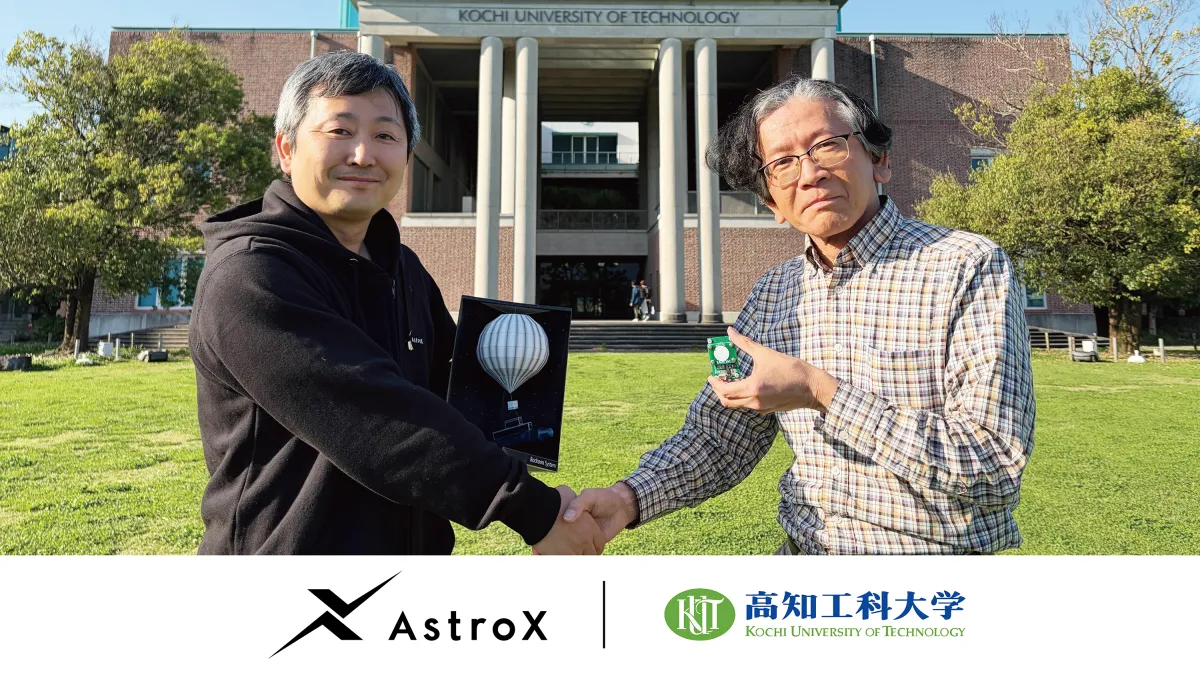
Kochi University of Technology and AstroX Partner for Payload Transport in Space Missions
Collaboration between Kochi University of Technology and AstroX
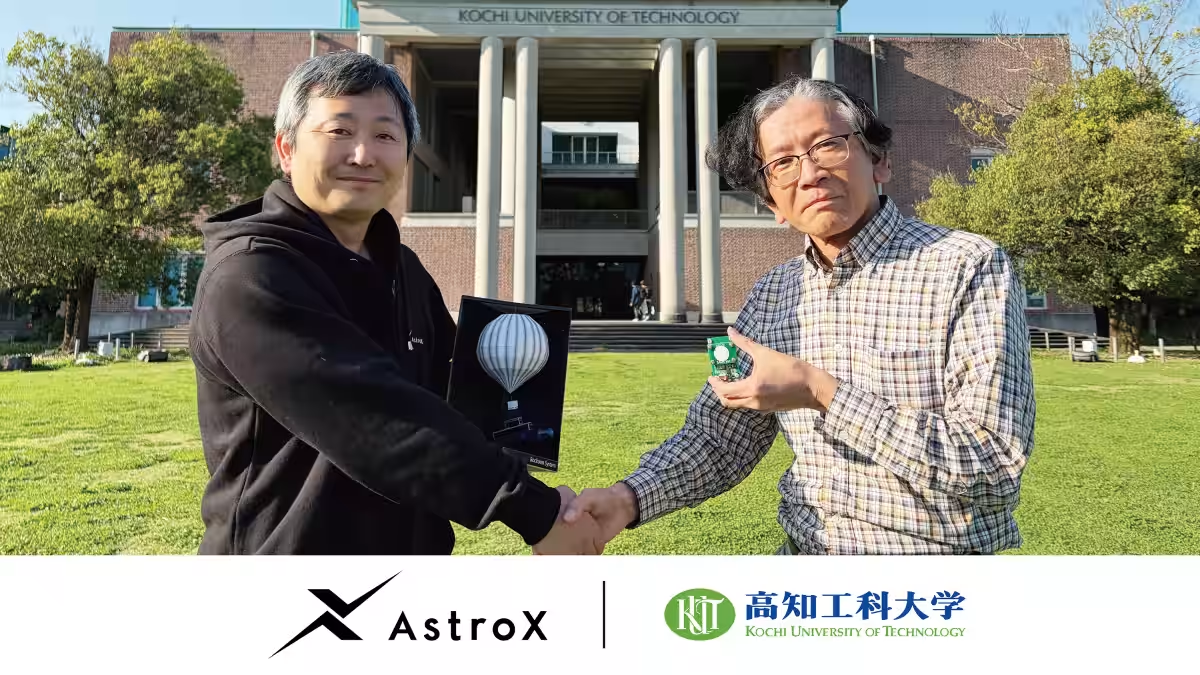
In an exciting development that merges academic research with cutting-edge space technology, AstroX Inc., a space startup based in Minamisoma, and Kochi University of Technology, located in Kami City, Kochi Prefecture, have signed a payload transport contract. This collaboration will see the university's infra-sound sensors integrated into AstroX’s Rockoon suborbital rocket and attitude control system.
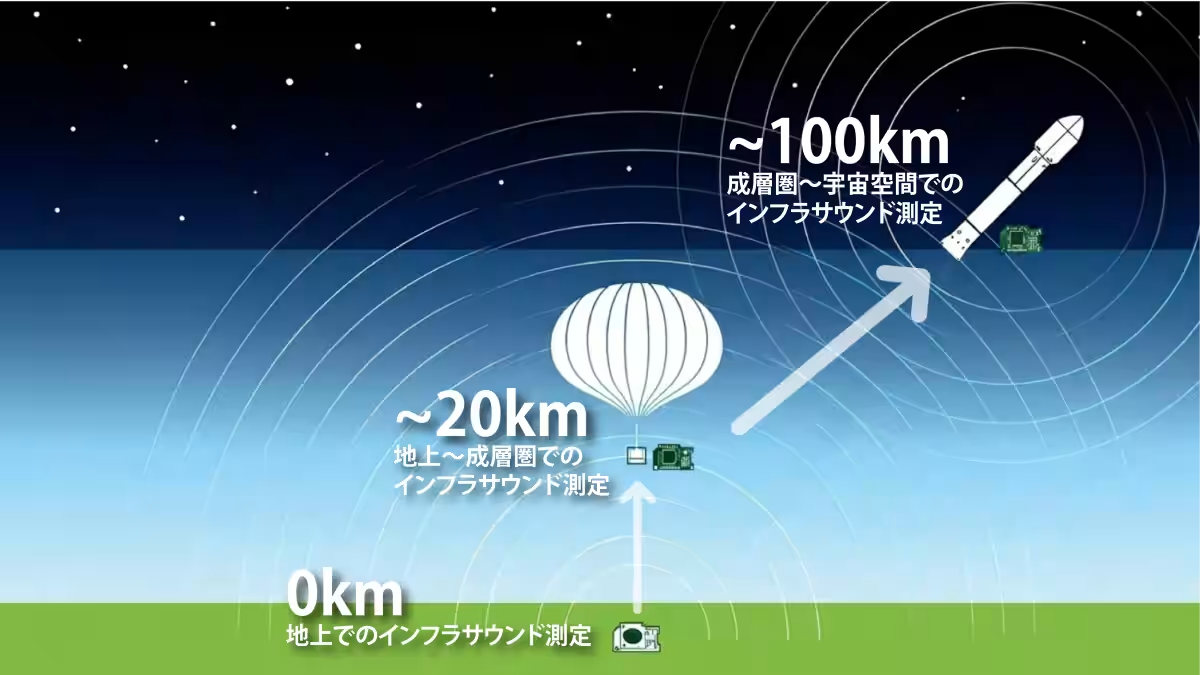
AstroX is actively developing its Rockoon system with the aim of reaching space by 2026. The mission will implement a unique three-dimensional measurement strategy that involves observing infra-sound waves generated by a single source simultaneously from the ground, the stratosphere, and nearing outer space.
Leveraging Rockoon's Features for Advanced Measurement
The current mission's innovative design includes placing infra-sound sensors both on the suborbital rocket and its attitude control device. This strategic configuration enables simultaneous measurements of infra-sound at varying altitudes. Such multi-level observation is made possible through the inherent capabilities of the Rockoon system.
Understanding Infra-sound
Infra-sound refers to sound waves that are below the normal hearing range of humans, typically under 20 Hz. While these low-frequency sounds cannot be perceived by the human ear, they can be generated by natural events like volcanic eruptions, thunderstorms, and man-made occurrences such as wind power generation. The infra-sound sensors to be used in this mission are designed to detect these small air movements, effectively visualizing what is usually an invisible sound. This capability allows for the near real-time detection and analysis of events happening far away.
Scientific Significance of Multi-altitude Observations
Infra-sound is used in measuring events such as volcanic eruptions, tsunamis, and meteor impacts. This mission aims to explore the propagation characteristics of infra-sound waves, which have previously been difficult to analyze from the ground alone. By measuring the same sound source from distinct heights, significant insights into sound propagation direction can be achieved, enhancing our understanding of these natural events.
Future Potential in Disaster Prevention and Planetary Exploration
The technology demonstrated in this mission holds promise for various critical fields:
- - Disaster Prevention and Mitigation: Insights from this mission could lead to the development of a constantly airborne infra-sound monitoring network using low-cost and mobile balloon systems. Such a network would improve early detection of phenomena like tsunamis and volcanic eruptions, particularly in hard-to-monitor areas like remote islands and mountainous regions.
- - Mars Exploration Applications: The infra-sound observation techniques validated in this mission are anticipated to be applicable in future Mars landing missions. Given the Martian atmosphere is notably thin, acquiring sound propagation data in this mission can provide valuable references for predicting and assessing acoustic behavior on Mars. Deploying these sensors on Martian rovers could enhance the remote sensing of events like meteor impact sounds and geological activities.
Educational Impact for Students
The upcoming mission offers a hands-on opportunity for Kochi University students, who will be actively involved in all aspects, including payload development, testing, operations, and data analysis. This initiative aligns with Japan’s Space Basic Plan (revised in 2023), which emphasizes human resource development in the space sector as a national strategy. Engaging students in this practical aerospace project provides them with rare, invaluable experiences.
Collaborative Comments
- - Professor Masayuki Yamamoto, head of the infra-sound research lab at Kochi University, expressed hope that their project will lead to progress not only in the realm of scientific knowledge but also in fostering the next generation of aerospace engineers.
- - Shotaku Oda, CEO of AstroX, emphasized the excitement of partnering with Kochi University on this payload initiative, noting that it represents a significant step towards establishing Rockoon technology as an essential platform for research and educational endeavours in Japan.
- - Yutaka Wada, CTO of AstroX, remarked on the unique advantage of using both a rocket and an attitude control device to observe infra-sound from various elevations simultaneously, highlighting its value for future exploratory missions and disaster prevention initiatives.
Conclusion
AstroX and Kochi University's collaboration not only aims to push the boundaries of what is possible in the study of infra-sound but also sets a foundation for future endeavors in disaster management and extraterrestrial research. With the initiative combining academic rigor with innovative space exploration technologies, it is sure to inspire the next generation of experts in the field.
For further information or to explore collaboration opportunities, potential research institutions and organizations are encouraged to reach out to AstroX.



Topics Entertainment & Media)







【About Using Articles】
You can freely use the title and article content by linking to the page where the article is posted.
※ Images cannot be used.
【About Links】
Links are free to use.