



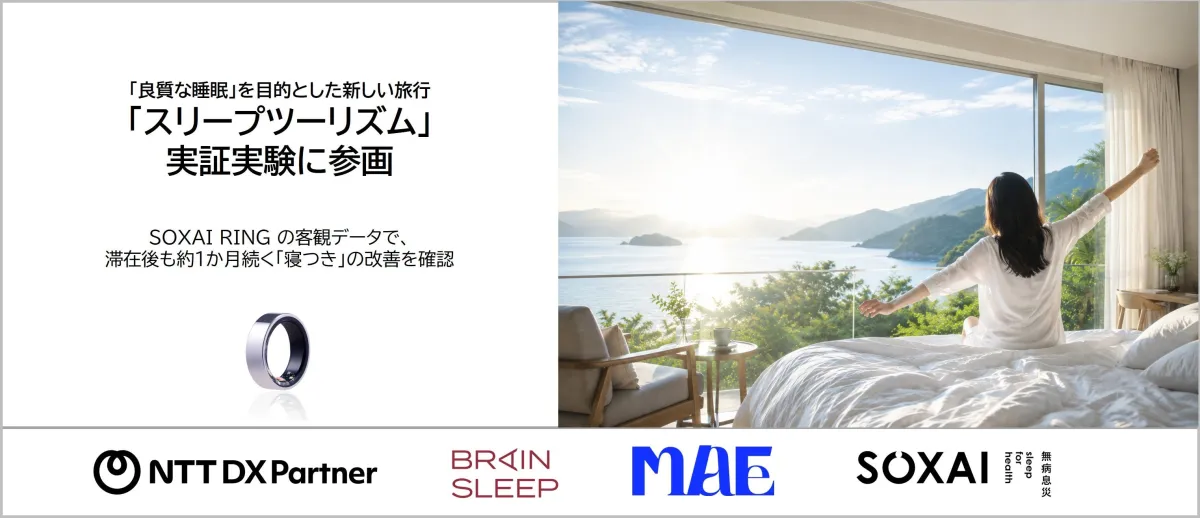
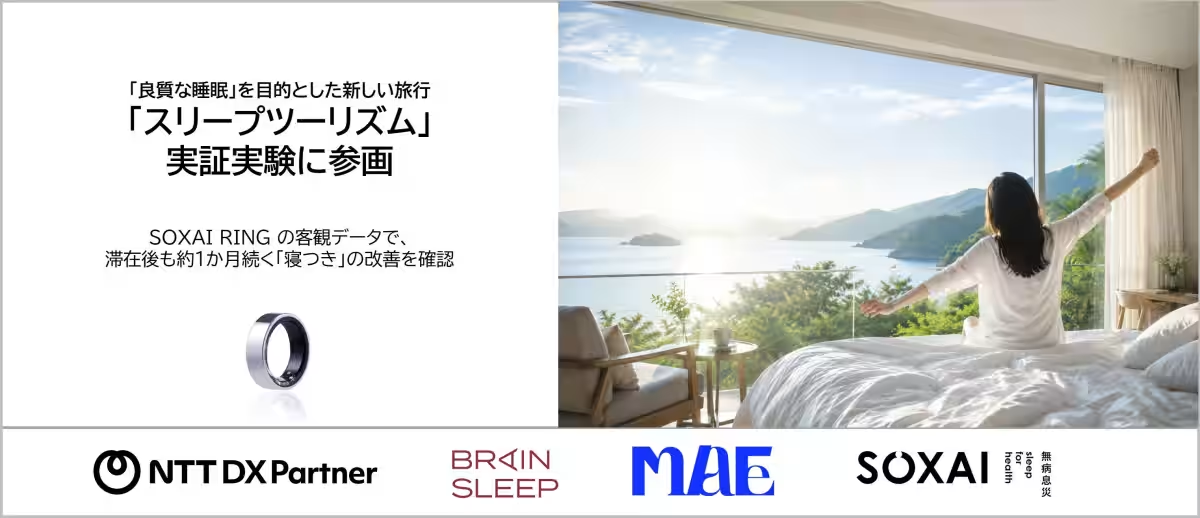
SOXAI Launches Innovative Sleep Tourism Project to Enhance Well-being
SOXAI's Innovative Sleep Tourism Project
In a groundbreaking initiative, SOXAI, a health tech company, has joined forces with NTT DX Partners and Brain Sleep, along with MAE, to conduct a study on sleep tourism. This innovative approach aims to enhance sleep quality through a unique travel experience at Healthian-wood in Toyama, Japan.
The study revolves around the concept of sleep tourism, a travel trend gaining traction worldwide, where travelers focus on improving their sleep quality during their stay. SOXAI provides wearables called the SOXAI RING, which tracks objective data related to sleep quality without interfering with participants' activities. The data collected will be instrumental in measuring the effectiveness of the sleep tourism program.
Study Structure and Methodology
The project includes a thorough analysis involving a group of ten male participants aged 20-50 who struggle with sleep issues. The methodology details a comparative study across three distinct periods: the 14 days prior to the stay, during the three-day stay, and the 30 days following their departure. Participants will wear the SOXAI RING during this entire period, allowing for a continuous and objective measurement of sleep and daytime activities.
The choice of the SOXAI RING as the measurement device stems from its ability to monitor both day and night activities without the wearer's conscious awareness. This setup provides valuable insights into how daytime behaviors affect nighttime sleep, allowing for targeted program enhancements.
The Importance of the Project
Research by Japan’s Ministry of Health indicates a rising percentage of individuals not receiving adequate restorative sleep. This issue has morphed into a pressing health concern in modern society. As wellness tourism continues to expand, it's becoming clear that travelers are shifting their focus from mere sightseeing to finding ways to restore and nurture their well-being. Japan, with its rich culture that emphasizes sleep health through practices like traditional hot springs and seasonal cuisine, is well-positioned to leverage sleep tourism trends effectively.
However, the study also acknowledges an issue known as
Topics Health)

【About Using Articles】
You can freely use the title and article content by linking to the page where the article is posted.
※ Images cannot be used.
【About Links】
Links are free to use.