



Overcoming Barriers in SEO: Insights from a Nationwide Survey of Marketing Professionals
Overcoming Barriers in SEO: Insights from a Nationwide Survey of Marketing Professionals
In a recent study conducted by Nyle Corporation, which operates in digital transformation and marketing, more than 275 marketing professionals from across Japan shared their obstacles and concerns regarding Search Engine Optimization (SEO). The survey was carried out over a three-day period from September 1 to 3, 2023, using the Fastask online platform.
Key Findings from the Survey
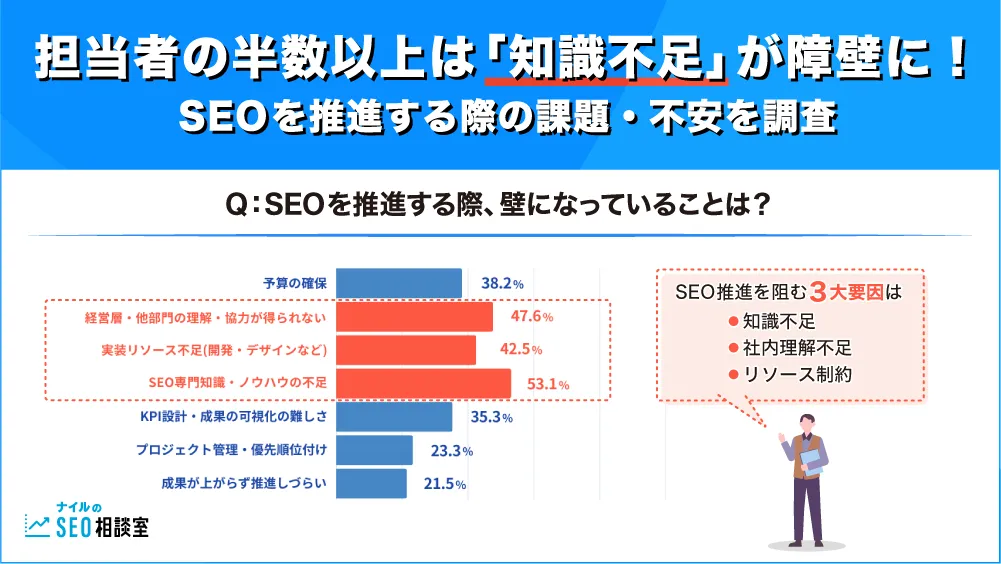
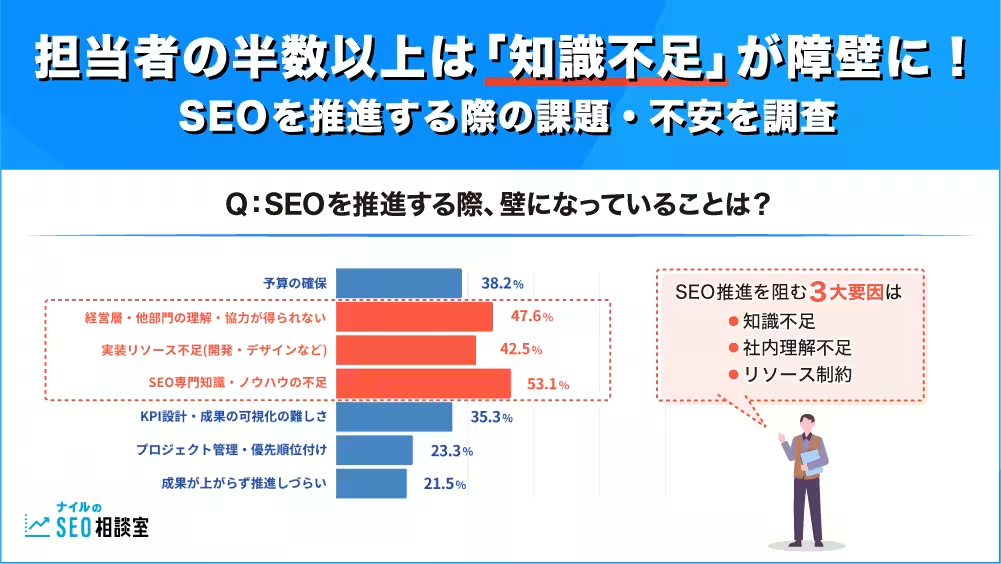
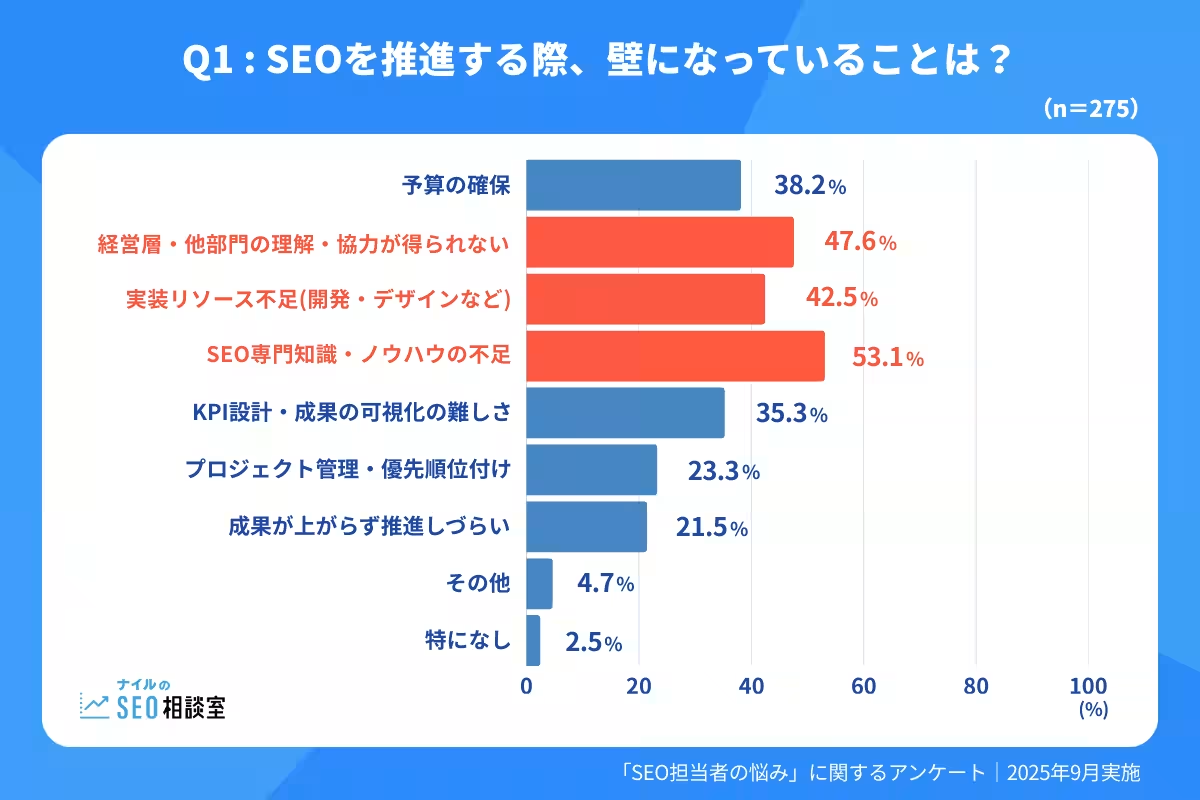
The survey unveiled three major factors hindering SEO efforts:
1. Lack of Knowledge (53.1%)
2. Insufficient Understanding Among Executives and Other Departments (47.6%)
3. Resource Constraints (42.5%)
Knowledge Gap as the Main Obstacle
The leading barrier to effective SEO is the lack of knowledge and expertise among marketing personnel. SEO is a dynamic field influenced by algorithm changes and diverse search behaviors, requiring professionals to continuously update their knowledge. However, many marketers often juggle multiple responsibilities and have limited opportunities for systematic learning, forcing them to implement strategies without adequate knowledge. This knowledge gap is likely contributing to their inability to achieve satisfactory results.
Challenges in Interdepartmental Collaboration
The second major issue identified is the difficulty in obtaining understanding and support from top management and other departments. SEO initiatives involve various aspects including content production, development, and design. As a result, communicating the impact of these initiatives to related departments is crucial but often ineffective. This lack of clarity regarding short-term revenue outcomes may lead management to deprioritize SEO efforts.
Resource Limitations
Resource constraints were also highlighted as a significant barrier. Implementing necessary site adjustments and structural improvements for SEO requires dedicated development and design resources. The inability to showcase the return on investment (ROI) for SEO initiatives may further diminish the priority given to development tasks.
Overall, the survey underscores the struggles faced by SEO professionals due to the intertwined issues of knowledge deficits, organizational understanding, and resource limitations.
Specific Areas of Concern: Content Creation and Technical SEO
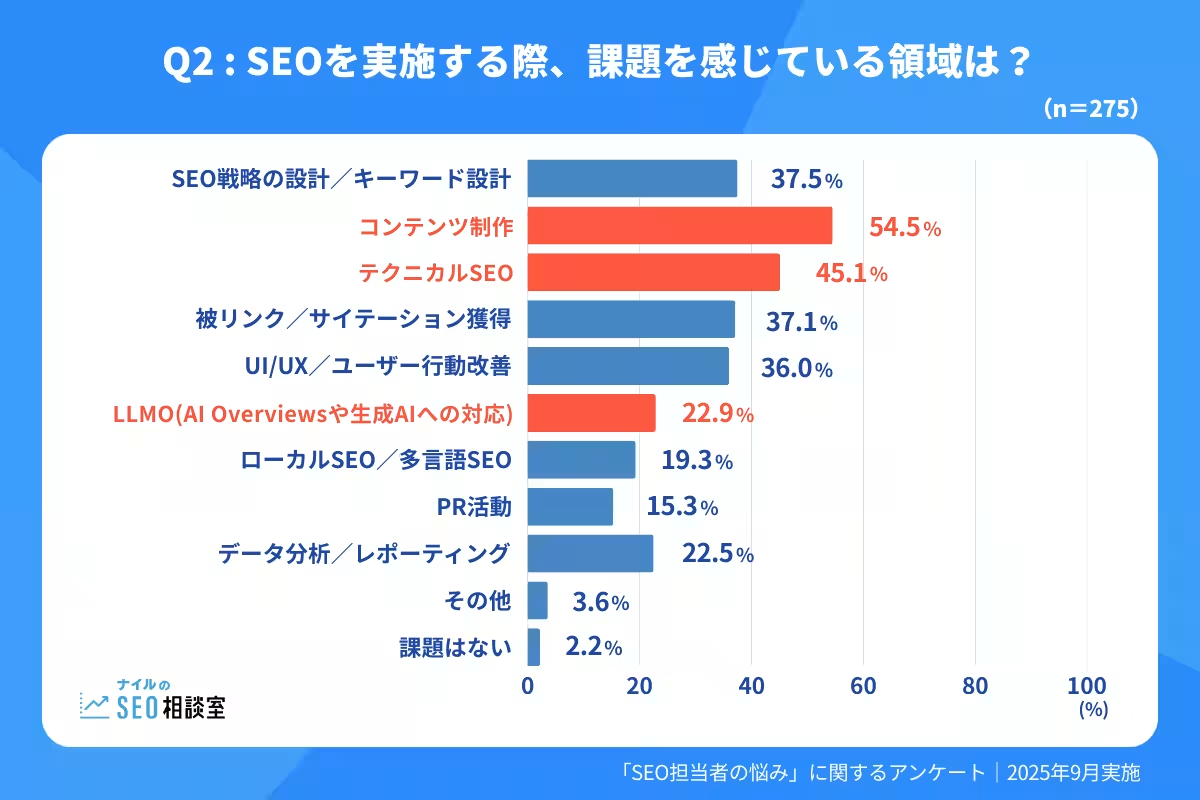
Diving deeper into specific SEO areas, Content Creation emerged as the most pressing challenge, reported by 54.5% of participants. The difficulty arises from the need to consistently produce high-quality content that adheres to Google’s E-E-A-T (Experience, Expertise, Authoritativeness, and Trustworthiness) criteria. This requires specialized skills and proper production systems—an achievement not easily met within constrained resources.
Following that, Technical SEO also posed challenges, with 45.1% of respondents mentioning it. This essential aspect suffers from a lack of specialized knowledge and necessitates collaboration with development teams—further linking back to previous points about resource shortages.
The Hurdle of Interdepartmental Coordination
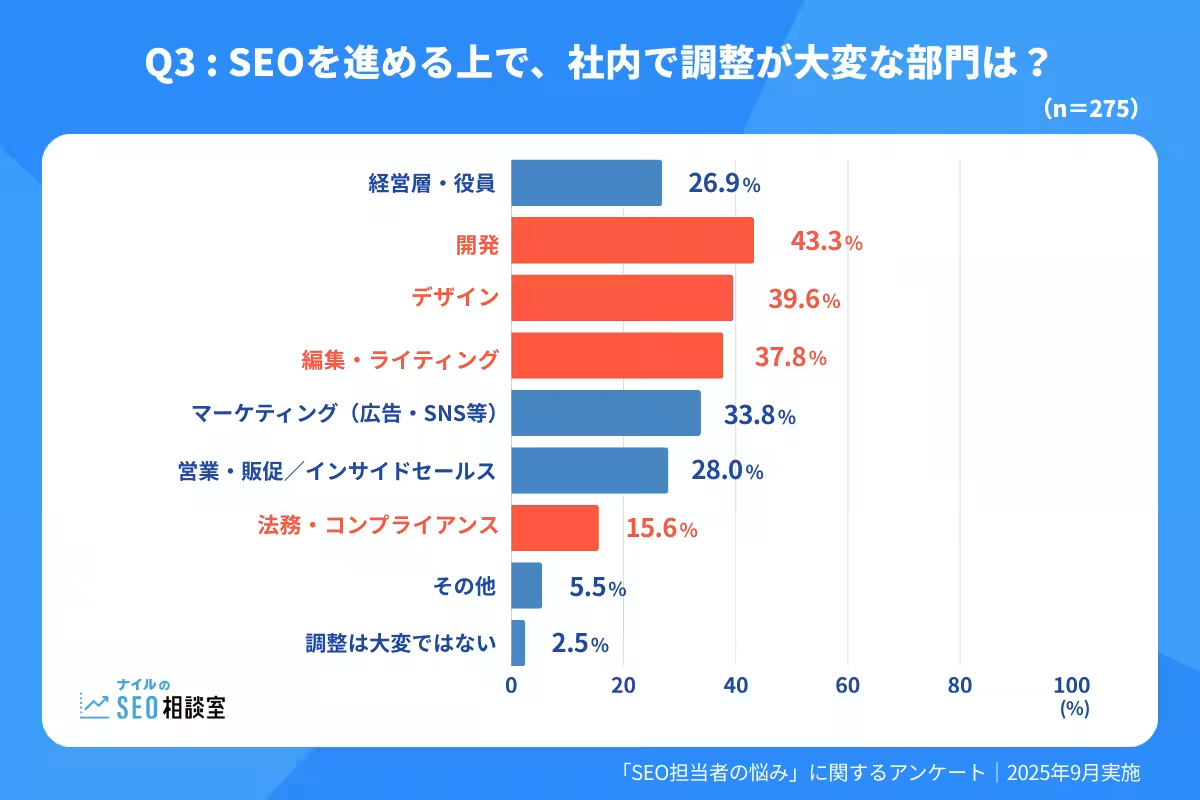
Coordination difficulties also surfaced as a significant theme. The survey showed that adjusting with the Development department (43.3%) was the hardest, followed by Design (39.6%) and Editing/Writing (37.8%). Only 2.5% of respondents claimed that coordination was not a challenge. These difficulties are largely attributed to differences in priorities and processes between SEO initiatives and technical development tasks, which often lead to SEO being postponed in favor of urgent system maintenance tasks.
Measuring SEO Success: The Internal Dilemma
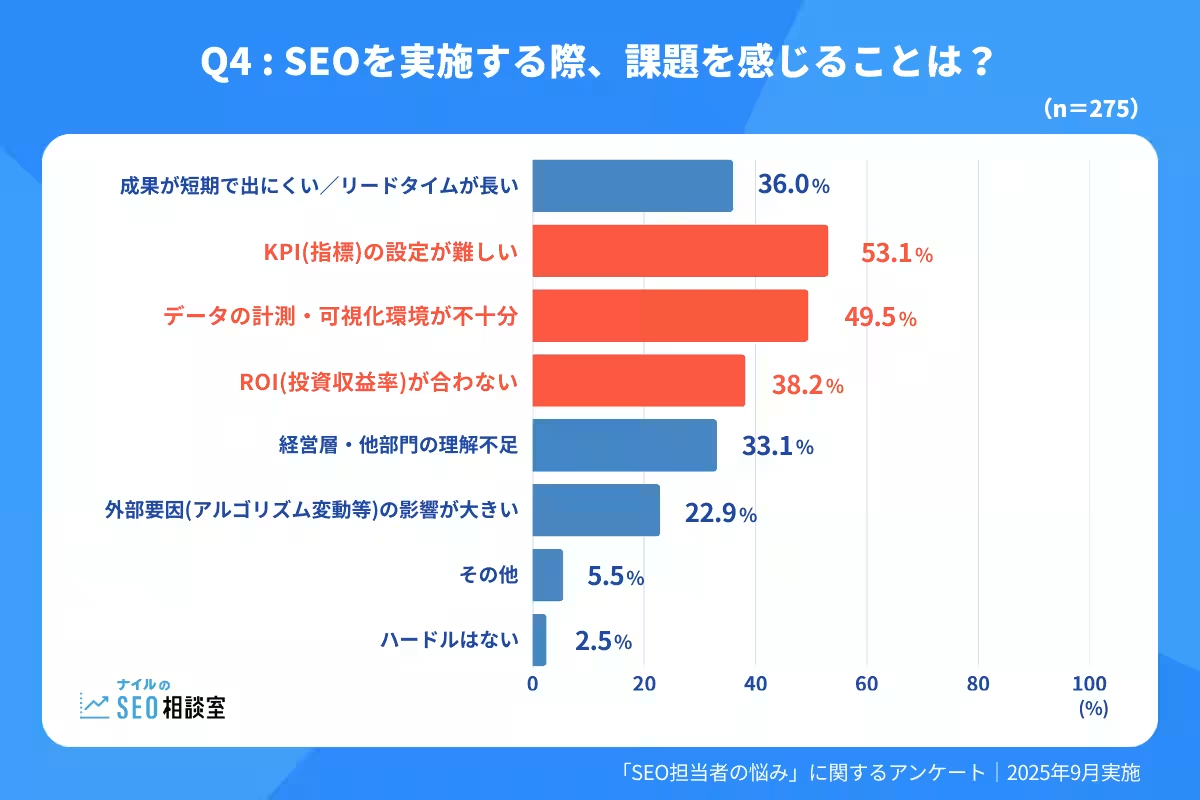
When it comes to evaluating SEO effectiveness internally, the most significant barrier reported was the difficulty in setting KPIs (53.1%). With numerous metrics involved—search rankings, visitor inflow, and conversions—determining the best KPIs for SEO is complicated. Additionally, many SEO efforts, particularly blogs and informational articles, do not translate into immediate sales or inquiries, leading to vague assessments of success within organizations.
Furthermore, nearly half of respondents (49.5%) indicated that they lack sufficient data measurement and visualization capabilities. The recent transition to Google Analytics 4 (GA4) has also been a source of challenges for SEO measurement. This inability to provide clear evidence can create a vicious cycle, making it difficult to gain executive buy-in and positive evaluations for SEO initiatives.
Another notable concern was the mismatch in ROI (38.2%). Given that SEO requires significant personnel and outsourcing costs but generates results over an extended period, short-term ROI assessments often paint a negative picture, complicating the justification for investment.
Addressing the Challenges Ahead
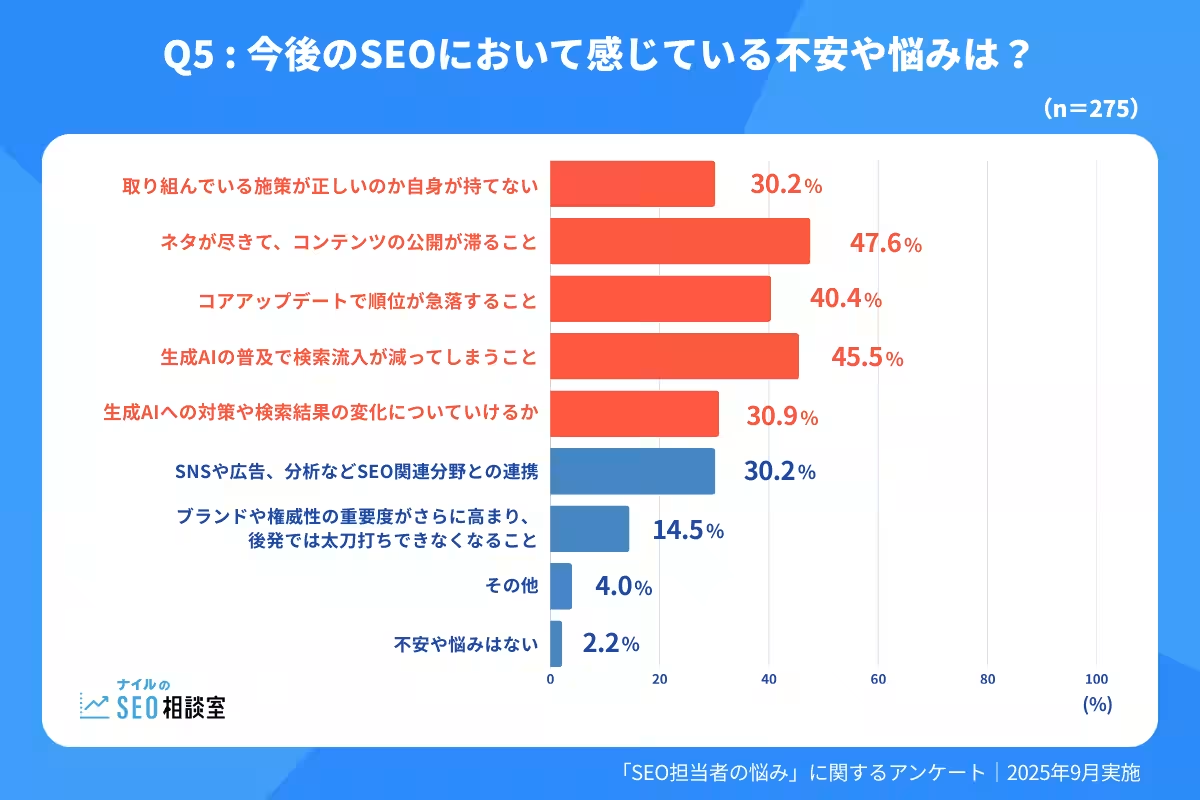
The findings from this survey reveal a clear picture of the challenges faced by SEO professionals including knowledge deficits and organizational coordination issues. Additionally, the emergence of generative AI technologies adds another layer of complexity to the SEO landscape.
To overcome these barriers, enhancing individual skill sets and fostering organization-wide comprehension of SEO best practices will be imperative. Moreover, engaging with external SEO experts can provide the necessary support and resources to navigate these challenges efficiently.
By strategically addressing knowledge gaps and fostering interdepartmental cooperation, SEO professionals can pave the way for impactful implementation of their strategies. The need for continuous content creation and adaptation to the evolving digital landscape demands robust planning and an agile approach to marketing collaboration.
Conclusion
As digital marketing evolves, it becomes increasingly clear that the future of successful SEO lies in the hands of well-informed, collaborative teams that can adapt to changes and challenges. Marketers must prioritize skills development and inter-departmental communication to navigate the evolving SEO landscape effectively.
Topics Business Technology)
【About Using Articles】
You can freely use the title and article content by linking to the page where the article is posted.
※ Images cannot be used.
【About Links】
Links are free to use.