



Understanding the Role of Vaginal Lactobacillus in Early Pregnancy for Maternal Health
The Role of Vaginal Lactobacillus in Early Pregnancy
Recent research conducted by a team from Kyorin University in Mitaka, Tokyo, has uncovered significant findings regarding the presence of
Lactobacillus, a type of beneficial bacteria, in the vaginal environment of pregnant women. This study, published in Nature Communications, emphasizes the correlation between higher concentrations of Lactobacillus during early pregnancy and favorable pregnancy outcomes, including the likelihood of carrying the pregnancy to 38 weeks or beyond.
Background Information
The microbiome, which consists of various microorganisms, plays a crucial role in the health of an expecting mother as well as the development of her fetus and newborn. While the importance of this microbiome is well acknowledged, the specifics of how maternal vaginal and gut microbiota influence newborn intestinal flora remain less understood. Scientists are still working to define what constitutes a 'healthy microbiome,' particularly in the context of pregnancy. Discovering the characteristics of a healthy microbiome can lead to preventive measures or treatments that significantly impact public health.
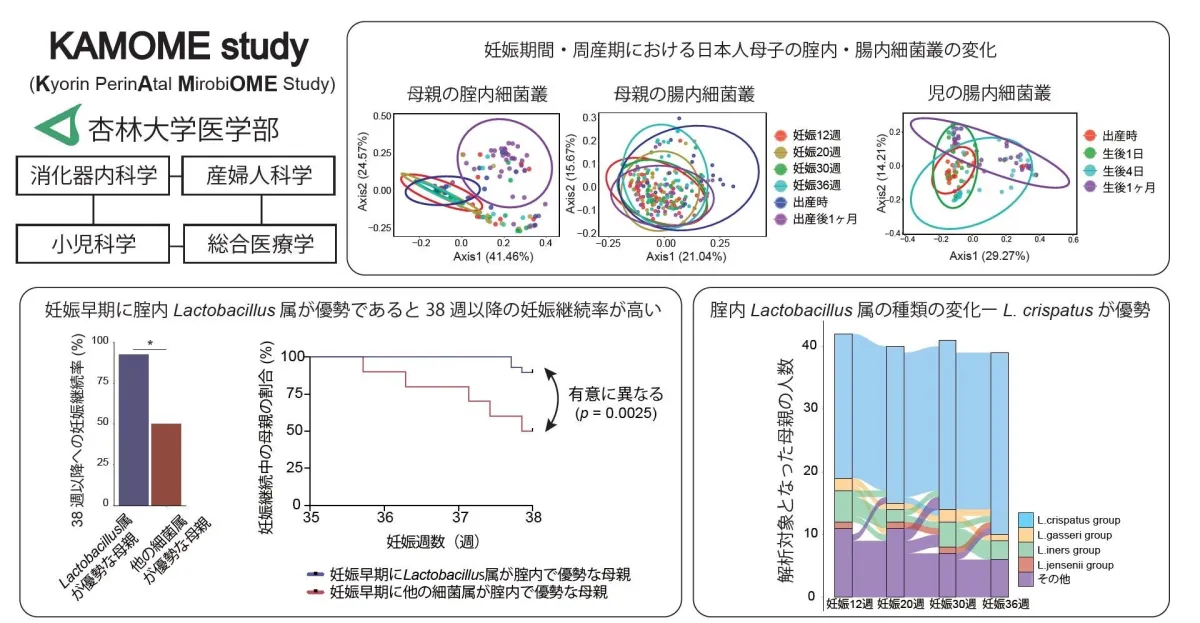
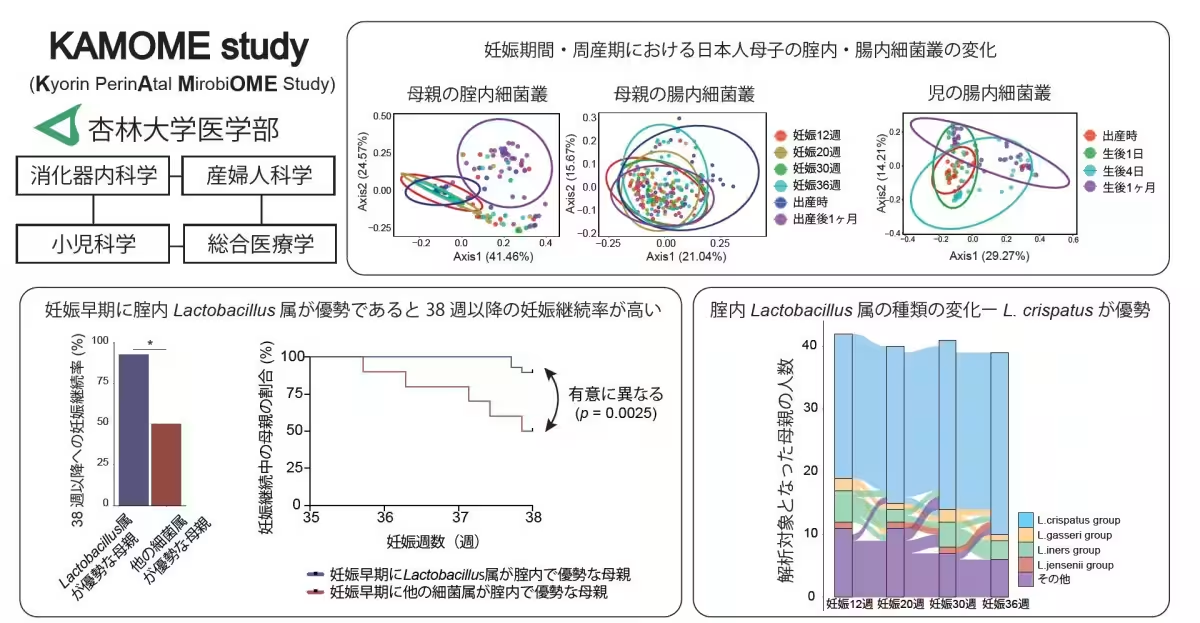
According to Kyorin University's research group, led by Professor Riiichi Hisamatsu from the Department of Gastroenterology, this study aims to explore what constitutes a 'healthy microbiome' for mothers and their newborns by examining pregnant women who consented to participate in the research at Kyorin University Medical Center. The data was collected from the 12th week of gestation until one month postpartum, focusing on the bacterial composition present in both vaginal and gut microbiota.
Key Findings
The research has revealed that women with higher levels of Lactobacillus in their vaginal microbiota during early pregnancy are significantly more likely to continue their pregnancies beyond 38 weeks when measured against those with lower counts. This is particularly noteworthy since pregnancies reaching 37 weeks are classified as 'term,' and those continuing to 38 weeks indicate readiness for childbirth. This groundbreaking study highlights how early vaginal bacteria can ensue long-term impacts on pregnancy.
Interestingly, the research also points to Lactobacillus crispatus as the dominant Lactobacillus species found in pregnant Japanese women. Notably, this species does not share the same prevalence globally during pregnancy, suggesting that genetic backgrounds and environmental factors like lifestyle influence the diversity and ratios of bacteria within different populations' microbiomes. Thus, this research offers the first insights into the vaginal microflora of Japanese expectant mothers, marking a new phase in understanding how the microbiome affects pregnancy outcomes worldwide.
Broader Implications
The study yielded new insights into the dynamic relationships between mother and child concerning their microbiomes in early life. Bacterial groups originating from the mothers' vagina, rectum, and skin were detected in the newborns' rectal samples. Furthermore, it uncovered that the newborns’ intestinal microbiota undergoes significant changes from the early days postpartum. The long-term effects on children's microbiomes and their future health remains an essential area for further study.
The researchers share hopes that these findings regarding establishing a 'healthy microbiome' will pave the way for developing enhanced maternal and child health care practices in the future. They also intend to continue their research in this field.
In Professor Hisamatsu's words, "While the gut microbiota plays a critical role in the health and disease of humans, much remains unknown about how it is structured. This study uniquely followed both maternal and neonatal microbiota over time, revealing that variations in the vaginal microbiota differ by race and that the proportion of Lactobacillus is influential in pregnancy duration. As we continue collecting data from such longitudinal studies, we expect it will help clarify how newborn microbiota are established and its potential impacts on future disease presentations."
Overall, this research opens new avenues for understanding how maternal health factors, specifically related to microbiomes, can significantly impact pregnancy outcomes. Future studies will focus on the evolution of these microbial communities and their implications on long-term health for both mothers and their children.
Topics Health)

【About Using Articles】
You can freely use the title and article content by linking to the page where the article is posted.
※ Images cannot be used.
【About Links】
Links are free to use.