



Accelerating Education Business Development: a.school and HAPPY so-da Join Forces
Introduction
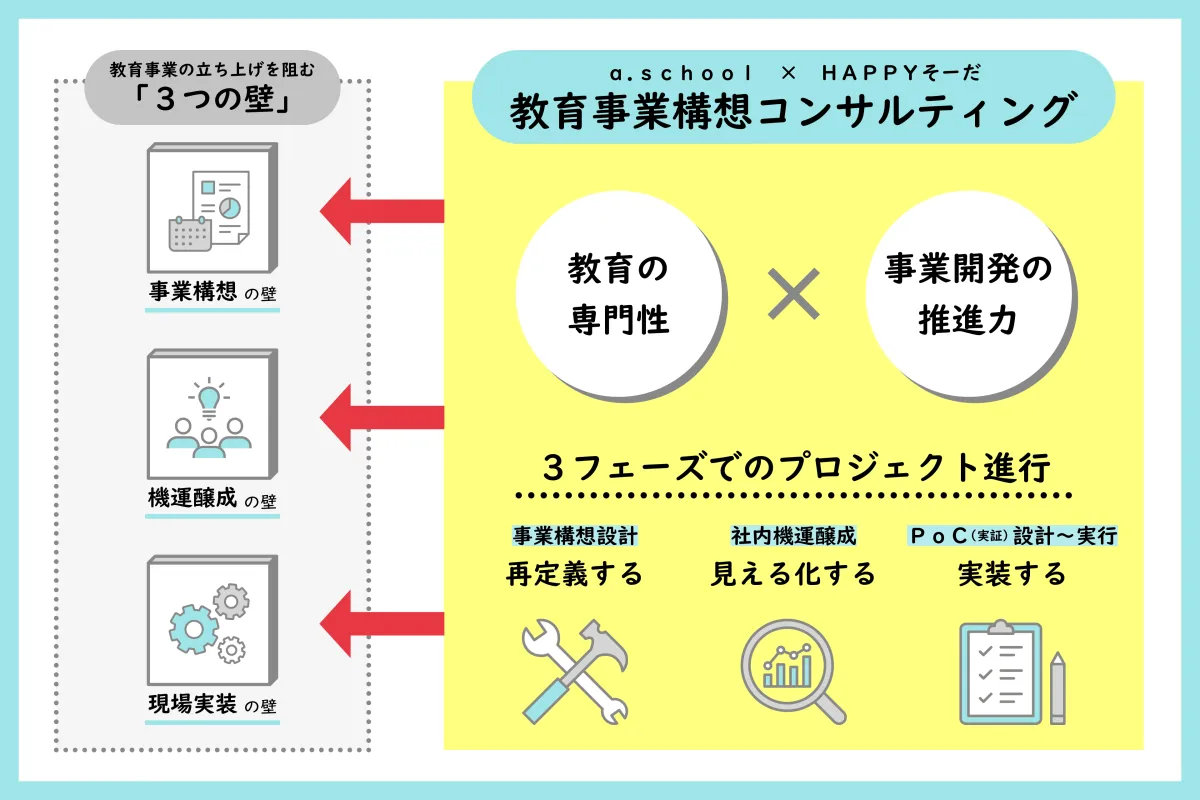
In a rapidly changing educational landscape, the need for innovative solutions and business models has become more pressing. Recognizing this demand, a.school, a Tokyo-based company, and HAPPY so-da, a consultancy specializing in education business development, have announced a transformative collaboration. This joint effort aims to support companies and municipalities in launching new educational initiatives or reforming existing ones within a condensed time frame of six months.
Service Overview
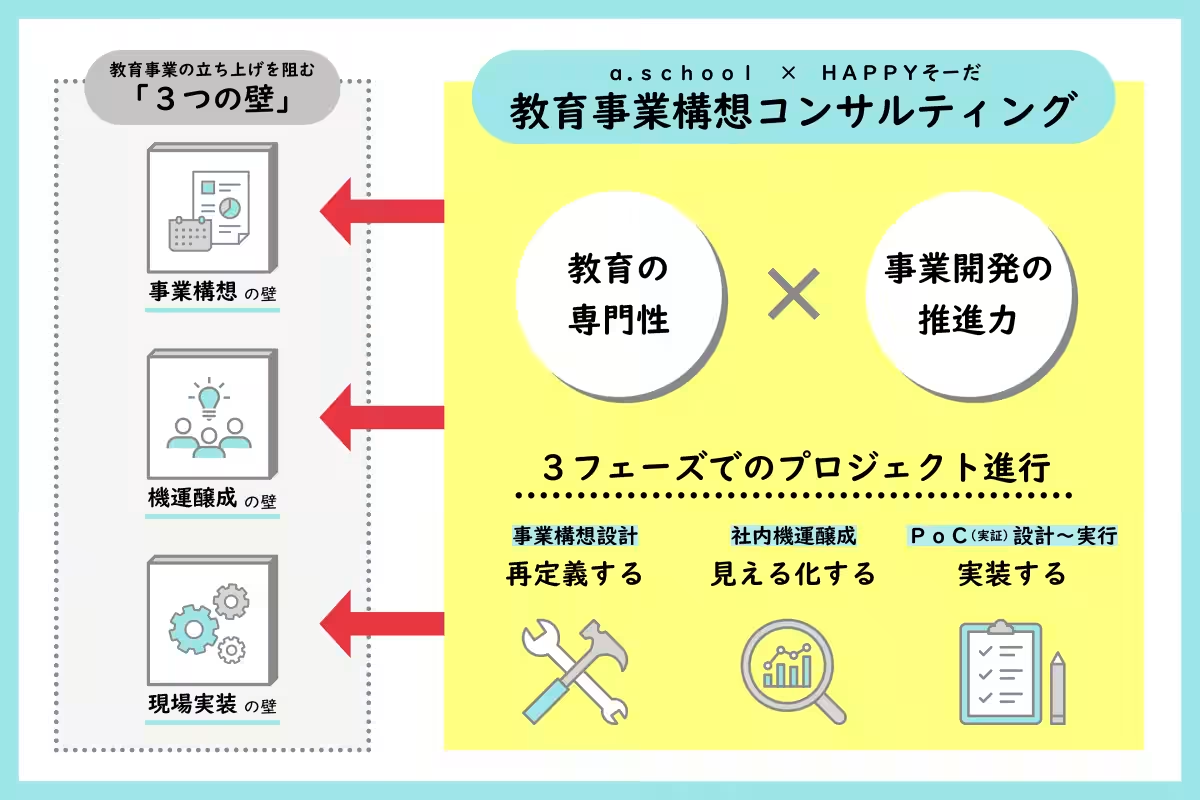
The newly introduced 'Education Business Concept Consulting' service combines the strengths of both organizations. By reinterpreting existing assets—such as technology, knowledge, human resources, and customer bases—through an educational lens, they aim to design educational initiatives that reach beyond traditional boundaries. This comprehensive service does not merely settle on conceptual development; it continues to engage through to the Proof of Concept (PoC) phase, offering consistent support throughout the journey.
The Challenges of Launching Educational Initiatives
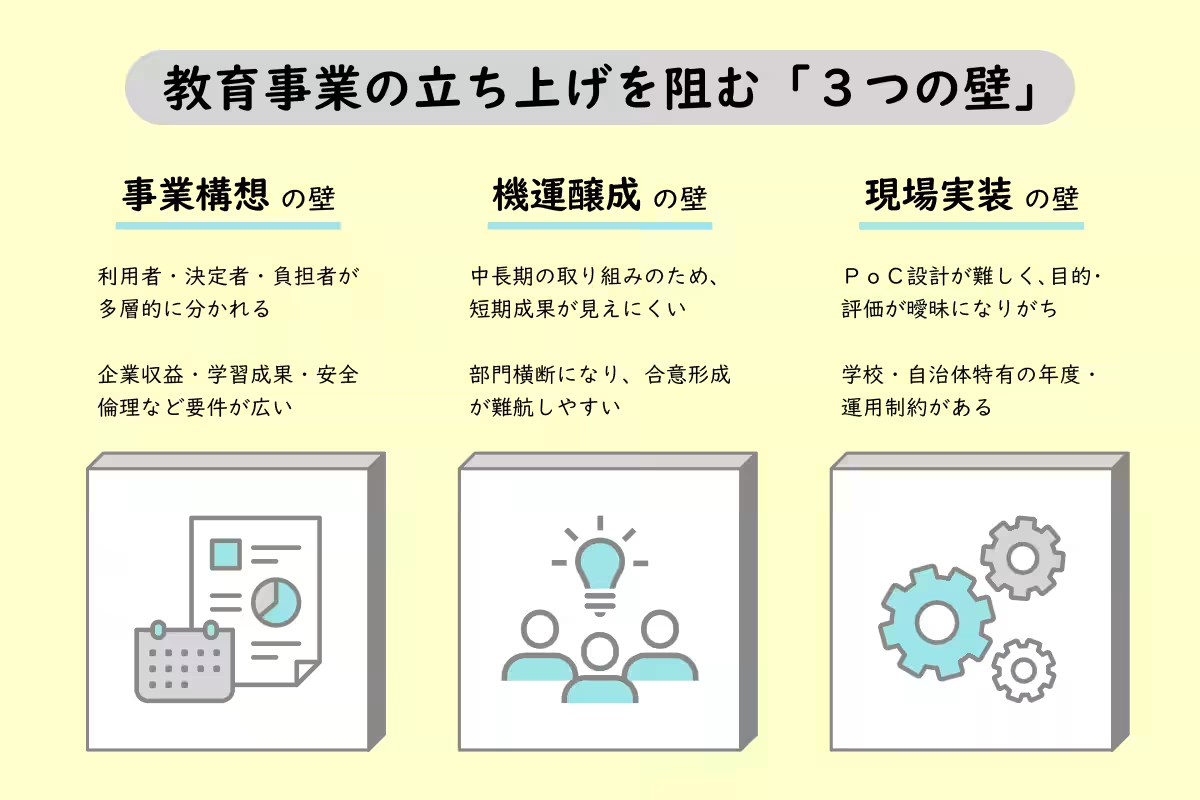
A growing number of companies view the education sector as a promising opportunity for growth, especially in light of trends like reskilling and human capital management. However, despite the rising interest, many encounter obstacles when attempting to establish new educational programs or significantly alter existing ones. Often, they face three main barriers:
1. Conceptualization Barrier
The education sector is characterized by a complex web of stakeholders, including beneficiaries (students, teachers, parents), decision-makers (schools, municipalities), and financial backers. Because of this multifaceted nature, creating a robust educational business model becomes challenging. When companies lack enough expertise to refine their concepts, project leaders often find themselves overwhelmed, leading to delays in prioritizing key issues and achieving an effective decision-making process.
2. Momentum Creation Barrier
The breadth of involvement required for education initiatives means they rarely remain confined to a single department; rather, they necessitate cross-departmental collaboration across various functions like HR, marketing, and compliance. This complexity often results in discussions about the initiative's significance becoming unclear. If stakeholders fail to articulate why they should pursue educational programs now, it hinders buy-in and consensus, delaying implementation.
3. Implementation Barrier
For educational projects to succeed, they must translate conceptual plans into practical, verifiable results. However, uncertainty around how to design effective PoCs can result in merely performative efforts lacking substantive evaluative metrics. Furthermore, educational contexts introduce specific limitations—such as operational rules and ethical regulations—that complicate real-world applications. This is especially true for companies venturing into education from other industries, often lacking necessary expertise and up-to-date knowledge about educational dynamics.
Our Strengths
This collaboration marries educational specialization with robust business development capabilities. Our service’s unique approach integrates educational insights from a.school—which has a wealth of experience in learning experience design—with HAPPY so-da’s profound understanding of business operations and governmental partnerships. We do not stop at merely developing concepts; we also actively facilitate internal decision-making, execute PoCs, and pave the way for subsequent actions.
Profiles of Key Leaders
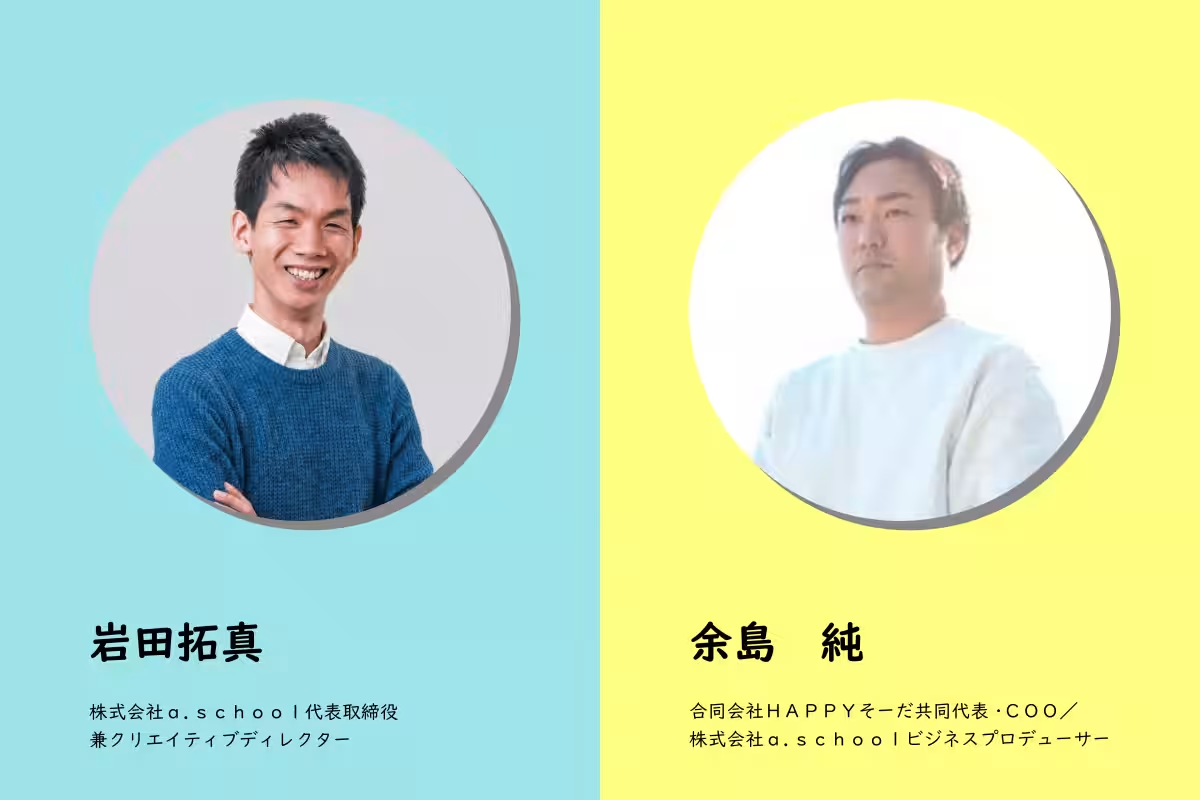
Takuma Iwata, CEO of a.school
Having graduated from Kyoto University and completed a Master's in Engineering at the University of Tokyo, Takuma Iwata has amassed a wealth of experience in business strategy and development at the Boston Consulting Group. In 2013, he founded a.school, focusing on fostering inquiry-based and creative learning methods. Over the past 12 years, he has engaged in more than 50 collaborations with various stakeholders, translating innovative educational concepts into tangible outcomes.
Jun Yoshijima, COO of HAPPY so-da
With a background in regional revitalization efforts and public-private partnerships, Jun Yoshijima has led numerous educational initiatives that bridge private and public sectors. With extensive management experience across diverse fields, he aims to create educational ecosystems that thrive on both social and financial sustainability.
Service Phases
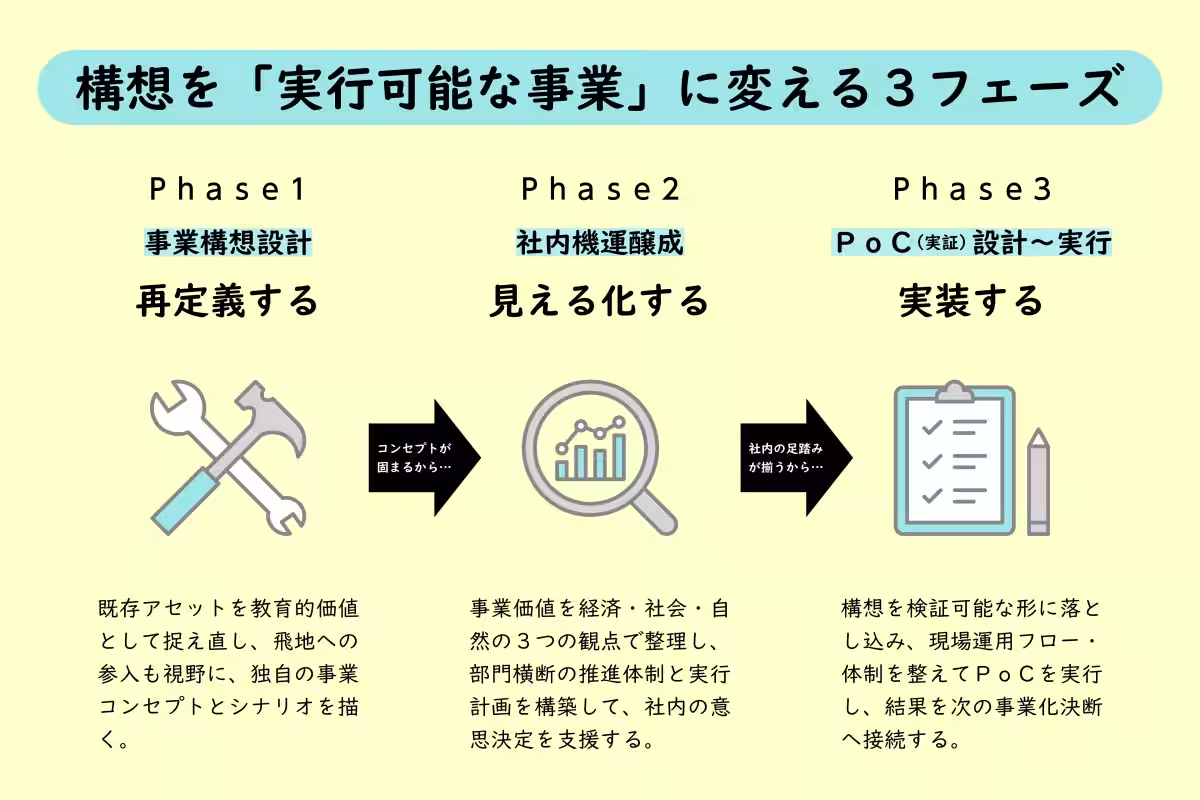
To effectively guide educational initiatives from inception to implementation, our service comprises three distinct phases:
Phase 1: Business Concept Design (2-3 months)
This phase focuses on restructuring existing organizational assets—technological, intellectual, and human resources—through an educational perspective. We identify potential growth areas by redefining existing business domains and exploring adjacent and entirely new markets.
Phase 2: Building Internal Momentum and Support Structures (2-3 months)
Here, we consolidate the project’s value proposition across economic, social, and environmental dimensions, creating clear narratives for stakeholder buy-in. We aim to solidify internal support by developing clear governance and action plans, while also embedding the rationale for educational investments into the broader organizational context.
Phase 3: PoC Planning and Execution (2 months or more)
The last phase sees us translating concepts into a tangible framework for proof of concept to secure actionable insights. We clarify key metrics, verification methods, and establish a cross-departmental team to roll out the PoC effectively.
This structured support ensures ventures advance past common bottlenecks, transforming nascent ideas into viable educational solutions.
Upcoming Event: Exploring Inquiry-Based Learning and Business Integration
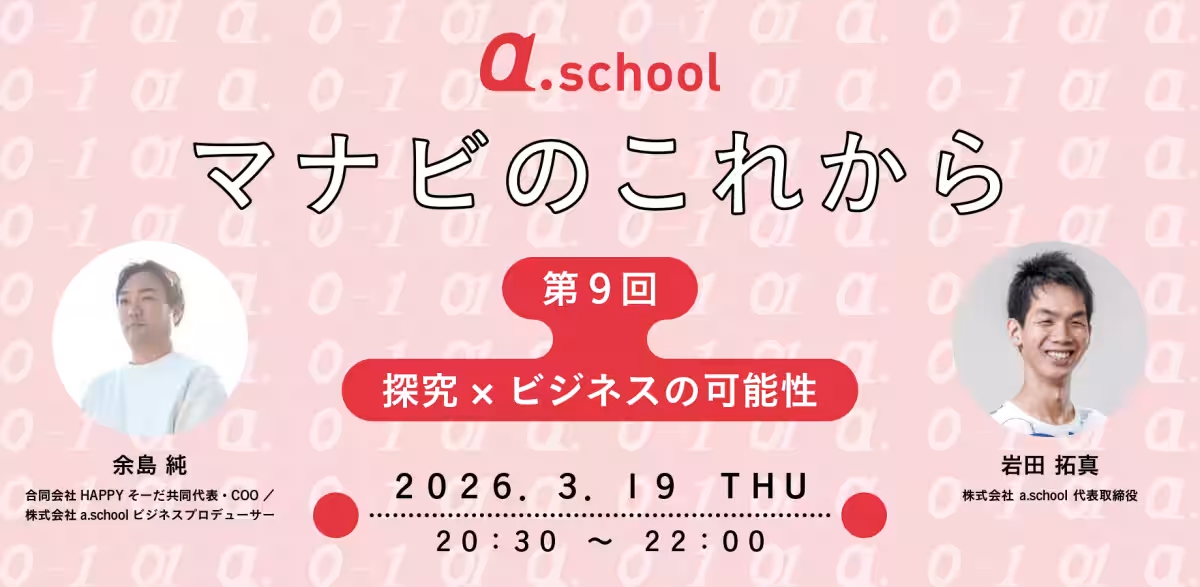
In addition to the new consulting service, both organizations are hosting an event focusing on the intersection of inquiry-based learning and business opportunities. On March 19, participants will hear from key leaders and engage in discussions regarding common challenges and strategies in educational business development.
By leveraging a.school and HAPPY so-da’s combined expertise, organizations now have an opportunity not just to innovate, but to effectively implement educational initiatives that create both societal value and sustainable business growth.
Topics Other)
【About Using Articles】
You can freely use the title and article content by linking to the page where the article is posted.
※ Images cannot be used.
【About Links】
Links are free to use.