



Introducing a Novel Method to Detect Key Genes in Cellular State Transitions
A Breakthrough in Single-Cell Analysis: The scLS Method
Recent advancements in the analysis of cellular behaviors have led to the development of a new technique called "scLS". This innovative method focuses on detecting key genes associated with cellular state transitions. With the growing significance of understanding how cells differentiate and respond to various stimuli, scLS emerges as a pivotal tool in the realm of single-cell research.
Background
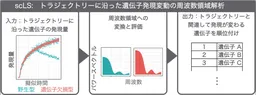
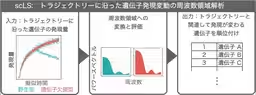
Cells continuously change their states during differentiation and in response to various stimuli. The method of trajectory analysis has gained popularity for estimating these gradual changes in cellular states. However, pinpointing which genes exhibit significant alterations throughout these transitions has remained a challenge. This is where the application of the Lomb-Scargle periodogram, traditionally used in astronomy, comes into play in the scLS method. By adapting this data analysis technique, researchers were able to efficiently track gene expression in relation to the trajectory of cellular state changes.
The Development of scLS
A research team led by Hitoshi Iuchi and Michiaki Hamada from Waseda University has successfully harnessed the Lomb-Scargle periodogram to create the scLS R package. Available on GitHub, this tool integrates seamlessly into existing single-cell analysis workflows. What sets scLS apart is its ability to discern crucial gene candidates along complex cellular trajectories, including those that bifurcate.
The performance of scLS has been validated using datasets from flies and trypanosomes, demonstrating its capability to uncover transient changes in gene expression and to detect known critical genes.
Details of the Methodology
Key Features of scLS
The scLS method comprises two primary analyses: one that identifies genes whose expression varies along a trajectory and another that detects discrepancies in expression patterns under different conditions. Utilizing frequency domain evaluation through the Lomb-Scargle method assists in analyzing non-uniformly spaced data typical of trajectory analyses. This facilitates a more holistic view of gene expression changes, even in branching trajectories, without the necessity to align branches individually.
Robustness and Validation
Through simulations and real data assessments, scLS has shown comparable detection capabilities to existing methods, while also successfully identifying expression changes that other methods previously struggled to capture. The tool's versatility is further highlighted by preliminary analyses published on GitHub, which revealed well-known marker genes pertaining to red blood cell differentiation among human hematopoietic cell data.
Broader Impact and Applications
The implications of scLS extend into various research areas, including cellular differentiation, immune response, disease progression, and drug responses. By streamlining the identification of significant gene candidates in initial analyses, researchers can more readily progress to visualization, marker comparison, and experimental validation.
Given its accessibility on platforms like GitHub and adaptability to current workflows, scLS is poised to be an essential resource not only for bioinformatics researchers but also for life sciences experts investigating differentiation and disease dynamics.
Future Challenges and Directions
While scLS provides a robust screening method for detecting gene-level changes across trajectories, it does have limitations, particularly in identifying specific branches or cell populations where changes occur. Combining scLS with methods that account for branching can enhance analysis depth. Furthermore, adapting the algorithm for larger single-cell datasets remains a notable future challenge, with prospects for utilizing Python dependencies more efficiently and employing R/C++ and GPU accelerations to enhance processing speed.
Research Insights
The rapid evolution of techniques for estimating cellular trajectories has made significant strides in single-cell analysis. However, determining which genes to focus on throughout this process remains a critical challenge for researchers. The team behind scLS hopes that their contribution facilitates a better understanding of complex cellular changes, ultimately aiding numerous studies.
Conclusion
The scLS method represents a significant advancement in single-cell RNA sequencing analysis. With its innovative approach to gene expression assessment, it stands to foster progress in various fields, allowing researchers to uncover critical genetic factors in real-time cellular transitions. As the methodology continues to be refined and applied, it represents a hopeful step forward in biomedical research.
For further information, refer to the publication in "Nucleic Acids Research" (DOI: 10.1093/nar/gkag682).
Topics Health)
【About Using Articles】
You can freely use the title and article content by linking to the page where the article is posted.
※ Images cannot be used.
【About Links】
Links are free to use.