



Revolutionary AI Technique for Automatic Analysis of X-ray Absorption Spectra Enhances Material Discovery
Revolutionizing Material Analysis with AI
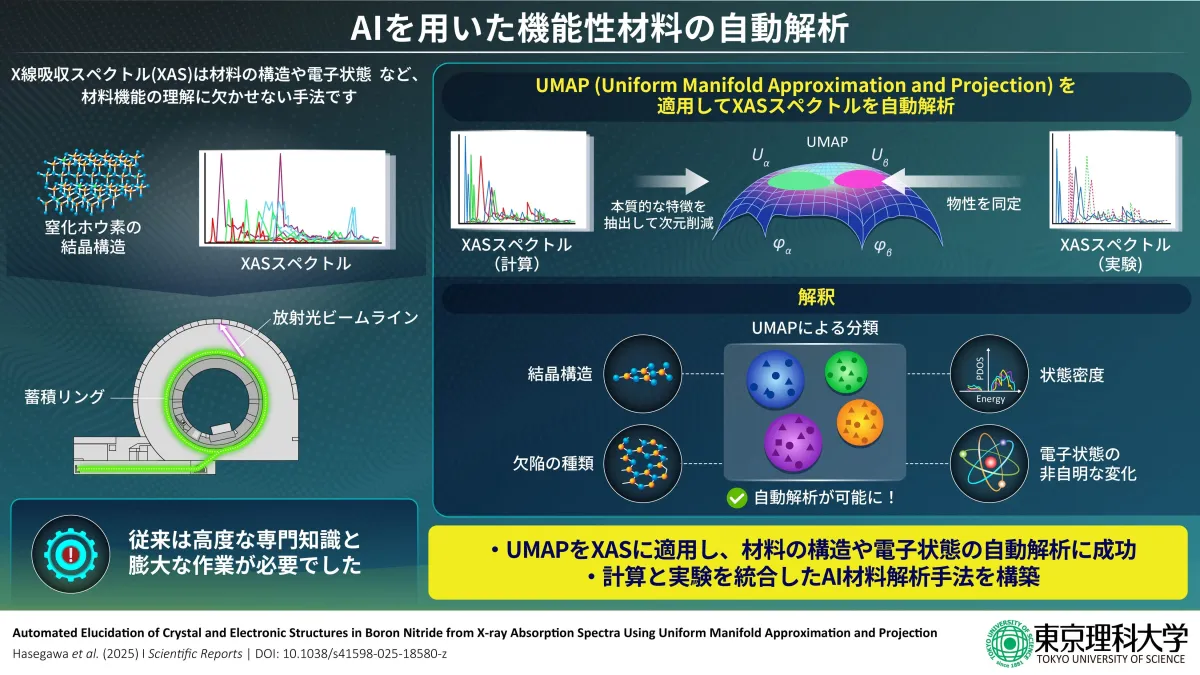
In a groundbreaking study led by a collaborative group of researchers from Tokyo University of Science, the University of Tokyo, and Tsukuba University, the capacity to automatically analyze complex X-ray absorption spectra using unsupervised machine learning techniques has been established. This innovative approach promises to simplify the identification of crystal structures and electronic states, which has long been a painstakingly manual task requiring extensive expertise.
Understanding the Challenge
Traditionally, X-ray absorption spectra, a method crucial for gathering information on material structures and electronic states, can be exceedingly complex due to the influence of various structures and impurities within the material. This complexity has necessitated comprehensive knowledge in crystallography, electronic property theory, and spectroscopy for accurate analysis. As patterns in the data are often obscured, the manual extraction of features from large datasets can be labor-intensive and prone to human error.
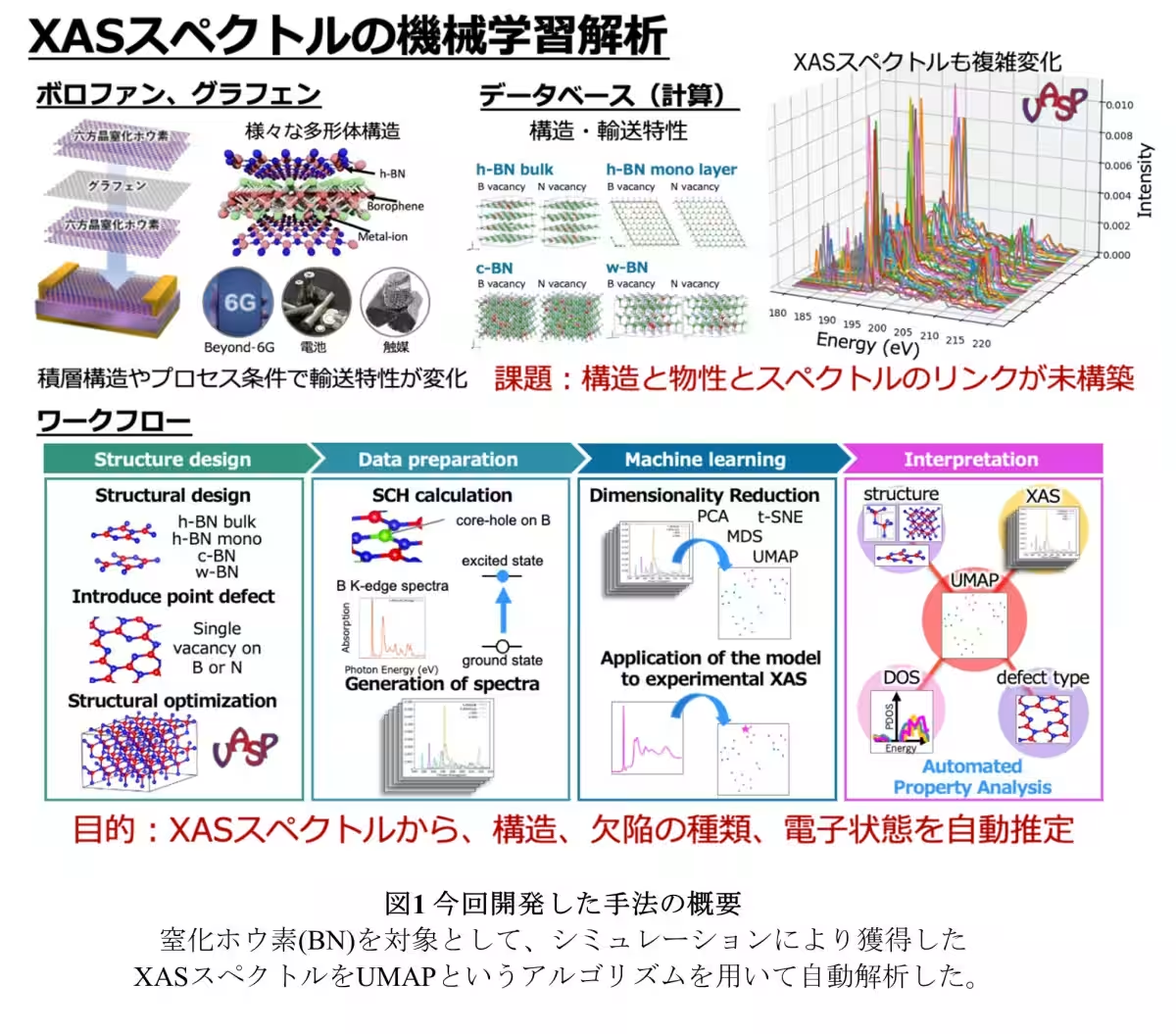
In response to these challenges, the team set out to develop a model using the Uniform Manifold Approximation and Projection (UMAP) method, a cutting-edge machine learning technique particularly suited for high-dimensional data. The goal was to leverage this model to classify X-ray absorption spectra automatically, thus streamlining the analysis process significantly.
Implementing Machine Learning
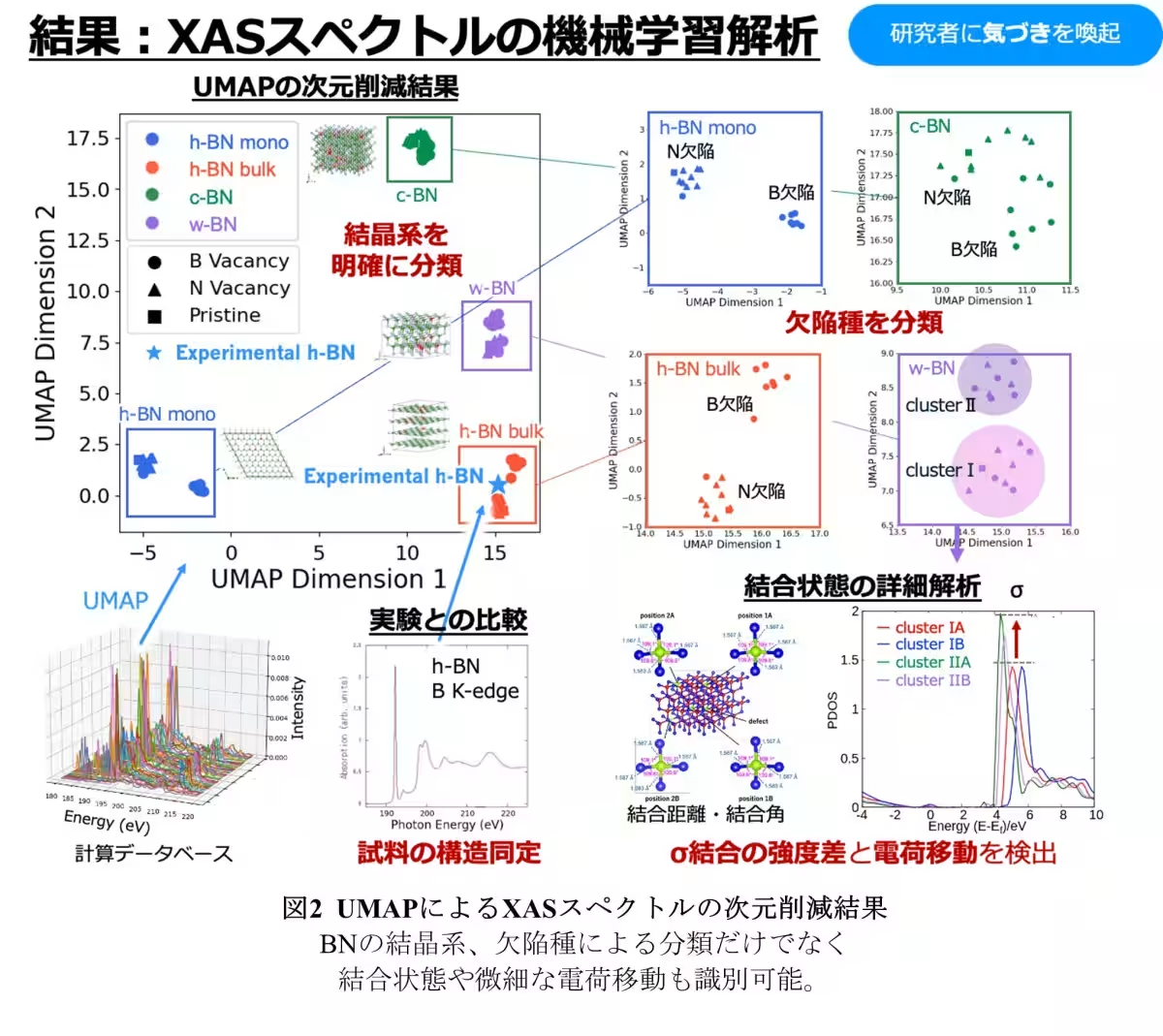
The researchers generated X-ray absorption spectra of various boron nitride (BN) structures, including layered (h-BN), cubic (c-BN), and wurtzite (w-BN) configurations, via first-principle calculations. By applying UMAP to the spectra, they successfully categorized the complex data according to crystal structure and types of defects present. Notably, UMAP outperformed traditional methods such as Principal Component Analysis (PCA) and Multidimensional Scaling (MDS), particularly in retaining the core features of intricate spectral data due to its ability to handle non-linear relationships.
Key Findings and Implications
One of the most remarkable revelations from this research was the successful identification and characterization of subtle changes in electronic states, such as charge transfer distinctions associated with σ-bonding. This automatic parsing of electronic states afforded insights previously unattainable through manual methods. Furthermore, this model was validated with experimental data, confirming its applicability beyond simulated datasets.
Professor Masato Kotsugi from Tokyo University of Science expressed optimism about the impact of this research, stating that automating the analysis of such complex spectral changes through AI could significantly aid materials scientists and accelerate the development of technologies such as batteries, catalysts, and semiconductor devices.
Path Forward
Not only does this research highlight the potential for AI to uncover new pathways in materials science, but it also sets a precedent for integrating data-driven methodologies into material design. The automated analysis capability paves the way for broad applications across various fields in material research, potentially expediting the discovery of innovative materials.
Supported by Japan's Strategic Creation Research Promotion Project (CREST) and utilizing high-performance computing resources, the findings of this study are documented in the International Journal of Scientific Reports, marking a significant milestone in material science research.
Conclusion
The integration of AI with material analysis is poised to transform how researchers approach material development, offering unprecedented levels of accuracy and efficiency. With ongoing advancements in machine learning, we can anticipate that the future of material science will be defined by greater innovation, rapid development timelines, and an expanded understanding of material properties. As we move forward, the ramifications of these findings could redefine the landscape of how materials are discovered, analyzed, and ultimately utilized in technology.
Topics Consumer Products & Retail)
【About Using Articles】
You can freely use the title and article content by linking to the page where the article is posted.
※ Images cannot be used.
【About Links】
Links are free to use.