



Unlocking the Genetic Blueprint of Hokkaido's Sika Deer: A Major Scientific Breakthrough
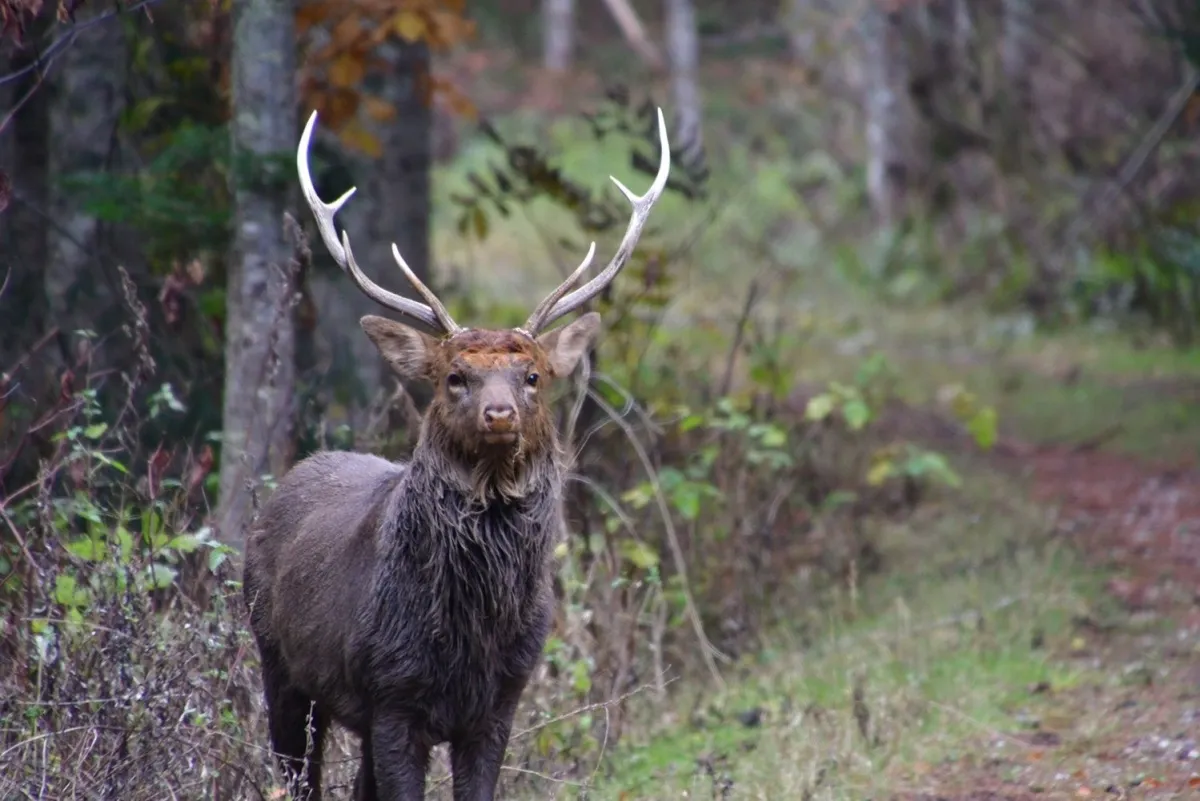
In a groundbreaking study, researchers from the Forestry and Forest Products Research Institute, Anicom Advanced Medical Research Institute, and Azabu University successfully reconstructed the genomic sequence of the sika deer subspecies native to Hokkaido, Japan, known scientifically as Cervus nippon yesoensis. Using long-read sequencing technology, they have established a new reference genome, designated as ‘CerNipYes1.0’. This effort marks a significant advancement in understanding both the evolutionary biology and ecological management of the species.
Prior research on the sika deer genome has relied heavily on data from domesticated individuals of unspecified subspecies from China, leaving a notable gap in knowledge regarding Japan's wild populations. The work conducted by this collaborative research group addresses this gap by providing a high-quality genomic assembly specific to the wild Hokkaido sika deer. With an estimated genome size of around 3.1 gigabases, the new assembly includes a total of 1,810 scaffolds and achieved an impressive N50 value of 77 megabases, indicating good continuity. Furthermore, the completeness of the genes is rated at 99.75%, with 12,562 genes reconstructed successfully, surpassing previous standard genomic sequences. The repetitive sequences in the genome are estimated to be approximately 21.6%, comparable to existing genome data and indicating high complexity.
The implications of this genomic data are vast. Not only does it enhance our understanding of the genetic diversity within the Cervidae family, but it also serves as a basis for future studies in evolutionary dynamics and species management. The complete genomic data of the Hokkaido sika deer is available through two significant international databases: the DNA Data Bank of Japan (DDBJ) and the National Center for Biotechnology Information (NCBI) in the United States.
The Cervidae family is recognized as a significant group of terrestrial even-toed ungulates, with the Japanese sika deer being naturally distributed across East Asia and comprising 14 recognized subspecies. The Hokkaido subspecies has been the subject of various ecological and management studies, and genetic assessments have hinted at the possibility of population expansion following a historical bottleneck.
The research team extracted muscle samples from male sika deer captured in Hokkaido's hunting management areas, facilitating the extraction of genomic DNA. The PacBio Sequel II sequencing technology was then employed to obtain high-fidelity long-read sequences, which formed the basis for the reconstruction of the genomic information. The statistical data indicative of genomic quality was assessed using multiple analysis software, leading to a total base pair count of roughly 58.8 billion, an average read length of about 14.9 kilobases, and an estimated coverage of around 18.7×.
Having established a reference-grade genome for the Hokkaido sika deer, future research directions are promising. This genomic dataset is expected to contribute significantly to understanding the variability in genome size and traits among deer species, thus serving as a foundational element for evolutionary studies. Moreover, as the quality of lineage estimation improves over time, the dataset could facilitate deeper insights into the ecological behaviors of sika deer, including their migratory routes and relationships among regional populations.
This research was published online on December 27, 2025, in Data in Brief, underlining the importance and timeliness of their findings in the field of genetic research. Continued studies based on this foundational genomic information will likely yield crucial insights into the management and conservation of the Hokkaido sika deer.
Prior research on the sika deer genome has relied heavily on data from domesticated individuals of unspecified subspecies from China, leaving a notable gap in knowledge regarding Japan's wild populations. The work conducted by this collaborative research group addresses this gap by providing a high-quality genomic assembly specific to the wild Hokkaido sika deer. With an estimated genome size of around 3.1 gigabases, the new assembly includes a total of 1,810 scaffolds and achieved an impressive N50 value of 77 megabases, indicating good continuity. Furthermore, the completeness of the genes is rated at 99.75%, with 12,562 genes reconstructed successfully, surpassing previous standard genomic sequences. The repetitive sequences in the genome are estimated to be approximately 21.6%, comparable to existing genome data and indicating high complexity.
The implications of this genomic data are vast. Not only does it enhance our understanding of the genetic diversity within the Cervidae family, but it also serves as a basis for future studies in evolutionary dynamics and species management. The complete genomic data of the Hokkaido sika deer is available through two significant international databases: the DNA Data Bank of Japan (DDBJ) and the National Center for Biotechnology Information (NCBI) in the United States.
The Cervidae family is recognized as a significant group of terrestrial even-toed ungulates, with the Japanese sika deer being naturally distributed across East Asia and comprising 14 recognized subspecies. The Hokkaido subspecies has been the subject of various ecological and management studies, and genetic assessments have hinted at the possibility of population expansion following a historical bottleneck.
The research team extracted muscle samples from male sika deer captured in Hokkaido's hunting management areas, facilitating the extraction of genomic DNA. The PacBio Sequel II sequencing technology was then employed to obtain high-fidelity long-read sequences, which formed the basis for the reconstruction of the genomic information. The statistical data indicative of genomic quality was assessed using multiple analysis software, leading to a total base pair count of roughly 58.8 billion, an average read length of about 14.9 kilobases, and an estimated coverage of around 18.7×.
Having established a reference-grade genome for the Hokkaido sika deer, future research directions are promising. This genomic dataset is expected to contribute significantly to understanding the variability in genome size and traits among deer species, thus serving as a foundational element for evolutionary studies. Moreover, as the quality of lineage estimation improves over time, the dataset could facilitate deeper insights into the ecological behaviors of sika deer, including their migratory routes and relationships among regional populations.
This research was published online on December 27, 2025, in Data in Brief, underlining the importance and timeliness of their findings in the field of genetic research. Continued studies based on this foundational genomic information will likely yield crucial insights into the management and conservation of the Hokkaido sika deer.
Topics Health)






【About Using Articles】
You can freely use the title and article content by linking to the page where the article is posted.
※ Images cannot be used.
【About Links】
Links are free to use.