



Innovative Diamond Dosimeter Achieves Unprecedented Sensitivity for Radiation Detection
Introduction
Recent advancements in radiation detection have been propelled by a collaborative study involving professors from Tokyo Metropolitan University and Tohoku University, as well as researchers from Orbray Inc. This initiative has yielded two significant breakthroughs using heteroepitaxial diamond (HED) for dosimetry applications: one focuses on developing a solid ionization chamber, and the other on evaluating optically stimulated luminescence (OSL) characteristics driven by different nitrogen concentrations.
Solid Ionization Chamber Development
Overview
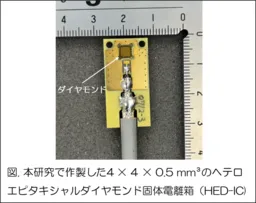
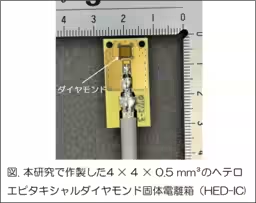
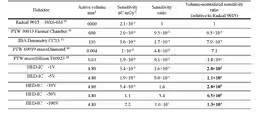
The team successfully designed a compact solid ionization chamber (HED-IC), measuring just 4 × 4 × 0.5 mm³. Unlike conventional air-filled ionization chambers, which require considerable volume for adequate sensitivity, this innovative device showcases exceptional performance metrics. Evaluations conducted in the diagnostic X-ray range (50–120 kV) under low-voltage conditions (-1 to -100 V) revealed a striking linearity (R² > 0.997) and maintained a stable response with energy dependence within 10%. This solid ionization chamber remarkably achieved a sensitivity around 13,000 times greater per unit volume when compared to traditional ionization chambers, making it a landmark development in radiation dosimetry.
Performance Benefits
The reduced size of the HED-IC contributes to its immense sensitivity, primarily due to diamond's high density and exceptional charge production efficiency. Not only does this smaller footprint facilitate ease of integration into medical equipment, but it also enhances local dose measurements and spatial resolution — critical factors in ensuring patient safety during medical imaging procedures.
Optically Stimulated Luminescence (OSL) Characteristics
Research Findings
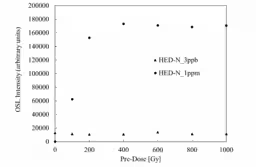
Alongside improving ionization chambers, the collaborative effort extended to assessing the OSL properties of heteroepitaxial diamonds with varied nitrogen concentrations (3 ppb and 1 ppm). The findings illustrated that diamonds with 1 ppm nitrogen concentration exhibited a notable increase in OSL intensity by approximately tenfold compared to their lower nitrogen counterparts. These variations shed light on the influential role of nitrogen-related defects as traps and recombination centers in the luminescence process.
Reversible Sensitivity Phenomenon
Interesting implications emerged from pre-irradiation treatments, demonstrating a reversible sensitization effect. This indicated that clean-room procedures and impurity levels could significantly influence luminescence characteristics, delivering profound insights into the interaction between nitrogen concentration and radiation response in diamond materials.
Significance and Future Applications
The thrust of this research lies in establishing a robust foundation for high-sensitivity radiation detection using diamonds, characterized by their biocompatible properties similar to human tissue. This feasibility enhances practical applications in fields like radiology, CT imaging, interventional radiology (IVR), and radiation therapy. Furthermore, as this technology advances, it opens the door for innovative designs in devices that could visualize dose distributions and amalgamate various detection mechanisms for comprehensive assessments.
Challenges and Next Steps
While this technology brings forth promising implications, it also poses challenges. For instance, the need for meticulous impurities control in diamond materials to optimize performance remains critical. Future research will delve into refining these properties to expand the material’s applications beyond ionization detection, particularly in establishing frameworks for advanced accumulative dose evaluation.
Conclusion
In conclusion, this collaboration marks a significant leap in multi-functional radiation detection materials. By harnessing the unique properties of heteroepitaxial diamond, researchers effectively converged ongoing advancements in both real-time detection and OSL technologies. The findings not only embody academic significance but also hold immense potentials for enhancing radiation safety and efficacy in medical procedures, paving the way for a new era in medical imaging and therapy enhancements.
Topics Health)
【About Using Articles】
You can freely use the title and article content by linking to the page where the article is posted.
※ Images cannot be used.
【About Links】
Links are free to use.