



The Importance of Engineers in Creating New Business Ventures
Event Report: The Role of Engineers in Business Innovation
AlSaga Partners, a Tokyo-based company dedicated to promoting digital transformation (DX), recently participated in a thought-provoking seminar organized by TISI Co., Ltd. The event, titled "Why Engineers Should Create New Business Ventures: Crafting the Future with Technology and Business," featured the company's CEO, Taika Omata, and NEC Solution Innovators’ CTO, Koji Shioya, in a dynamic panel discussion moderated by Katsuma Sumi from Filament Co., Ltd.
Speaker Introduction
Taika Omata - CEO and CTO of AlSaga Partners
With a background working at major IT vendors like Hewlett-Packard Japan and NTT Communications, Omata has amassed valuable experience in system operations and network construction. He joined Cruise Co., Ltd. in 2009 and quickly rose to the position of director. Subsequently, he founded AlSaga Partners in 2016, emphasizing that while monetary gain is important, one should never compromise their values.
Koji Shioya - Executive Fellow, CTO, and CIPO of NEC Solution Innovators
Shioya has extensive experience in architecting various cloud infrastructure solutions, focusing on innovation and technological strategy. He leads efforts in creating new businesses and technologies while spearheading research and development at the Innovation Laboratory.
Panel Themes
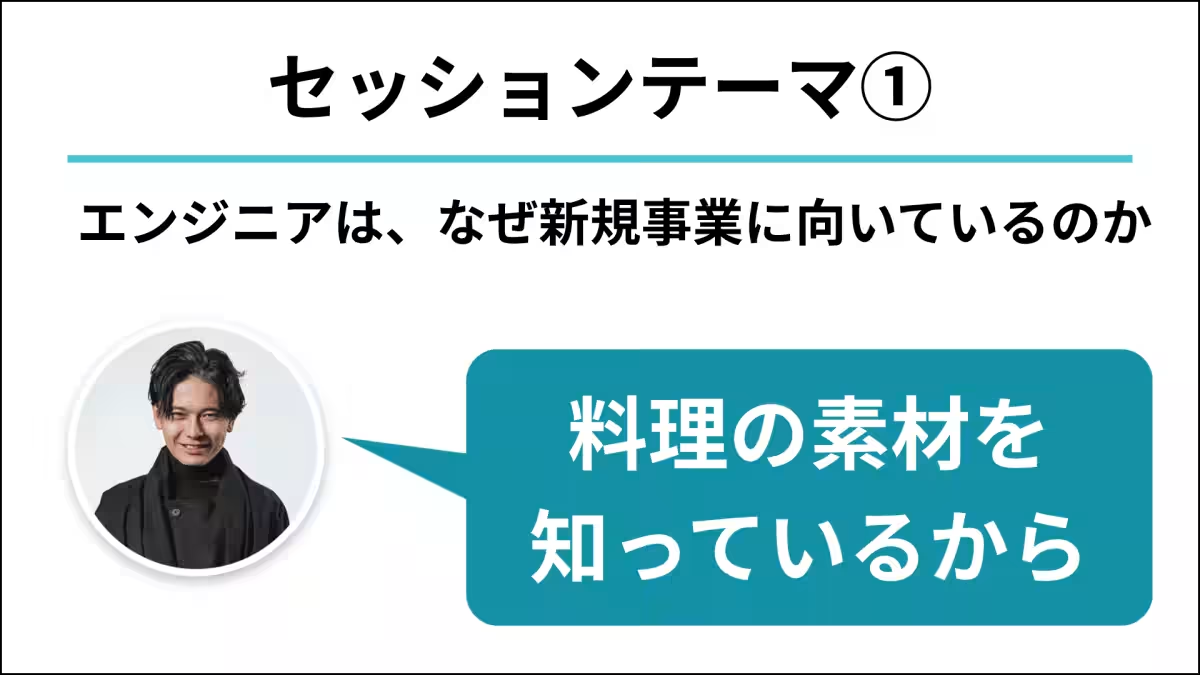
Why are Engineers Well-Suited for New Business?
Omata articulated the reasons engineers have a unique advantage in launching new business ventures by likening it to how a skilled chef understands their ingredients. In modern software development, the ability to leverage existing frameworks and open-source solutions is crucial, akin to how a chef uses their knowledge of ingredients to craft a novel dish. This knowledge of contemporary languages and frameworks empowers engineers to deliver exceptional products.
He further emphasized that even minor technical instability, such as loading delays, can drive users away. The critical differentiator in a competitive market lies in an engineer's ability to choose the right technologies and their combinations, which ultimately shapes the finest services.
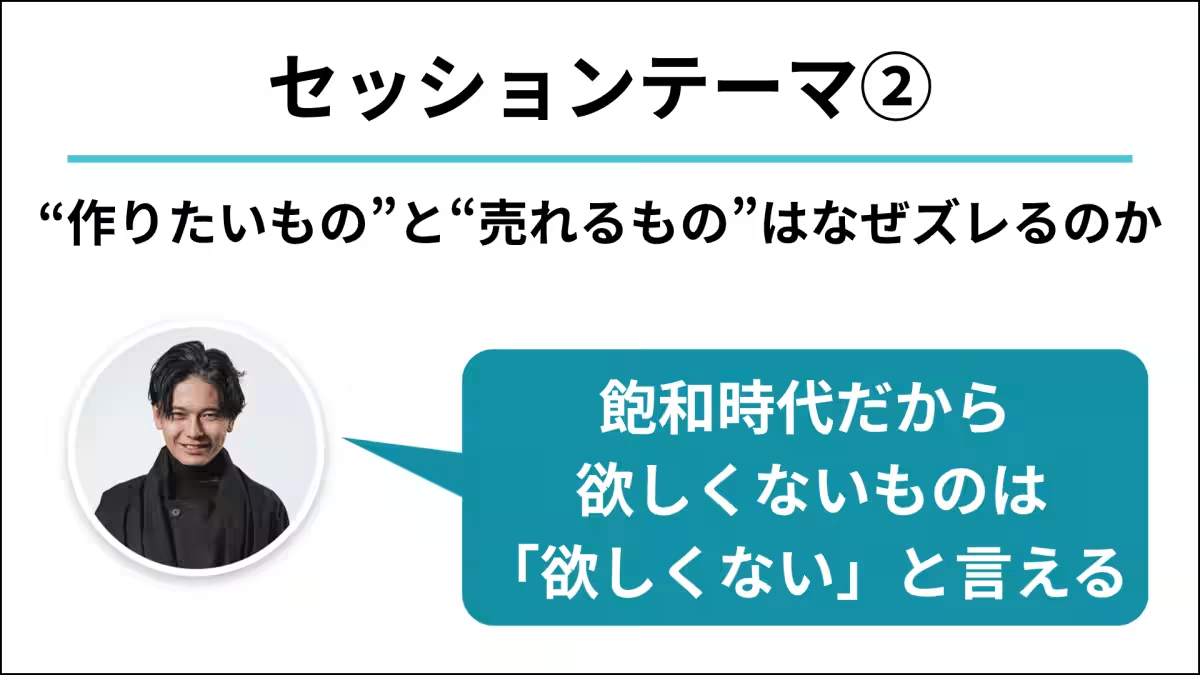
The Disconnect Between “What We Want to Build” and “What Sells”
In addressing why there is often a misalignment between desired products and market needs, Omata pointed out the saturation of numerous services in today's market. Customers are quick to switch to alternatives at the slightest inconvenience, indicating that a profound understanding of market demands is paramount. Rather than starting with personal desires, engineers must adopt a market-driven approach (market-in) to create desirable products.
He cautioned against designing services that overly depend on user customization, as excessive options can burden users and lead to dissatisfaction—akin to asking someone what gift they want and losing the magic of thoughtful selection.
Failures and Lessons Learned in New Business Ventures
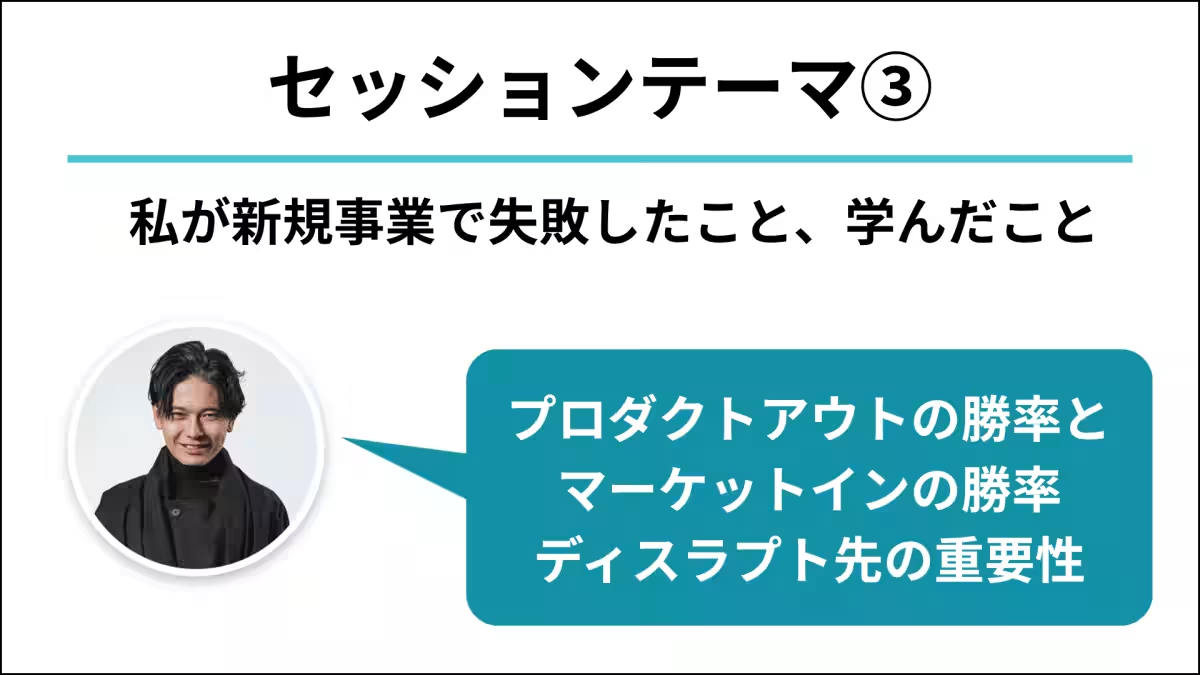
Drawing from his vast experiences of developing multiple services, Omata shared insights on the difference between product-out and market-in approaches. Today’s market demands a shift to a user-centric perspective, yet he highlighted the inherent challenges in accurately gathering user feedback.
He metaphorically described the challenge of creating a new market from scratch, likening it to constructing a river where none exists. Instead, he advised focusing on areas where existing demand flows, leveraging technology to disrupt and transform those markets.
The Future Role of Engineers in the Age of AI
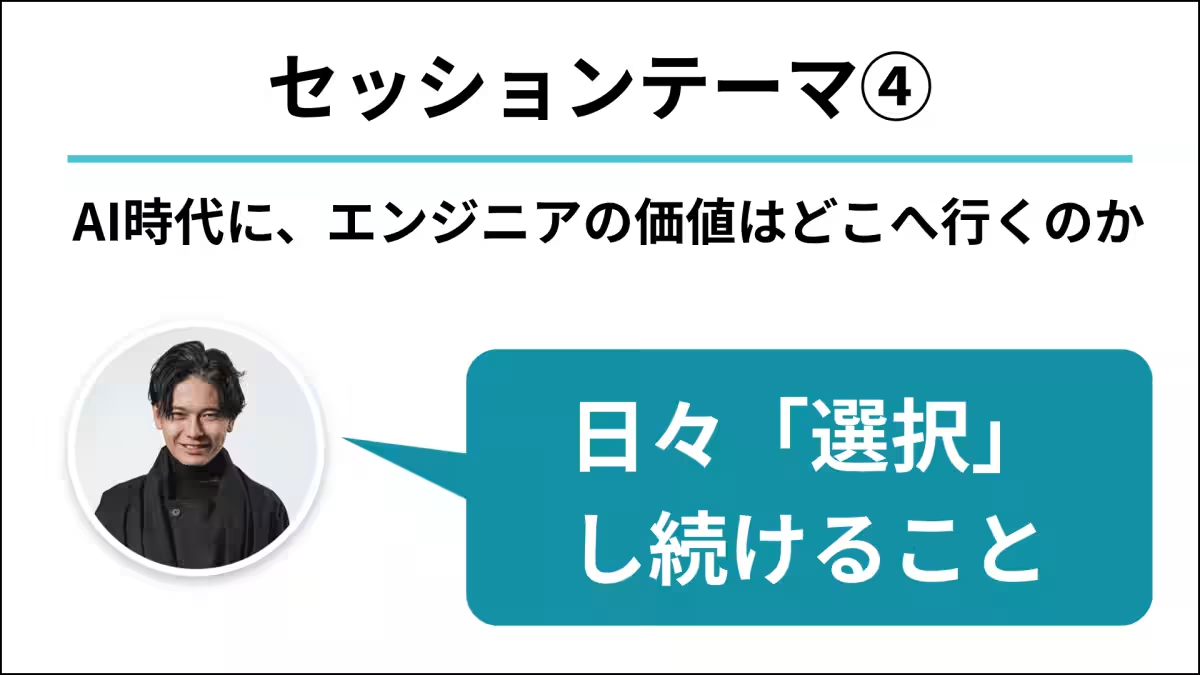
As code generation tools powered by AI continue to evolve, Omata asserted that the true value of an engineer lies in their capacity to make informed choices. Even for tasks as simple as implementing a login system, numerous options exist that can either bolster or detract from business value. The ability to judiciously decide which technology delivers the greatest impact is irreplaceable, underscoring the necessity of engineers in this tech-driven era.
Q&A Session
During the Q&A segment, attendees posed various questions about the principles that should guide product development and the growth opportunities offered by new business ventures. Omata emphasized the importance of heartfelt engagement in product development and warned against giving MVPs a poor initial impression, which could prove detrimental in rebuilding user trust later.
He encouraged engineers to boldly pursue their passions, asserting that even if a business venture doesn't succeed, the experience gained is invaluable. "You may lose in business but win in your engineer life," he concluded, motivating participants to embrace challenges.
Conclusion
In closing, Omata urged everyone to believe in their potential and not fear stepping outside their comfort zones. At AlSaga Partners, fostering an environment that encourages such challenges is essential, advocating for a culture where every individual can contribute creatively and collectively to generate new value.
AlSaga Partners, located in Shibuya, Tokyo, is a comprehensive DX firm that provides end-to-end solutions for digital transformation across various industries. Committed to nurturing IT talent domestically, AlSaga plays a vital role in advancing the capabilities of Japan's workforce.


Topics Business Technology)

【About Using Articles】
You can freely use the title and article content by linking to the page where the article is posted.
※ Images cannot be used.
【About Links】
Links are free to use.