



The Surge of Frozen Vegetable Recipes Amidst Rising Food Prices and Waste Reduction Initiatives
The Surge of Frozen Vegetable Recipes
As the challenge of food waste rises in Japan, a new trend is emerging that focuses on utilizing frozen vegetables effectively. Cookpad Inc., the leading recipe service provider, recently explored search trends linking to frozen vegetable recipes, finding an impressive increase in searches. This surge reflects a shift in how consumers are viewing frozen produce — not just as an alternative to fresh, but as a staple in home cooking.
Rising Searches and Use of Frozen Vegetables
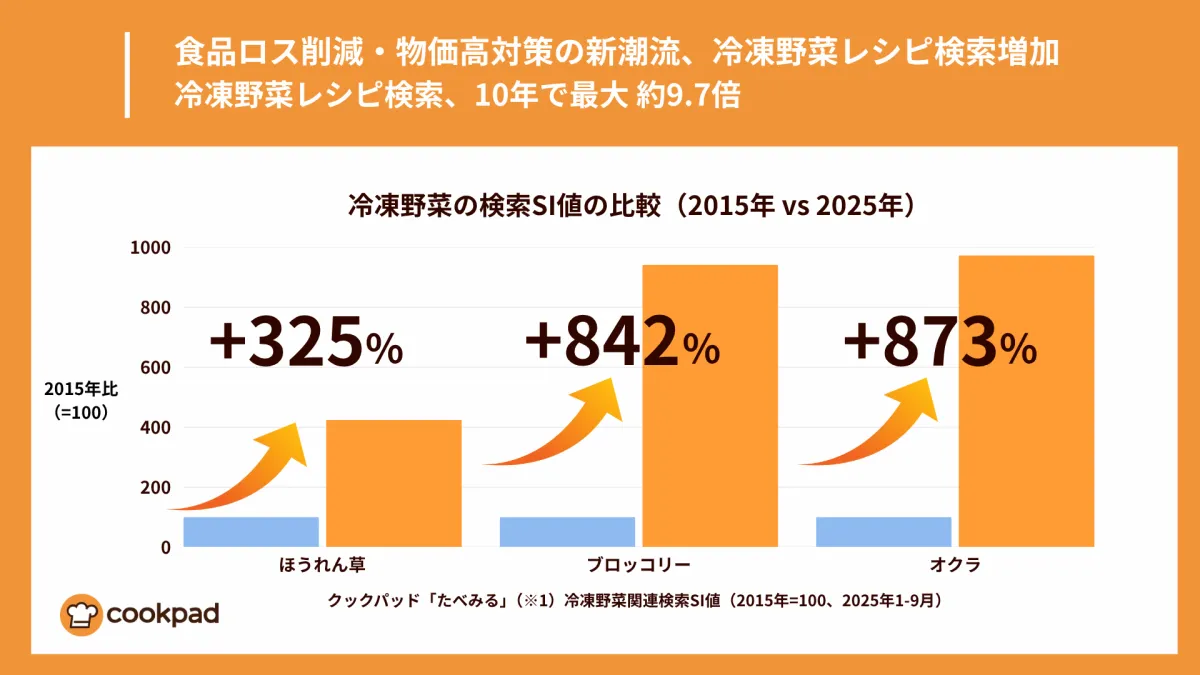
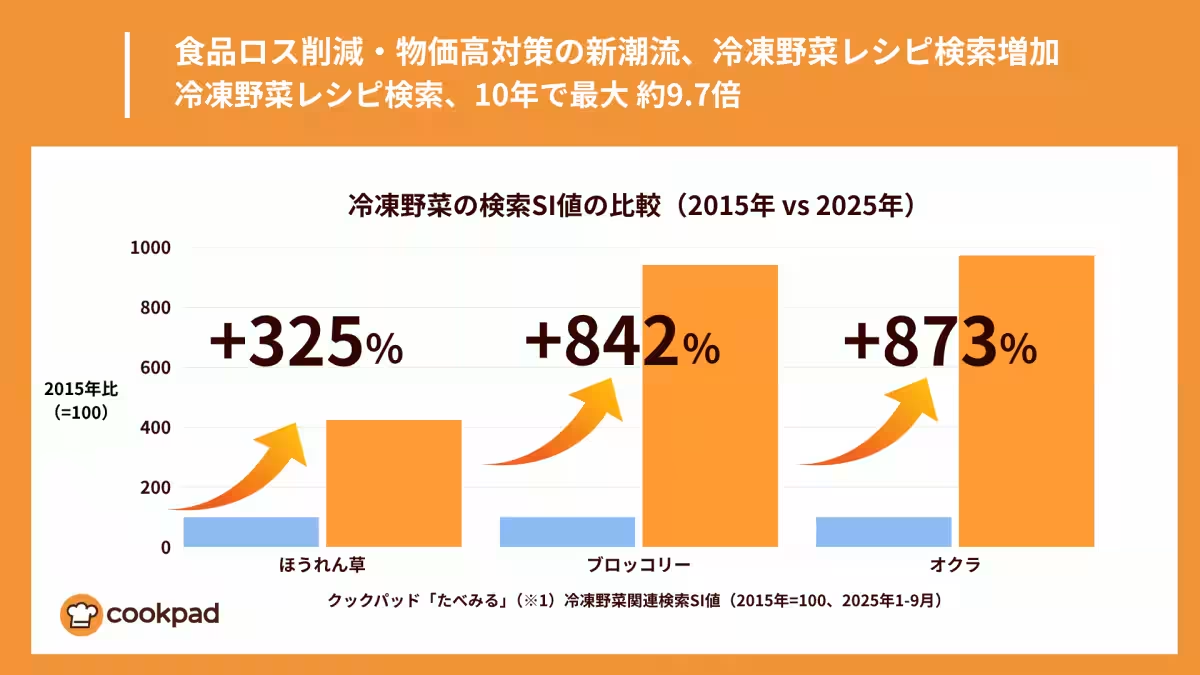
In line with the Food Waste Reduction Month in October, the company discovered that searches for frozen vegetable recipes have skyrocketed by up to 9.7 times compared to 2015. Notably, ingredients like broccoli, spinach, and okra have shown particularly strong growth, with an average jump of 36.7% expected in 2025 compared to the previous year. This dramatic increase indicates a pivotal shift in consumer behavior towards incorporating frozen vegetables into regular cooking repertoire.
Addressing Food Waste and Rising Costs
Japan is facing a sobering reality with approximately 5.23 million tons of food waste generated annually. Among this waste, the challenge of utilizing leftover vegetables in households is significant. Compounding this issue, vegetable prices are experiencing significant inflation, driven by unpredictable weather and increased logistics costs. Reports show that in 2024, prices for fresh produce, such as onions and broccoli, remain high. Given these circumstances, frozen vegetables are gaining traction for their reliability in price and flexibility in usage, serving as a viable solution in tackling food waste and countering rising costs.
A Closer Look at Search Trends
Analyzing data from Cookpad's food search service, Tabemiru, it is evident that from January to September 2025, searches for key frozen vegetable recipes have increased significantly. Over the past decade, the usage of frozen broccoli has multiplied almost ninefold, while frozen spinach has quadrupled. In terms of import metrics, the Ministry of Finance predicts that in 2024, Japan will import over 1.216 million tons of frozen vegetables, marking the highest volume to date, illustrating a substantial growing demand.
Advancements in Domestic Frozen Vegetable Initiatives
The expansion of frozen vegetable usage is not only seen in consumer behavior but also led by domestic producers. In 2025, the second National Frozen Vegetable Awards highlighted the best frozen products available, thus amplifying the appeal of homegrown frozen vegetables. Noteworthy mentions include ‘Inka no Mezame’ and ‘Shine Muscat,’ which have earned the coveted gold medal, further promoting japanese frozen vegetables' charm and quality.
Versatile Culinary Applications
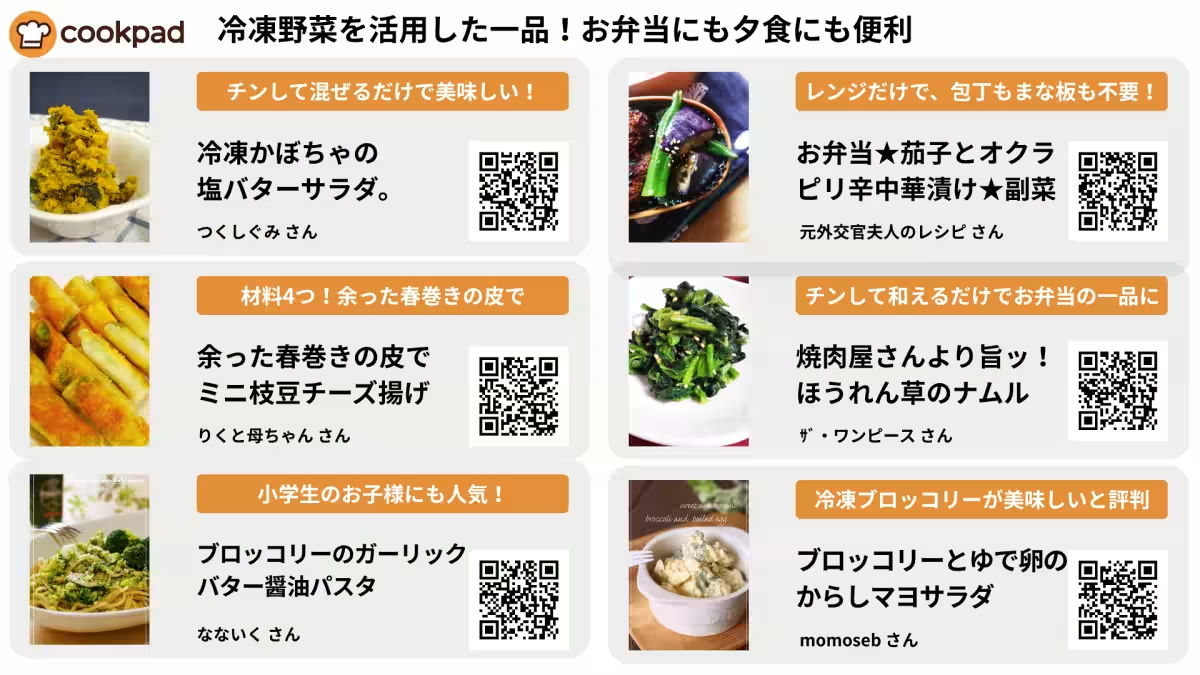
The scope of frozen vegetables extends beyond salads and soups. They are increasingly being embraced in main dishes and frying applications. From tempura made with frozen green beans to mixed fried treats using frozen edamame, the necessity of pre-preparation is eliminated, enabling quicker and more convenient cooking methods. As families integrate these into their daily diets, frozen vegetables have become synonymous with ease in meal preparation, even extending to lunchboxes.
Towards Sustainable Dining Practices
Frozen vegetables have successfully transitioned from being viewed as a compromise choice to a proactive selection. With continuous advancements in freezing technology, the quality of frozen vegetables, including texture retention upon defrosting, has significantly improved. The future of meal preparation looks to endorse frozen vegetables not only for their economical advantages and waste reduction potential but also for their nutritional benefits and ease of inclusion in diverse recipes.
Cookpad remains committed to providing innovative solutions aimed at enriching cooking experiences. Their database boasts around 10,000 frozen vegetable recipes across various cuisines, catering to a myriad of cooking needs, from side dishes to soups, all while ensuring that ingredients are not wasted but utilized to their maximum potential.
Conclusion
Cookpad aims to champion sustainable practices in the kitchen by continuing to provide valuable insights and fostering a community around creative cooking with frozen vegetables. This evolution in consumer behavior towards these products marks a noteworthy shift in attitude — one that not only addresses immediate concerns about food prices and waste but also promotes a healthier, more sustainable future for home cooking.
Topics Consumer Products & Retail)
【About Using Articles】
You can freely use the title and article content by linking to the page where the article is posted.
※ Images cannot be used.
【About Links】
Links are free to use.