



Analysis Reveals Nearly Half of Businesses Use Paper or Excel for Year-End Adjustments
Year-End Adjustment Practices Under Scrutiny
A recent survey conducted by Smartcamp Inc., the firm behind BOXIL—a platform for comparing SaaS products—has brought to light critical insights regarding year-end adjustment practices among Japanese companies. The investigation targeted 2,439 personnel involved in such tasks, with a subsequent detailed analysis conducted on 631 respondents who primarily utilize paper or Excel spreadsheets for these adjustments.
Key Findings on Year-End Adjustments
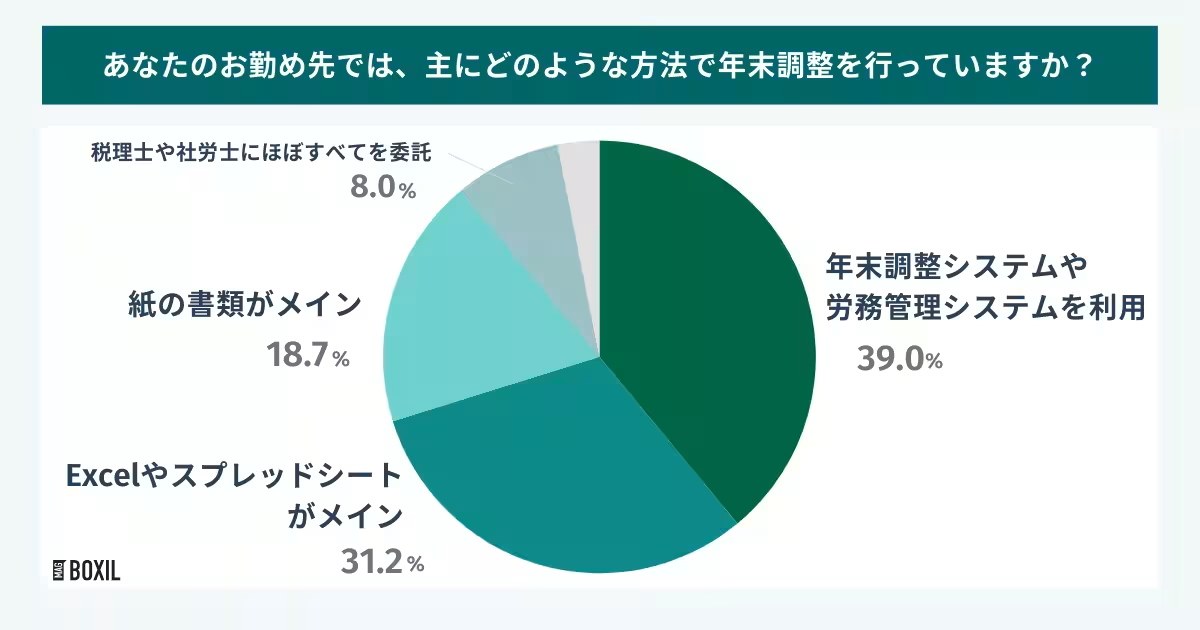
Nearly 49.9% of the surveyed companies rely on either Excel/spreadsheets or paper to complete year-end adjustments. The reliance on these traditional methods raises concerns about efficiency and reliability in handling such crucial operations.
Manual Management Leads to Significant Time Expenditure
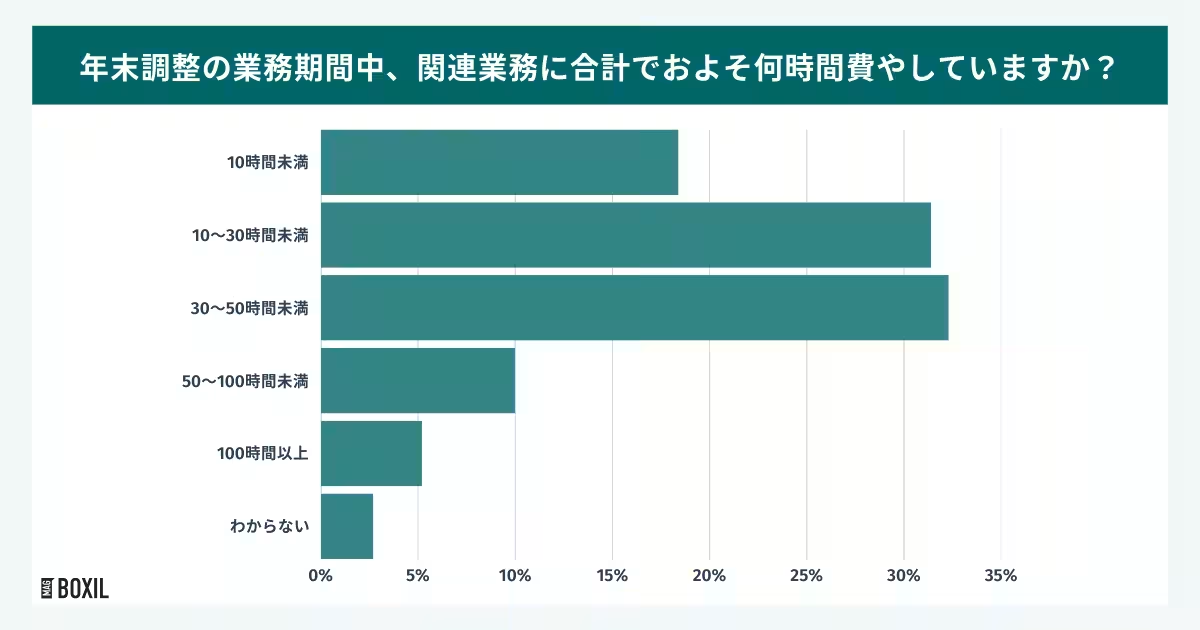
Specifically, the research uncovered that 47.5% of those using analog methods dedicate over 30 hours during the adjustment period. A breakdown of this time commitment shows that the majority spends between 30 and 50 hours, equivalent to about 4 workdays, simply managing the necessary calculations and paperwork.
Major Stressors Identified
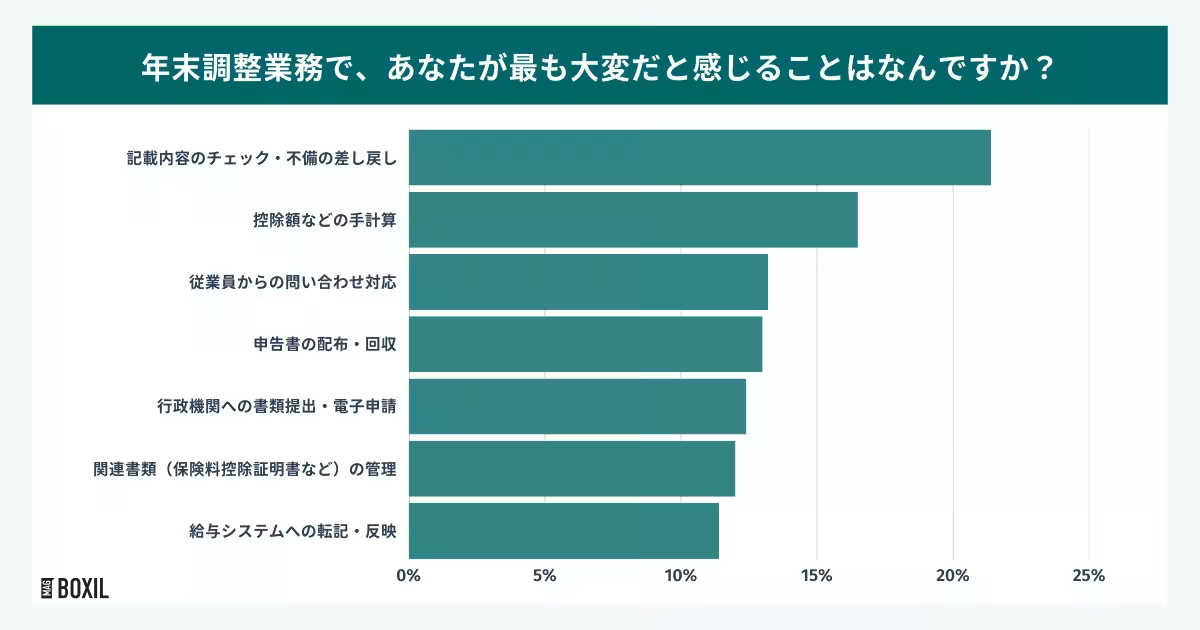
When queried about the most taxing aspects of their work, the most prevalent response from survey participants was the need to check entries for inaccuracies and return documents for corrections—accounting for 21.4% of responses. Other stress points included manual calculations of deductions (16.5%) and handling inquiries from employees (13.2%).
This indicates that staff are often overwhelmed in managing back-and-forth communications to rectify errors, adding to their workload significantly. The cumulative time spent on these repetitive tasks is indicative of a systemic inefficiency in year-end adjustments.
Organizational Hesitation in System Implementation
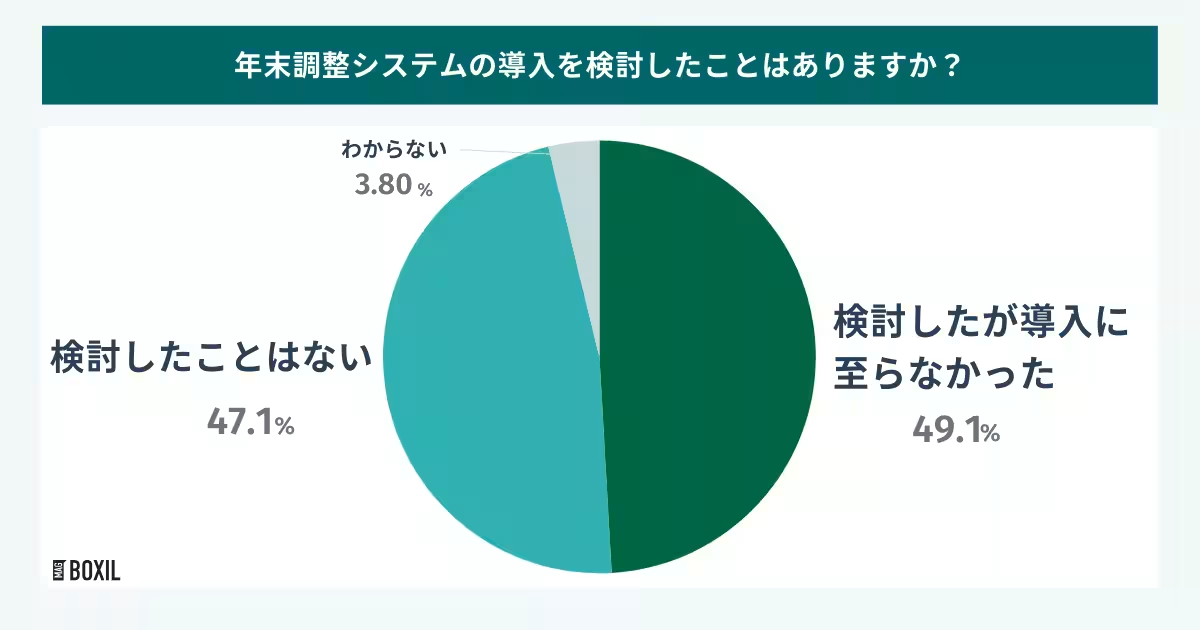
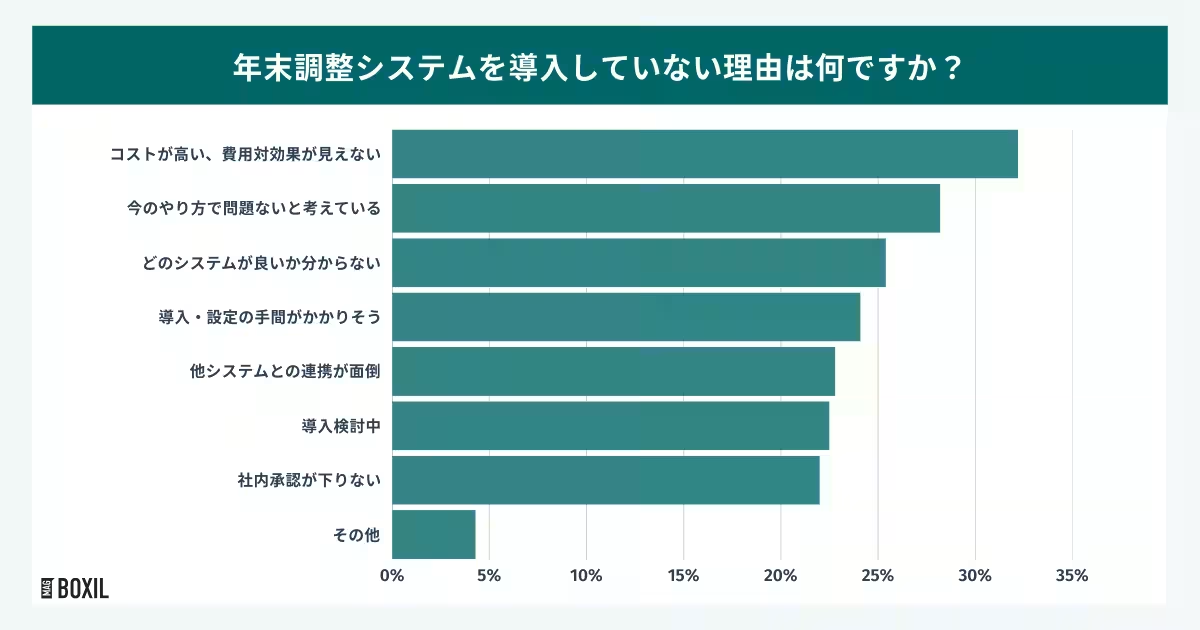
Interestingly, while nearly 49.1% of surveyed companies have considered integrating a new system for year-end adjustments, the majority ultimately did not make the leap. The leading reason for this reluctance was cited as high costs and unclear returns on investment (32.2%). Alongside this, 25.4% of respondents expressed confusion over choosing the right software.
A notable 24.1% expressed concerns about the potential hassle involved in system implementation, while 28.2% believed their current methods were sufficient, revealing a significant disparity between awareness of potential improvements and actual transitions to technology solutions.
Calls for Transformation
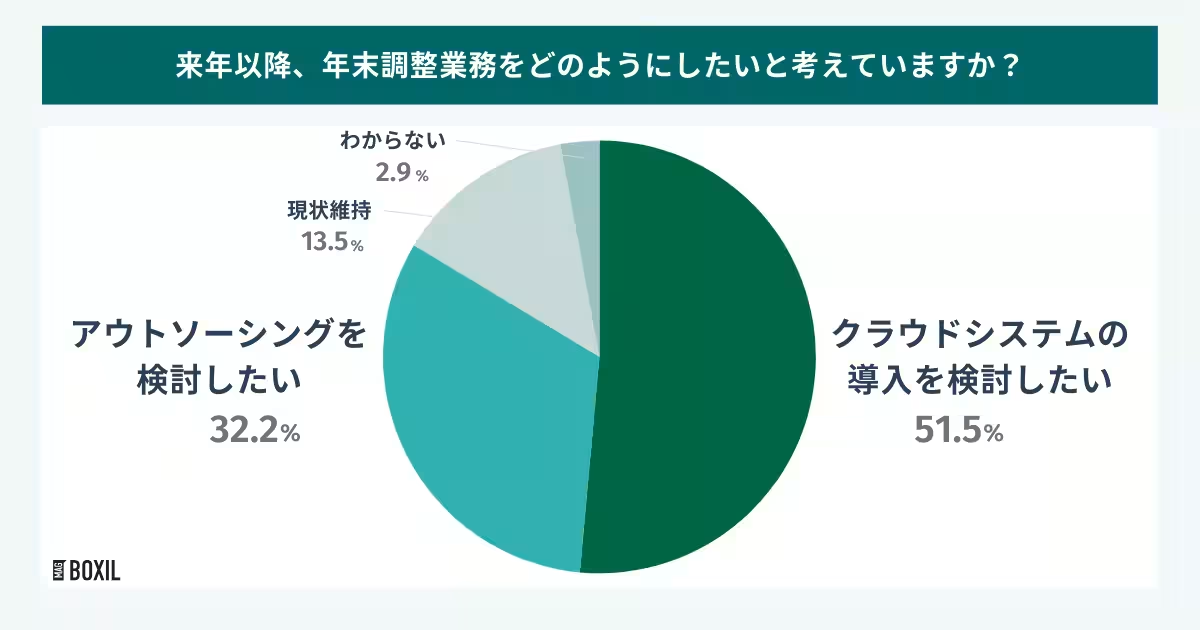
However, looking forward, over 83.7% of respondents indicated a preference for either adopting a cloud-based system or considering outsourcing to enhance their year-end adjustment processes. Specifically, 51.5% of those surveyed are inclined to explore cloud systems, while 32.2% would prefer outsourcing.
This data reflects a strong desire among operational personnel for substantial transformation in how their companies handle year-end adjustments.
Conclusion
The extensive reliance on paper and Excel for year-end adjustments starkly highlights the need for companies to embrace digital transformation. As revealed by BOXIL’s survey, there exists a significant opportunity for improving efficiency, reducing stress, and implementing solutions that can ease the burdens currently faced by businesses. To explore more about this crucial topic, visit the full report on BOXIL’s website.
Additional Resources
For more insights into year-end adjustment software and services, refer to the following resources:
- - Top 5 Free Year-End Adjustment Tools
- - What is Year-End Adjustment? An Easy Explanation
- - Freedom from Printed Material: Case Study on Year-End Adjustment
- - Comprehensive Guide to Withholding Tax: Methods and Overview
Topics Business Technology)
【About Using Articles】
You can freely use the title and article content by linking to the page where the article is posted.
※ Images cannot be used.
【About Links】
Links are free to use.