



Quantifying the Horizontal Recycling and CO₂ Reduction of Gypsum Boards in Japan
Gypsum Board Recycling in Japan: A New Initiative
The construction industry in Japan is embarking on a significant transformation with a groundbreaking project focusing on the recycling of gypsum board, a ubiquitous material in interior construction. Led by Semba Corporation, alongside Mori Building Co., Ltd., Chiyoda Ute Co., Ltd., and Tokuyama Chiyoda Gypsum Co., this initiative aims to establish a circular economy model for construction materials through the project "Board to Board."
Project Overview
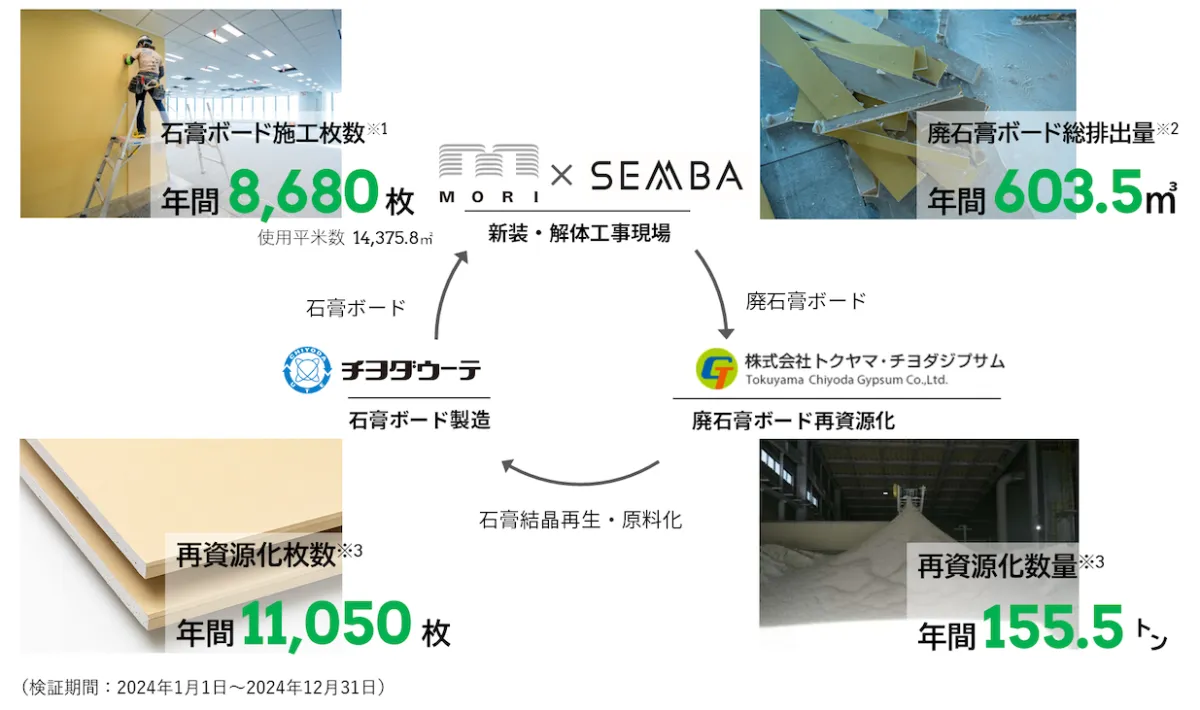
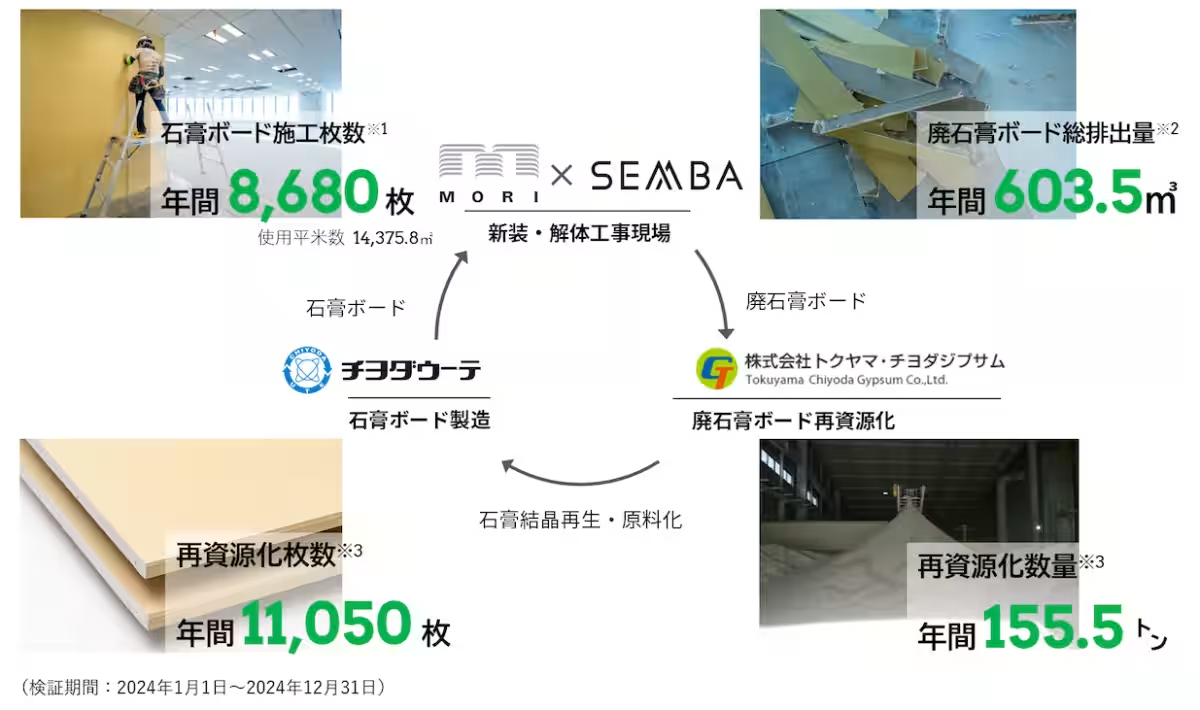
Starting January 1, 2024, Semba and its partners began a one-year collaborative demonstration project targeting the horizontal recycling of gypsum boards used in buildings like the Azabudai Hills and Toranomon Hills. This project seeks to quantify the volume of recycled gypsum board and the subsequent decrease in CO₂ emissions resulting from their reuse. The results thus far indicate a promising outcome, with the recovery of 603.5 cubic meters of waste gypsum board, resulting in the production of an impressive 11,050 new boards.
The process involves meticulous sorting at construction sites, particularly during renovation and demolition phases. A noteworthy aspect of this initiative is its ambitious goal of achieving 100% recycling of the residue produced, utilizing Tokuyama Chiyoda Gypsum’s pioneering technology to convert waste gypsum board back into new, usable products.
Environmental Impact
Gypsum board waste in Japan is projected to exceed three million tons by 2047, yet current recycling rates linger around a mere 30%. This underwhelming statistic reveals a dependency on imported raw materials, which poses a serious concern regarding resource management and environmental sustainability. Thus, the project tackles both the recycling inefficiency and the reliance on exports by enhancing local resource circles.
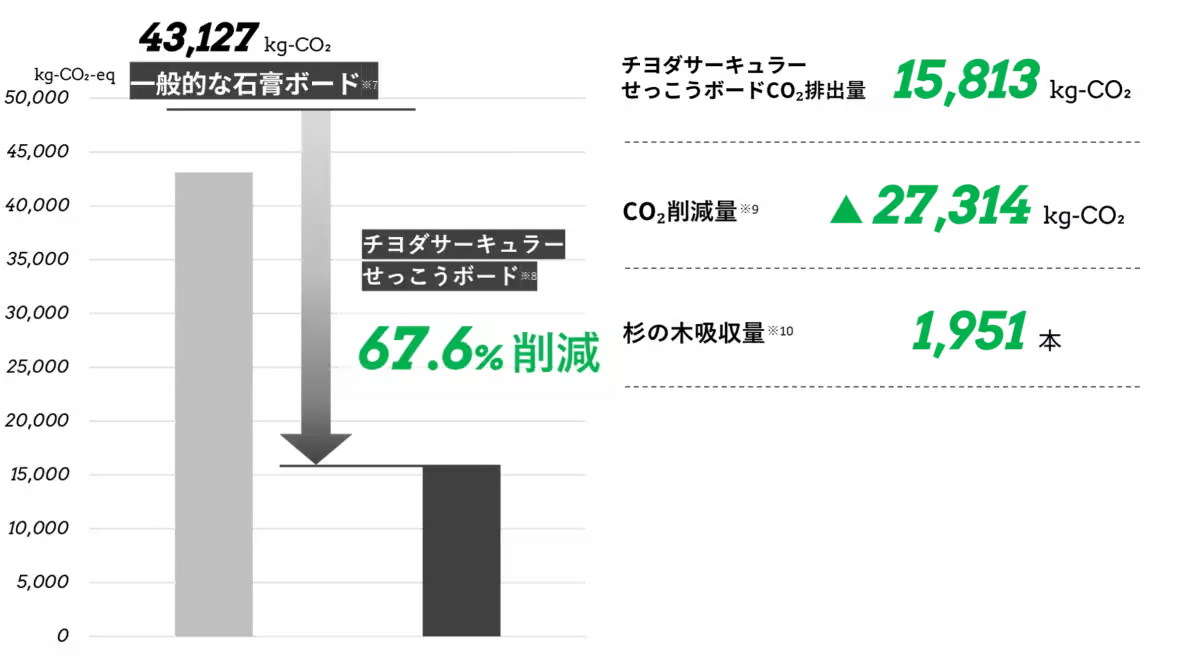
This initiative not only reduces waste but actively contributes to minimizing emissions. Reports show that utilizing locally recycled materials can cut CO₂ emissions by an impressive 67.6%. By implementing local recycling practices, the project significantly reduces the environmental toll associated with the transportation of raw materials.
Key Details of the Project
The project implementation encompasses four major sites:
1. Azabudai Hills Mori JP Tower
2. Azabudai Hills Garden Plaza
3. Toranomon Hills Station Tower
4. Toranomon Hills Edomizaka Terrace
Over the set duration, from January 2024 to December 2024, all waste gypsum boards collected from these sites will undergo a recycling process to produce new materials. Semba not only oversees the logistics of acquiring these circular gypsum boards but also manages the on-site operations required to support effective recycling practices.
Collaborative Approach
This initiative exemplifies a partnership approach in tackling construction waste. By collaborating, these companies are setting a new standard in the construction industry for sustainability. Semba ensures the supply of circular gypsum boards within facilities operated by Mori Building, promoting a closed-loop system where waste is continuously repurposed rather than discarded.
As construction practices evolve, so does the imperative for more ethical and sustainable practices that cater to environmental responsibility. Semba, with the predicated ethos of creating "kind spaces for the future," plays a pivotal role in aligning construction methods with this vision.
Future Outlook
With ongoing efforts and further development in recycling technologies, this project could become a model for similar initiatives both nationally and globally. The construction sector can set a precedent for how post-consumer waste is managed and reintroduced into the economy, potentially revolutionizing recycling methodologies in construction. Through this journey, Semba and its partners not only demonstrate their commitment to sustainability but also pave the way for a more resource-efficient future in urban development.
For additional detailed insights, please refer to the official press release.
Semba Corporation
Semba Corporation is dedicated to supporting various spaces, from commercial facilities to healthcare settings. With a commitment to ethical business practices, they strive to co-create spaces that respect humanity and the environment. The company is based in Minato-ku, Tokyo, and is publicly listed on the Tokyo Stock Exchange.
Location: Minato-ku, Tokyo, Japan
Stock Code: 6540
Main Achievements: Noteworthy projects include the design and construction of Fukuoka Airport’s international terminal and various shopping parks across Japan.

Topics Consumer Products & Retail)
【About Using Articles】
You can freely use the title and article content by linking to the page where the article is posted.
※ Images cannot be used.
【About Links】
Links are free to use.