




Understanding Consumer Authenticity: The Value of Intent Data in Marketing Strategies
Unpacking Consumer Authenticity: The Value of Intent Data
In today’s fast-paced marketing landscape, understanding the genuine needs and desires of consumers—referred to as their true sentiments—is essential. Ascent Networks, a forward-thinking company headquartered in Chuo-ku, Tokyo, recently unveiled their consumer intent analysis tool, Listening Mind, through the widely-watched video platform PIVOT. This revelation has significant implications for both marketers and consumers.
In a compelling discussion led by Ascent Networks’ Nishino and Novacell's Aoki Rio, they highlighted the limitations of traditional research methods such as surveys and focus groups. These approaches often fall prey to biases stemming from respondents' cognitive constraints and the intentions of researchers. Notably, results from these methods can skew perspectives, making it challenging for businesses to capture an authentic view of consumer motivations.
Challenges of Traditional Research Methods
Common criticisms of established research methods include:
- - Panel Data: Often biased and limited.
- - Proprietary Data: These datasets, like web logs or CRM data, tend to be constrained to a company's customers, restricting the analysis of the broader market picture.
Given these limitations, the focus is shifting towards social media and search data as viable alternatives to grasp consumer authenticity effectively. Search data, in particular, encapsulates unfiltered expressions of individual desires, thus offering invaluable insight into consumer intent.
The Richness of Intent Data
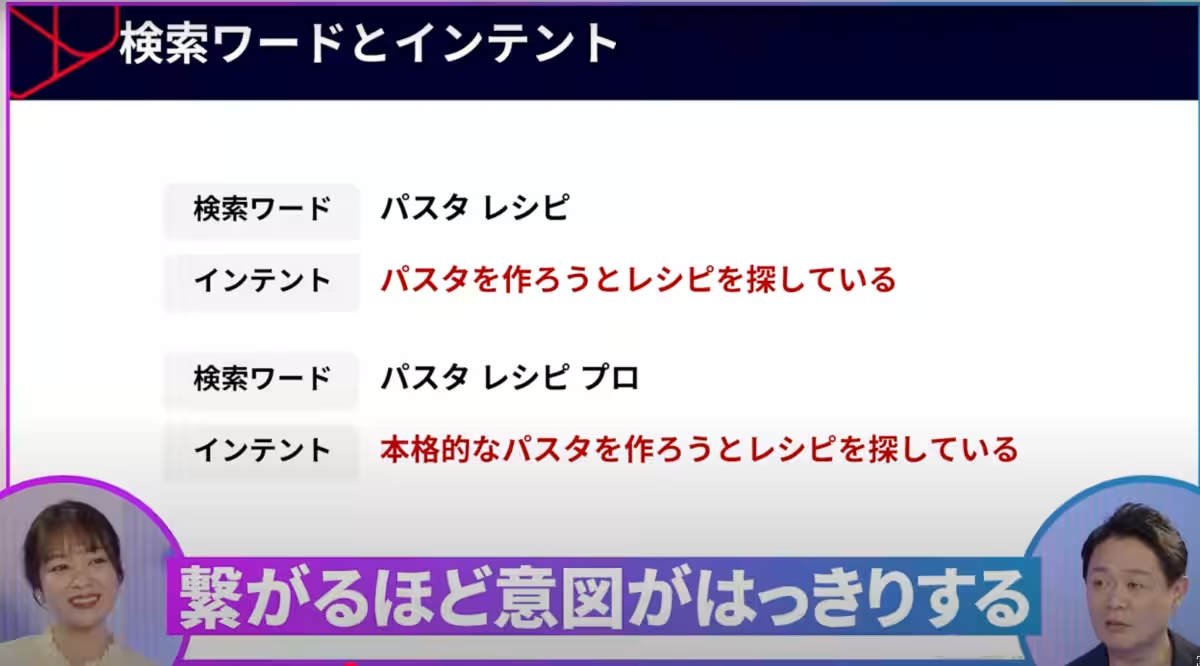
Search data represents the true, unspoken sentiments of consumers, conveying intentions that may not manifest in traditional marketing channels. This data can reveal profound insights; for instance, a search for “pasta recipes” signifies not only the intent to make pasta but reflects the specific desire for expertise when the term evolves to “professional pasta recipes.” These differences illustrate how nuanced search phrases offer layers of intent data that marketers can utilize.
To tap into this wealth of information, Ascent Networks introduces Listening Mind, a robust tool designed to analyze intent data derived from search queries used by a staggering 80% of Japanese internet users on Google. This capability allows brands to uncover genuine consumer motivations without succumbing to biases.
Key Features of Listening Mind
Listening Mind is built upon extensively analyzing intent data. Here are some of its key functionalities:
1. Intent Finder: This feature helps identify consumer intents from a range of related keywords. For instance, it can uncover that there are 8,359 keywords associated with the term “non-alcoholic,” shedding light on consumer interests and related categories.
2. Path Finder: This functionality visualizes search behaviors before and after specific keywords, providing insights into the thought process of consumers. It also incorporates AI-driven persona analyses.
3. Cluster Finder: This enables the collection and analysis of up to 20,000 related keywords, revealing broader needs. For example, searches beginning with “recommended non-alcoholic beer” can unearth specific scenarios around its consumption, such as “before bed,” “prior to medical check-ups,” or “after workouts.”
Practical Use Cases and Insights
During the latter part of the PIVOT discussion, Aoki Rio from Novacell elaborated on how they have successfully integrated Listening Mind into their marketing strategies. He highlighted the challenges faced in the burgeoning men’s cosmetics market and articulated how intent data has steered their approach towards efficient marketing research.
Insights gained from the discussion include:
- - How marketing professionals can leverage search data to unearth authentic consumer sentiments.
- - The practical applications of Listening Mind in addressing real-world business challenges.
- - The importance of employing unbiased data to form strategy.
- - The necessity for futuristic skills and tools in the ever-evolving landscape of marketing within the AI era.
Conclusion
The efficient use of consumer intent analysis may redefine conventional marketing strategies. It holds the potential to unlock insights that drive impactful decision-making and foster a deeper understanding of consumer behavior. To see these discussions unfold, don't miss the PIVOT video, where industry experts delve into practical applications of these advancements.
Ascent Networks is offering a 7-day free trial of Listening Mind to allow businesses to explore related keywords relevant to their operations, creating opportunities for new discoveries.
For further information, visit Listening Mind. Ascent Networks remains committed to advancing intent marketing's future, guiding businesses towards evidence-based strategies that connect authentically with consumers.
Company Overview
Ascent Networks, established in January 2006, operates as a data-driven marketing consultancy. With a focus on Japan and South Korea, they specialize in research and developments around search data, consistently pushing the boundaries of marketing intelligence and solutions.



Topics Consumer Products & Retail)









【About Using Articles】
You can freely use the title and article content by linking to the page where the article is posted.
※ Images cannot be used.
【About Links】
Links are free to use.