



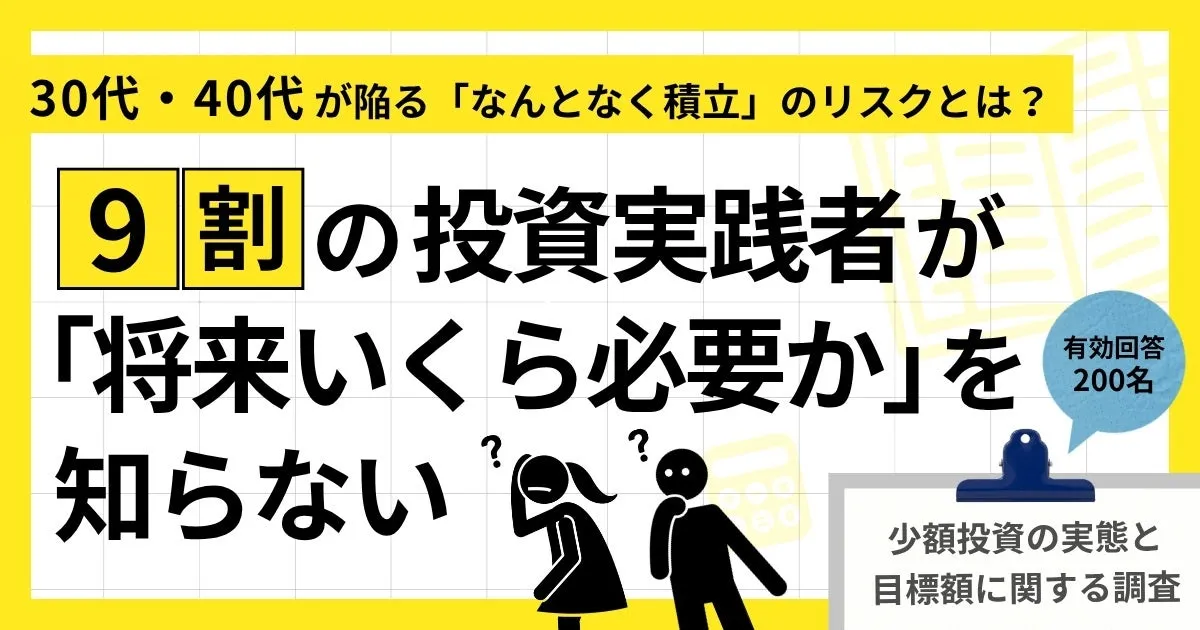
Majority of Investors Lack Awareness of Future Financial Needs
The Critical Gap in Investment Planning: Setting Goals
Investing has become increasingly popular, particularly with the spread of the new NISA policy. However, amidst this trend, many investors seem to fall into a trap: they set monthly investment amounts without a clear understanding of their future financial needs. A recent survey by Trust Corporation's financial education school, FE Lab, focused on this very issue.
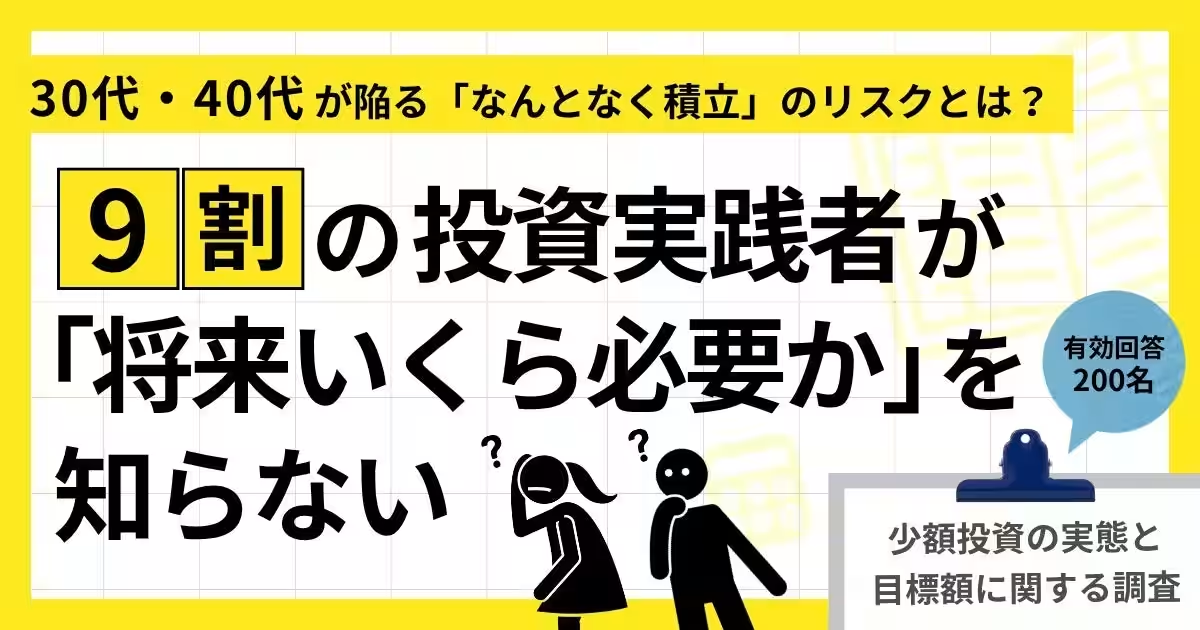
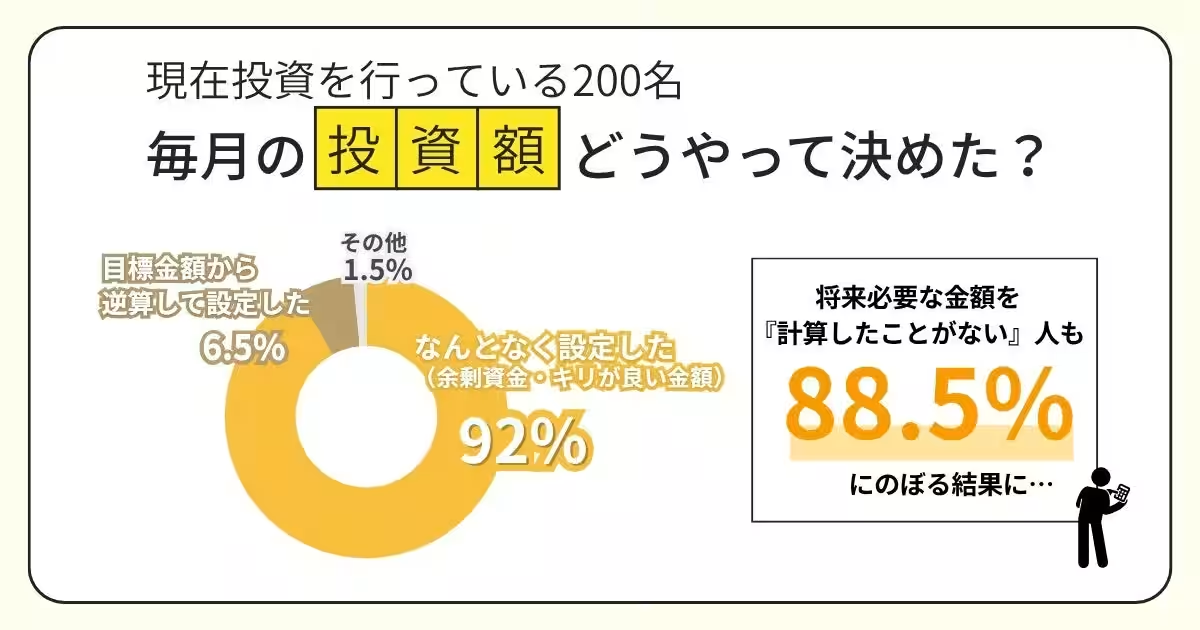
The survey involved 200 individuals aged between their 20s and 50s, all currently engaged in some form of investment. Strikingly, over 90% of these respondents admitted that they set their investment amounts based on a vague sense of what they felt was appropriate, rather than calculating backwards from a defined target amount. Additionally, 85% continued to express concerns about future financial insufficiency.
Survey Summary
- - Approximately 90% of investors do not calculate their target amounts before setting monthly contributions.
- - Investors often resort to ambiguous saving practices, making them vulnerable to sudden expenses related to life stage changes.
- - While over 80% harbor worries about their financial futures, nearly half find themselves unable to increase their investment amounts.
- - Prior to increasing contributions, it is essential to reassess investment objectives and timelines.
The Core Issue: Vague Goals and Ambiguous Contributions
The primary catalyst for many individuals starting to invest is often a fear of inadequate funds for future needs, particularly for retirement. Yet, there exists a noticeable contradiction: despite this apprehension, an overwhelming 92% of respondents determined their contribution amounts based on surplus funds or arbitrary figures rather than by calculating how much they would truly need. Alarmingly, 88.5% have never even attempted to calculate their future financial goals.
This situation implies that these investors are undertaking a journey without a map, continuing to invest without konkretizierung what their ultimate objectives are—when they need the money and for what purpose. This misplaced sense of security derived from starting to invest, often leads to neglect in developing a comprehensive strategy, which is arguably the biggest pitfall in personal finance.
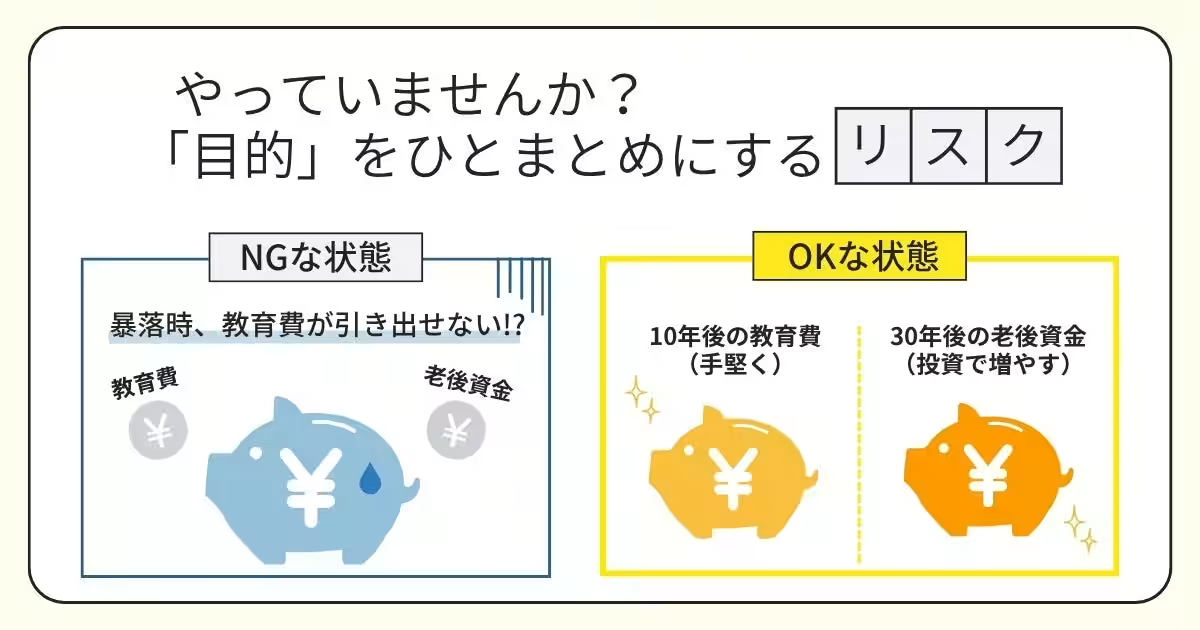
The Risks of Mixing Educational and Retirement Savings
Notably, unclear investment aims can render individuals especially vulnerable during significant life transitions, such as their children's education or their retirement planning. The survey indicated that alongside the need for retirement funding (61.5%), many respondents anticipate increased spending for their children's education (37.0%) and vehicle purchases (32.5%).
If one combines educational expenses for a child's college tuition with retirement savings, there exists a substantial risk: at the moment educational funds might be needed, market conditions might not favor accessibility to those funds. Such a situation could force investors to withdraw money during unfavorable market circumstances.
Real-life experiences provided in the survey revealed distressing scenarios:
- - One respondent shared that the pandemic had cut their salary, forcing them to withdraw from their NISA account to cover living expenses.
- - Another recounted unexpected veterinary bills leading to a cessation in their investment contributions.
- - Others expressed how recent life events, such as purchasing a car or dealing with significant health issues, drastically reduced their ability to invest further.
Three Steps to Restructure Financial Management
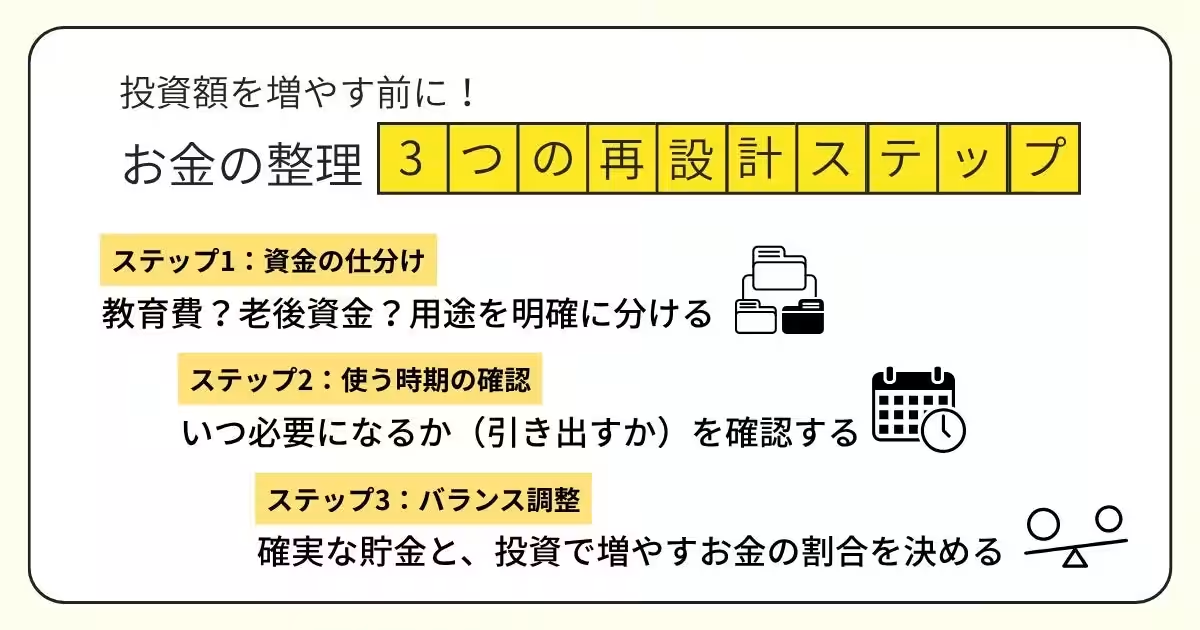
Given the findings, how can investors shift out of this state of uncertainty? Over half of those surveyed expressed that they feel unable to allocate additional funds towards investments. It is critical to understand that reevaluation does not necessarily mean increasing monthly contributions right away. Here are three essential steps for better financial organization:
1. Categorizing Funds (Understanding Usage): Clearly define what each pot of money is for—education in 10 years versus retirement in 30 years—and decide how to allocate funds appropriately.
2. Timing Assessment (Knowing When to Use): Identify when funds will be needed for each purpose, allowing for timely withdrawals when appropriate.
3. Balancing Savings and Investments (Prepping Accordingly): Determine how to balance risky investments with secured savings to achieve a personalized investment strategy.
Graduating from Ambiguity to Structured Planning
Starting your investment journey by opening an account and making initial contributions is a commendable first step. However, negligence in regularly reviewing and refining that plan could risk wasting time—the most powerful advantage in investment growth.
Unsurprisingly, many survey respondents expressed regret about not beginning their planning sooner. Before panicking about insufficient funds for investments, individuals should first clarify their financial stance and reassess the intended use and timelines of their money. This focused approach is a vital step toward safeguarding one's financial future and protecting critical assets.
For those who wish to reference this research, kindly attribute the source to the Financial Education School (FE Lab) along with a link to their website.
About FE Lab
FE Lab is designed to assist individuals in their 30s and 40s who experience anxiety regarding future finances, helping them gain systematic foundational knowledge for wealth-building without being misled by scattered online information. Through free online seminars that don’t require face-time, FE Lab provides a roadmap to asset formation based on sound knowledge rather than instinct.
Survey Overview
- - Objective: Investigation of small investment practices and target amounts.
- - Participants: Men and women aged 20 to 50 engaging in investment.
- - Methodology: Online survey conducted over a two-day period from August 8-9, 2026.
- - Valid Responses: 200.
Company Overview
- - Company Name: Trust Corporation
- - Website: Trust Corporation
- - Services: Operating a financial education community, providing personalized asset formation support, and organizing money seminars.
Media Contact
Trust Corporation
Contact: Okutani
Email: [email protected]
Topics Financial Services & Investing)





【About Using Articles】
You can freely use the title and article content by linking to the page where the article is posted.
※ Images cannot be used.
【About Links】
Links are free to use.