




Takachiho University to Significantly Reduce Admission Fees by 2027: A New Era in Private Education Models
Takachiho University Launches Major Fee Reform for 2027 Admissions
In an unprecedented move, Takachiho University, located in Suginami, Tokyo, has announced a substantial reduction in its admission fees, dropping from 220,000 yen to 20,000 yen starting from the 2027 academic year. This significant change is a strategic response to the challenges posed by decreasing birth rates and growing competition among universities for prospective students. The university aims to alleviate the financial burdens typically associated with the admission process while overhauling its approach to private education management.
Key Points of the Reform
- - Reduction of Admission Fees: The admission fee will be reduced by approximately 90%, from 220,000 yen to 20,000 yen.
- - Simplicity of Costs: Instead of a refund system, the reform focuses on minimizing the initial financial outlay.
- - Integration of Costs: Facility maintenance fees will be included in tuition rather than presented as separate charges.
- - Redesigned Tuition Structure: The overall tuition expense over four years will be restructured to spread costs more evenly.
- - Commitment to Small Class Sizes: The university will maintain its focus on small class education.
- - Expanded Major and Minor Programs: The introduction of a system allowing students to pursue both major and minor subjects.
- - PBL (Project-Based Learning) Promotion: A drive towards interdisciplinary education through PBL methodologies.
The decision to reform the admission fee structure is not merely about affordability but is part of a broader strategy aimed at redefining the value of education. As universities contend with a shrinking pool of students, it is becoming increasingly critical to address the economic strain on both students and their families.
The Broader Context of Educational Selection
Today’s university entrance landscape is shaped by various financial pressures beyond the admission fee, including application fees, transportation costs, and accommodation expenses. Furthermore, private universities often demand immediate payment of admission fees shortly after acceptance, compounding the financial burden for both students and parents.
In light of declining 18-year-old populations, institutions are challenged to redefine educational value beyond mere academic metrics, focusing on how educational offerings can evolve to meet the demands of students and the workforce:
- - What kind of education are we offering?
- - How will we invest in our students' futures?
- - How do we support their career development post-graduation?
Commitment to Educational Investment
Against this backdrop, Takachiho University is not simply slashing admission fees. This initiative represents a fundamental shift towards prioritizing the educational investments made in students. From 2027 onward, the university will enhance its academic offerings in the following ways:
1. Expansion of the New Curriculum:
- Major and Minor Programs: Students will have the opportunity to combine their main area of study with minor areas from a diverse selection of 22 subjects. Themes include:
- Marketing
- Entrepreneurship
- Psychology
- Representation Culture
- Data Science
- Global Liberal Arts & Business
- Sports
The demand in the modern workforce is for versatile individuals capable of navigating multiple domains, and Takachiho University aims to meet this need through its curriculum.
2. Implementation of Project-Based Learning (PBL):
- This interdisciplinary approach encourages students from various faculties to collaborate on community and business challenges, allowing them to engage in practical learning that develops skills such as project planning, analysis, presentation, and teamwork.
3. Focus on Small Class Sizes:
- Approximately 69% of courses will contain fewer than 40 students, creating opportunities for more personalized learning experiences. The first-year seminars will consist of 13 to 15 students, enabling instructors to provide tailored support and one-on-one mentoring.
4. Expansion of International Collaborations:
- Collaborating with more international institutions will provide students with opportunities for short-term study abroad programs and exposure to diverse cultures, striving to cultivate global perspectives and communication skills.
Fostering Visual Recognition of Academic Achievements
To further underpin its reform, the university will develop systems to visibly recognize student achievements, whether in academic performance, qualification acquisitions, or extracurricular successes. This initiative moves beyond mere enrollment to focus on what students learn and accomplish during their time at the university, thereby enhancing their employability as they transition into the job market.
Enhanced Award Systems
As part of this initiative, Takachiho University will expand its award systems to recognize student challenges and achievements more broadly, ensuring that diligent efforts are rewarded.
Academic and Qualification-Based Awards:
- High achievers will be awarded based on academic standing and qualifications, motivating a diverse range of students to strive for excellence.
- Award categories will include:
- Category A: Significant financial rewards for top tier qualification successes (e.g., CPA exam results).
- Category B: Standardized awards for other qualifications.
- Category C: Smaller, yet meaningful recognitions for further achievements.
Commentary from Leadership
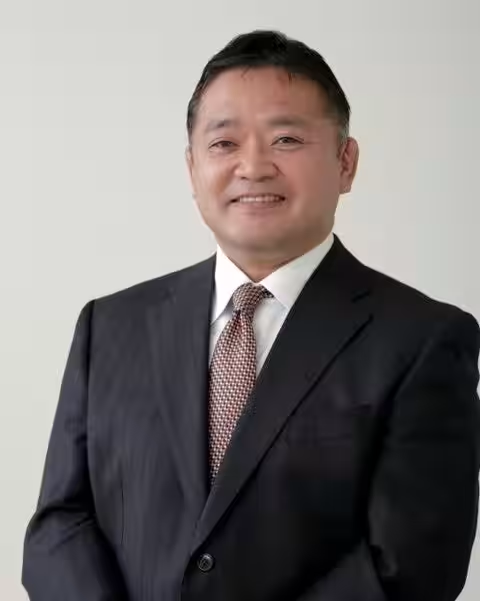
Yasuhiko Ishii, Executive Director of Takachiho Academy sees the new admission fee structure as a way to decrease the financial barrier for applicants while actively questioning and redefining what the university experience should be.
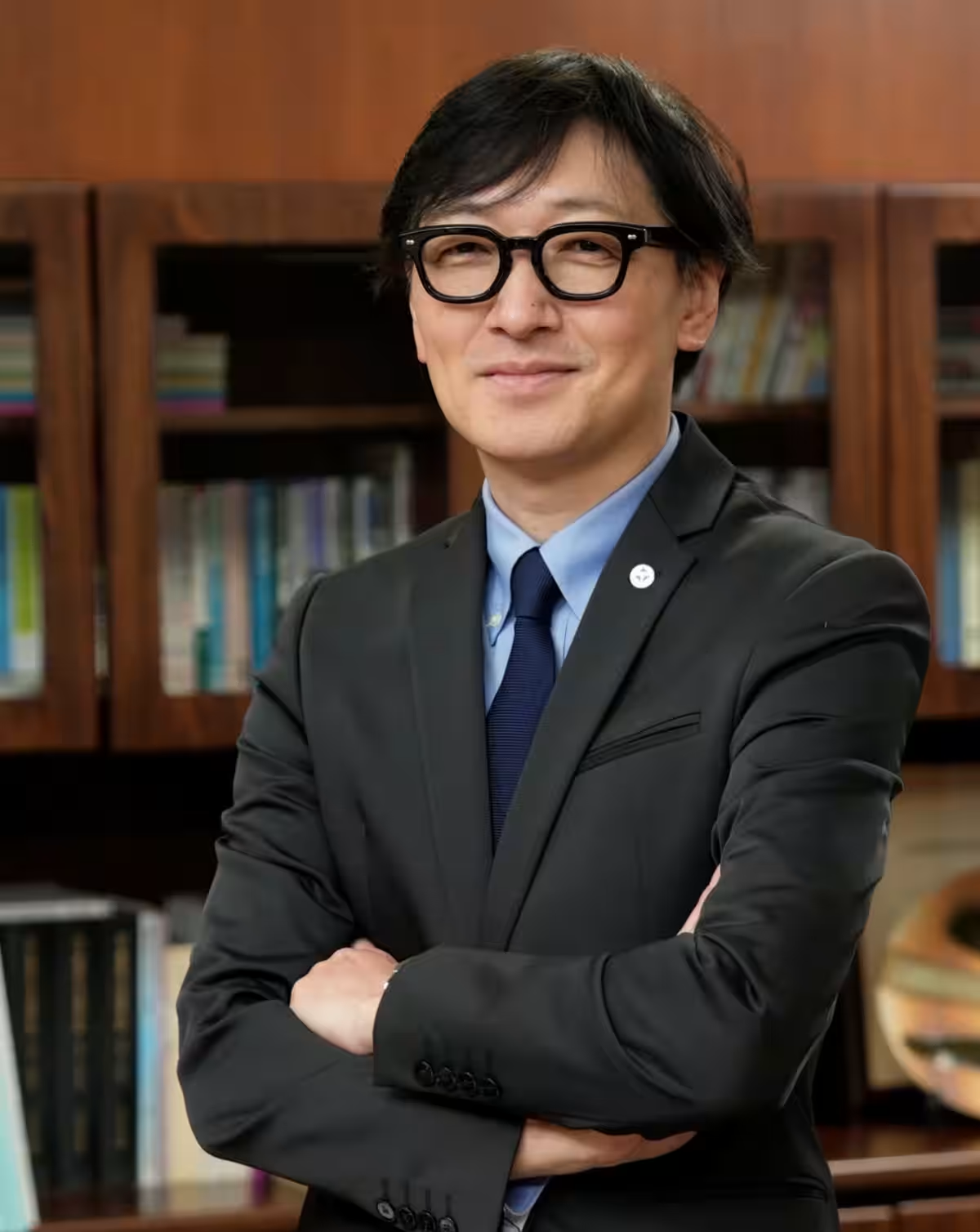
Motoki Saito, the university's President outlined that the evolving job market necessitates a workforce that is not only specialized but also adept at cross-disciplinary problem-solving. This educational approach, centered around a co-created future curriculum incorporating practical skills, seeks to nurture graduates capable of articulating their experiences and responding to the demands of a rapidly changing society.
In conclusion, Takachiho University’s innovative reforms and commitment to educational investment not only aim to ease the financial burden on prospective students but also aspire to lead the way in creating a versatile, proactive learning environment that responds to both student needs and societal changes.

Topics Other)
【About Using Articles】
You can freely use the title and article content by linking to the page where the article is posted.
※ Images cannot be used.
【About Links】
Links are free to use.