



Revolutionizing Powder Coating: Fast Metal Film Coating Technology
Revolutionizing Powder Coating: Fast Metal Film Coating Technology
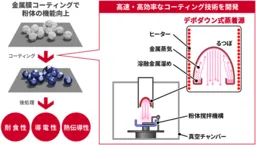
In the constant pursuit of innovation in manufacturing, a groundbreaking technique has emerged that offers a swift and efficient way to coat powder materials with metal films. Developed collaboratively by the National Institute of Advanced Industrial Science and Technology (AIST) and DOWA Holdings, this innovative vacuum deposition source represents a significant leap forward in the realm of powder coating technology.
The New Deposition Technique
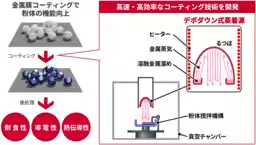
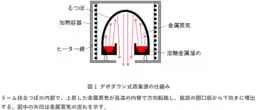
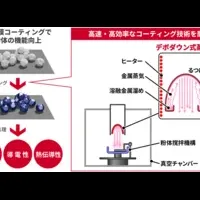
The newly developed downward deposition source enables metal vapor to be projected downward onto powders, all while maintaining the metal in a molten state. This method surpasses traditional powder coating techniques, particularly sputtering, in terms of both film formation speed and energy efficiency. The implications for mass production are vast, particularly in industries that rely on high-performance powder materials.
Coating the surface of powders with metal films introduces various functionalities that were previously unattainable. Enhanced properties such as corrosion resistance, electrical conductivity, and thermal conductivity can transform standard powders into high-performance materials suitable for batteries, electronic components, and catalysts.
Addressing the Challenges of Traditional Coating Methods
Historically, the challenge of coating powders with metals has revolved around how to efficiently deliver the metal film material to the powder without spillage, particularly when using traditional methods like sputtering. Sputtering, while capable of creating precise films, tends to be inefficient in terms of coating speed. On the other hand, conventional vacuum deposition allows for faster application but has traditionally only allowed for upward deposition, making it unsuitable for powder applications, where the powders are held at the bottom of a container.
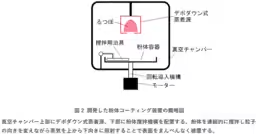
To tackle this challenge, the new system uses a specialized crucible that heats the metal and directs the resulting vapor downwards, alongside a mechanism to continuously agitate the powder. This ensures that metal vapor reaches all surfaces of the powder particles, regardless of their position within the container.
Proving the Technology's Efficacy
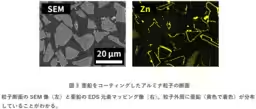
To validate the capability of this advanced deposition technique, the team measured zinc coating on alumina powder—a ceramic material with a typical particle size of 15.4 micrometers. After placing the powder in the apparatus, the high-vacuum chamber was evacuated, followed by heating the system to 750°C while maintaining agitation of the powder. Testing confirmed that the particles were uniformly covered with a zinc layer, averaging a thickness of 20.6 nanometers—demonstrating the method's effectiveness.
Performance Compared to Sputtering
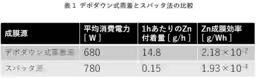
When compared quantitatively to conventional sputtering methods, the new vacuum deposition method exhibited strikingly higher efficiencies. The zinc deposition rate was found to be approximately 100 times greater than that achieved through sputtering. Moreover, the energy consumption was relatively comparable, showcasing the new method's superior performance without a significant increase in operational costs.
A Comprehensive Solution for Future Applications
This newly developed downward deposition source not only facilitates fast and efficient coating but also allows for effective utilization of the metal materials. Unlike sputtering, which leaves unused material behind, the new approach maximizes material use by evaporating the entire amount placed in the crucible. This capability is expected to lead to a simpler design, suitable for industrial scalability, and allows for potential combinations of multiple deposition sources for coating with alloys or composite layers.
Overall, the implications of this technology are expansive. It can potentially enhance the performance of powders in various applications—from automotive to electronics—by optimizing their surface properties for enhanced durability, conductivity, or reactivity. Additionally, by utilizing coated powders in sintering processes, manufacturers can achieve improved control over joint properties at the grain boundaries, thereby optimizing the resulting solid materials.
Next Steps for Implementation
Looking forward, the research team aims to refine the process further. Future developments will work towards creating a system that can form metal films directly onto clean powder surfaces without exposure to air, preventing unwanted oxidation. This possesses the potential to further enhance the application's versatility, allowing for adaptations in challenging materials where reactions can complicate traditional coating methods.
The research findings will be presented at the Powder Technology Society’s 2026 Autumn Conference set to take place in Tokyo at the Big Sight from November 24-25, 2026, showcasing the promising advancements in powder material engineering. This new technology represents a significant stride towards revolutionizing the field of materials science, offering enhanced production methods that align with contemporary sustainability and efficiency goals.
Topics Consumer Products & Retail)

【About Using Articles】
You can freely use the title and article content by linking to the page where the article is posted.
※ Images cannot be used.
【About Links】
Links are free to use.