



Challenges in Promoting Women to Executive Positions in Japan's Corporations
Challenges in Women's Advancement to Executive Positions
The promotion of women to management roles and executive positions in Japan continues to face significant hurdles, as revealed by the recent survey titled "HR White Paper 2025" published by the Japan HR Association. This paper analyzed data from 6,139 HR departments across various companies nationwide, offering crucial insights into the barriers that impede women's career advancement in the corporate landscape.
Key Findings from the Survey
According to the survey, the predominant issues identified in promoting women to managerial positions were:
- - A lack of ambition among women themselves
- - A scarcity of women who meet the requisite qualifications
- - A limited number of female employees company-wide
- - The absence of role models
- - The persistence of unconscious bias
These challenges were particularly pronounced in larger organizations. As the scale of the company increased, the prevalence of factors such as the absence of role models and deep-seated unconscious bias appeared to rise significantly.
Detailed Insights per Position
1. Promotion to Managerial Positions (equivalent to Section Manager)
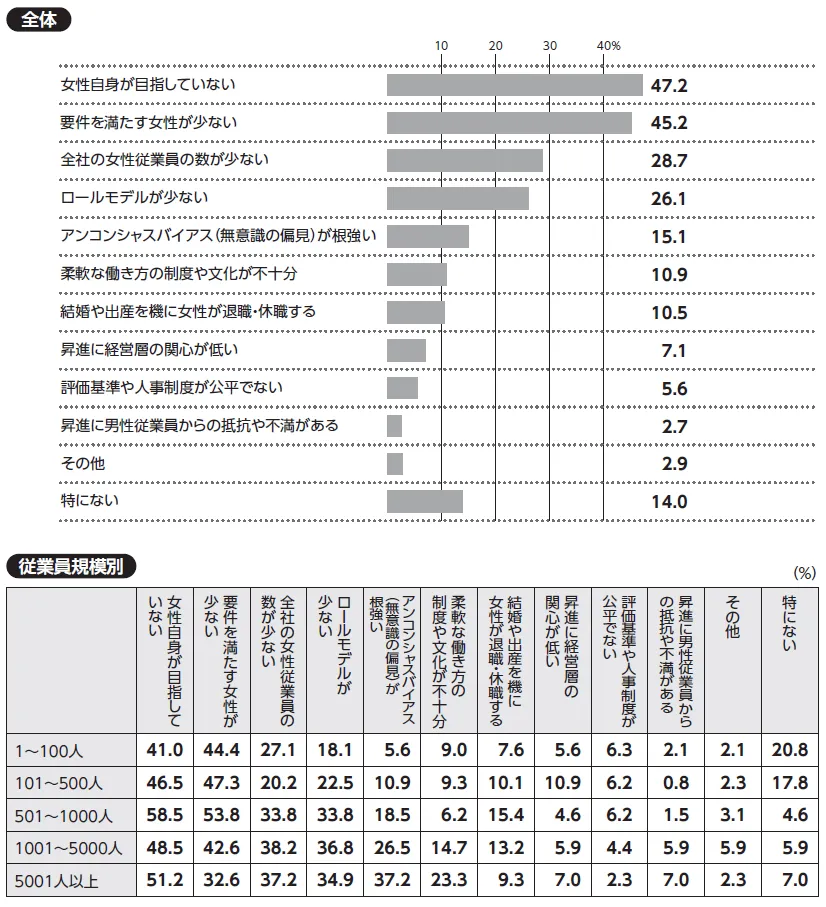
The most frequently cited barrier for promoting women to managerial roles was a lack of ambition, noted by 47.2% of respondents. Following this, 45.2% pointed out that there are not enough qualified women, while 28.7% mentioned a low overall number of female employees in the company.
Notably, 15.1% of respondents acknowledged the issue of entrenched unconscious bias. In larger companies, however, the perception of the impact of unconscious bias increased, indicating a correlation between company size and the recognition of this issue.
2. Promotion to Department Head Positions
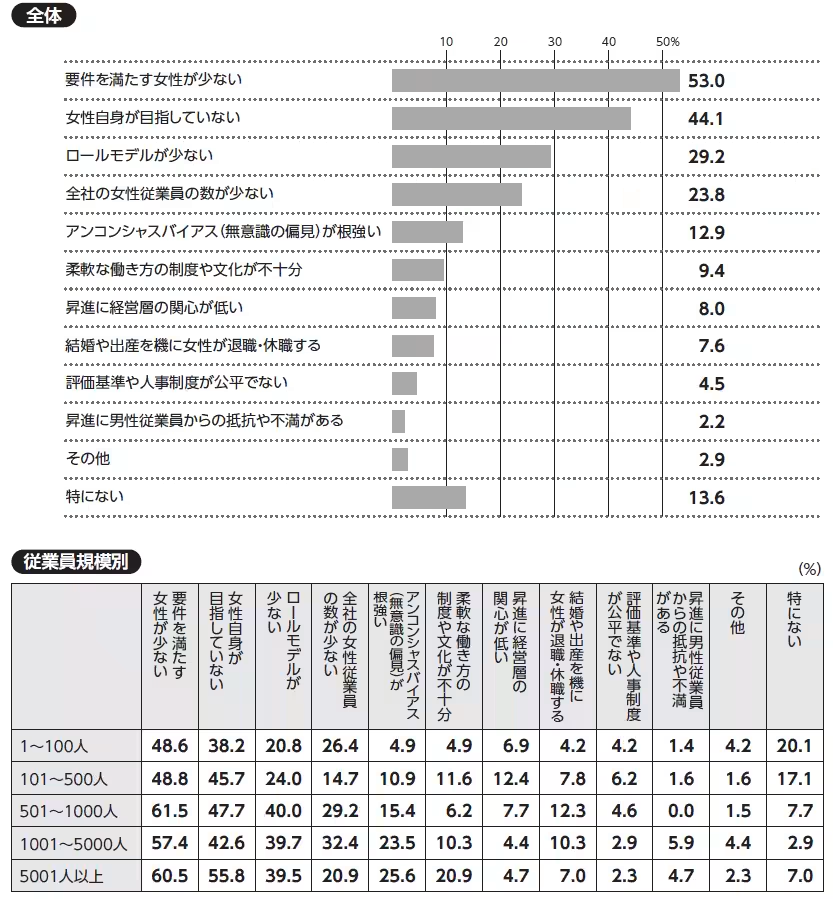
For the advancement of women to department head roles, the major challenge highlighted was the lack of qualified individuals, reported by 53.0% of companies. Other concerns included a lack of ambition amongst women (44.1%) and the absence of role models (29.2%). Interestingly, data revealed a higher percentage (over 39%) of larger firms identified a shortage of role models compared to the overall response (29.2%).
3. Promotion to Executive Positions
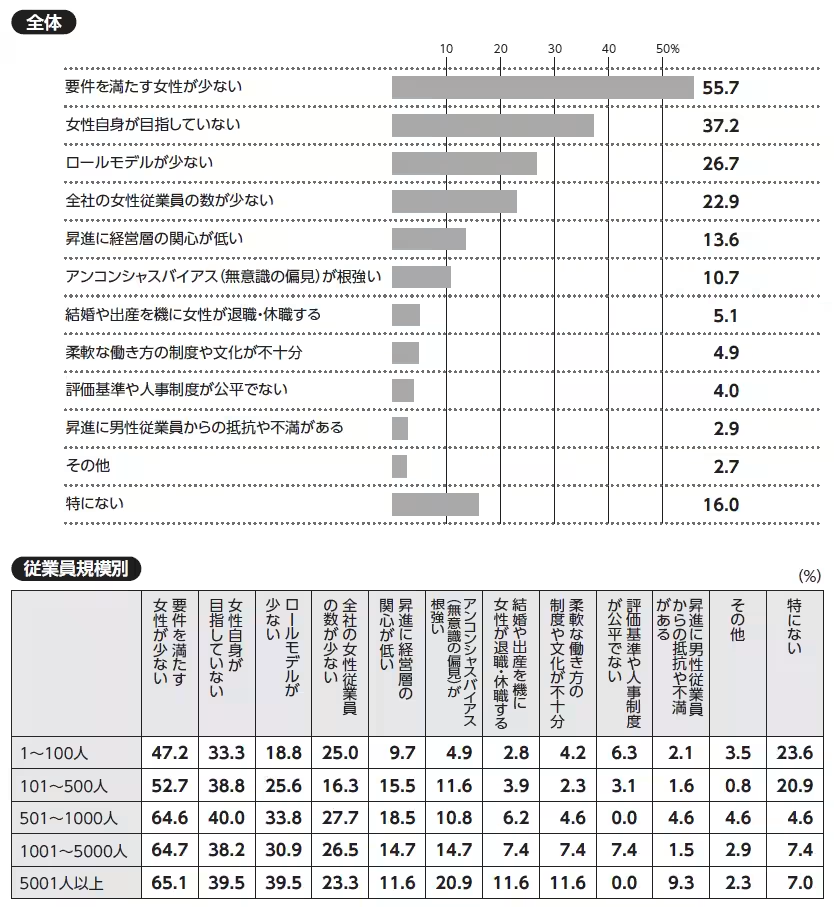
The challenges faced in promoting women to executive positions were similarly concerning, with 55.7% of participants stating there are not enough qualified candidates. Additionally, a lack of ambition among women (37.2%) and the absence of role models (26.7%) were frequently mentioned. Again, larger firms consistently reported higher percentages of concern regarding the lack of qualified women for executive roles.
Expert Commentary
Academic insights provided by Dr. Ikutaro Masaki, an associate professor in psychology at Tokyo Women’s University, emphasize the necessity for companies to reassess their developmental frameworks for female executives. He notes that barriers to promotion vary significantly between managerial and executive positions, which suggests the need for tailored approaches depending on the specific role.
Dr. Masaki emphasizes that rather than adhering to a one-size-fits-all narrative, companies should delve into the underlying reasons for these disparities and adjust their strategies accordingly.
Broader Context and Implications
This report also touches upon broader themes within human resource management, shedding light on strategic HR practices and recruitment challenges facing new graduate hires. A significant finding indicates that only 47.0% of companies felt they successfully met their hiring requirements for new graduates, signaling a potential issue with both the quantity and quality of candidates. Companies also reported that they expect attributes such as autonomy from their younger employees.
In summary, while Japan has made strides toward improving gender diversity in corporate leadership, substantial challenges remain. Addressing unconscious biases, fostering suitable role models, and enhancing the qualifications of female candidates are pivotal steps toward creating a more inclusive corporate environment. Therefore, it is crucial for organizations to engage with this complex issue, tailoring their strategies to promote women's advancement effectively.
Topics People & Culture)






【About Using Articles】
You can freely use the title and article content by linking to the page where the article is posted.
※ Images cannot be used.
【About Links】
Links are free to use.