




Enhancing Marriage Support in Okayama: A Focused Workshop by Omikare
Enhancing Marriage Support in Okayama: A Focused Workshop by Omikare
Omikare, a leading marriage support platform in Japan, is hosting a critical workshop aimed at local government officials in Okayama Prefecture on February 18, 2026. The event is set to focus on fostering genuine connections in the community to combat declining marriage rates among the youth. With over a million members and recognized as Japan's number one marriage event information site, Omikare is uniquely positioned to provide insights and resources for effective marriage support.
Workshop Context
Situated in the hilly terrains of the northeastern region of Okayama, the Mimasaka area includes ten municipalities, including Tsuyama, Mimasaka, and Maniwa. Interestingly, this local vicinity faces significant demographic challenges; many areas struggle with attracting attendees to marriage events due to dwindling populations and transportation limitations.
Despite a growing desire among younger individuals to marry, a lack of opportunities for meaningful connections, excessive information, and fear of failure often impede action. In this context, Omikare's initiative is to convey practical methodologies to improve wedding support efforts linked to local realities, stemming from their prior collaborations with various municipalities.
Workshop Objectives
The workshop has three main objectives:
1. Identifying Barriers: It aims to explore why a notable portion of young individuals, often described as "marriage lost," are hesitant to participate in marriage activities. By understanding their fears and hesitations, attendees will gain insights into effective communication and strategy development.
2. Updating Support Strategies: The focus here is on adapting initiatives to meet the changing values of younger generations, particularly Gen Z, who possess a heightened awareness of cost-benefit perceptions regarding relationships.
3. Building Practical Frameworks: This involves sharing know-how on how municipalities, even with limited resources, can design and execute engaging events that resonate with the younger populace’s expectations while reducing their operational burdens.
Detailed Program
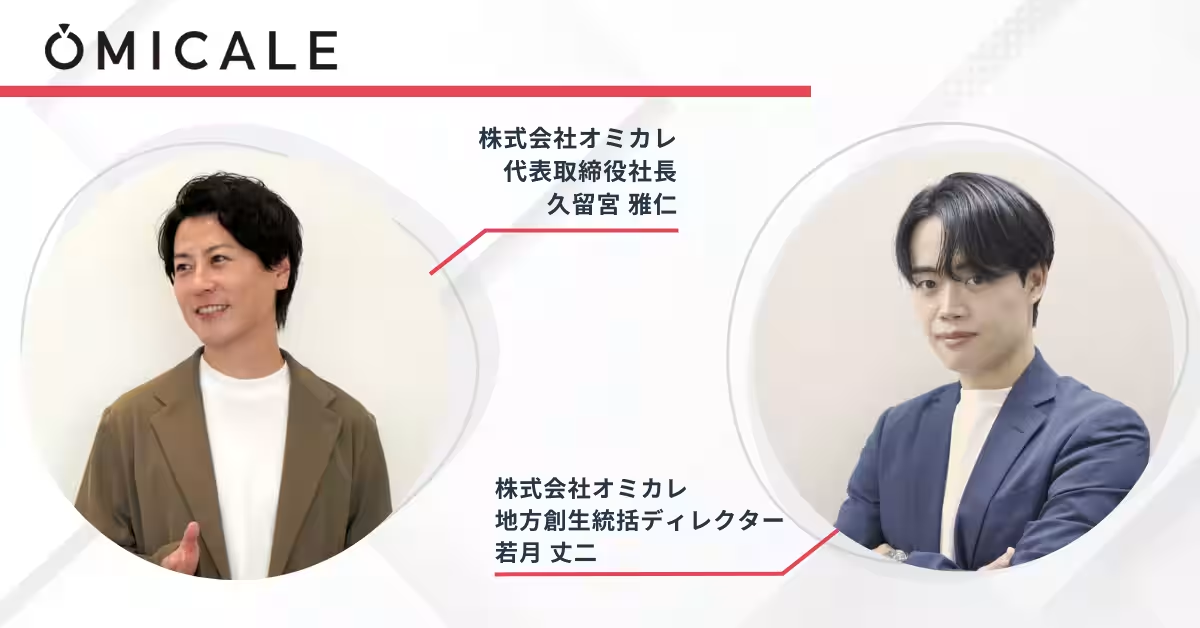
The workshop will feature engaging sessions led by Omikare’s CEO, Masahito Kurumiya, and the firm's Director of Regional Revitalization, Joji Wakatsuki.
Program Itinerary (Total Duration: 120 minutes)
- - Part 1 (50 minutes): This segment will include a company introduction, discussion on collaborative achievements with municipalities (including examples from Okayama), a deep dive into current societal conditions surrounding marriage and dating, insights on young people's romantic aspirations with a focus on Gen Z, current trends in marriage and dating services, and the essentials of hosting marriage events.
- - Part 2 (70 minutes): This will be an interactive session for questions and discussion among participants, allowing municipalities to exchange ideas and experiences.
Workshop Logistics
- - Date: February 18, 2026
- - Time: 10:00 AM - 12:00 PM
- - Venue: Mimasaka Prefectural Bureau, 5th Floor Conference Room, Tsuyama City
- - Target Audience: Officials from municipalities engaged in declining birthrate countermeasures, marriage support, and local revitalization.
Insights from Local Officials
Local officials emphasize the urgency of addressing demographic concerns. The Mimasaka Prefectural Bureau has taken proactive steps since 2017, initiating a matchmaking system known as "Enmusubi Network," along with hosting various events to facilitate connections. However, specific areas show a notable decline in youth and female populations. Collaborative efforts with Omikare aim to yield strategies that are both appealing and relevant to younger demographics.
Future Directions for Omikare
Moving forward, Omikare seeks to cement its role as a 'marriage support partner' for municipalities, continuing to deliver insights and event design support tailored to local needs. Their collaboration with Okayama's "Hare Koi / Hare Kon Project" represents a significant step towards energizing young people's positive attitudes towards romance and marriage. A shared commitment between public and private sectors is vital for realizing effective marriage support initiatives, allowing individuals to take meaningful steps in their relational journeys.
Conclusion
Through comprehensive workshops like this, Omikare is committed to illuminating pathways to meaningful community connections. By addressing local needs and leveraging their extensive platform, they aim to cultivate a landscape where marriage thrives in Okayama, adapting to the evolving demands of the younger generation. This workshop marks a crucial step toward building an inclusive and supportive framework for the youth in the region.


Topics People & Culture)
【About Using Articles】
You can freely use the title and article content by linking to the page where the article is posted.
※ Images cannot be used.
【About Links】
Links are free to use.