




Exploring Eye Health and Vision Correction During Pollen Season
Understanding the Impact of Pollen Season on Eye Health
As spring approaches, many people find themselves struggling with pollen allergies. While common symptoms like sneezing and runny noses are widely recognized, eye-related issues such as itchiness, redness, and a gritty sensation (seasonal allergic conjunctivitis) are equally bothersome. This is particularly true for contact lens users, who often face heightened discomfort during pollen season. A survey conducted by our company in March 2025 revealed that among individuals in their 20s to 40s who are concerned about myopia, pollen allergies rank as the second most frustrating issue in their daily lives. This indicates that not only do they face inconveniences from myopia, but the added discomfort from pollen season significantly burdens those in need of vision correction.
In this article, we focus on the relationship between eye troubles during pollen season and vision correction methods. We aim to explore how being able to see clearly without glasses can serve as an effective pollen defense strategy. We consulted Dr. Hiroshi Asao, an ICL (Implantable Contact Lens) instructor and director of Asao Eye Clinic, to gain insights into this innovative vision correction option.
Pollen and Contact Lenses: A Recipe for Eye Trouble
Pollen allergies have become a widespread issue, affecting one in two people in Japan. In a targeted survey for those with myopia, allergic conjunctivitis caused by pollen ranked among the top three concerns beside anxiety during disasters and dry eye syndrome. Pollen allergies arise when the immune system mistakenly reacts to harmless pollen as a harmful substance, leading to excessive allergic reactions. Various pollen types can trigger these allergies depending on the season: cedar and cypress in spring, sweet vernal grass and ragweed in early summer, and mugwort in autumn.
Particularly problematic are cedar and cypress pollens, which start dispersing around early February and peak around March. During this time, many patients seek medical attention due to intense itching, redness, and a feeling of foreign bodies in their eyes. This condition is medically recognized as seasonal allergic conjunctivitis.
Moreover, for those who wear contact lenses, the symptoms of seasonal allergic conjunctivitis can be exacerbated. One reason is dry eye syndrome. Wearing contact lenses decreases tear volume and increases evaporation, leading even those who normally do not suffer from dry eyes to experience these symptoms. Dr. Asao warns that when dry eyes and allergic conjunctivitis coincide, the latter's symptoms can worsen significantly. Additionally, dirty contact lenses can trigger excessive immune reactions, potentially leading to conjunctival diseases such as giant papillary conjunctivitis. Dr. Asao suggests that the cumulative effects of these various symptoms may contribute to the worsening of allergic conjunctivitis in contact lens users.
Protecting Future Vision with Proper Measures During Pollen Season
For mild cases of seasonal allergic conjunctivitis, symptoms can often be managed with eye drops. Therefore, seeking accurate diagnosis and treatment from an ophthalmologist is crucial. In addition to pollen allergies, if an individual also suffers from perennial allergies (caused by dust mites, pet dander, etc.) that manifest as atopic dermatitis, it can exacerbate seasonal allergic conjunctivitis. Rubbing or striking the eyes due to excessive itching can inflict damage on the eyeballs, increasing risks for future cataracts or retinal detachment. Dr. Asao emphasizes the importance of managing symptoms with appropriate treatment, especially when atopic dermatitis is involved.
ICL Treatment: A Compatible Solution for Pollen Season
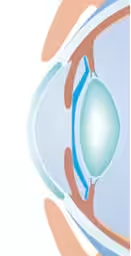
Dr. Asao proposes that for individuals with significant myopia who struggle with allergic conjunctivitis—regardless of whether their allergies are seasonal or perennial—ICL treatment can serve as an effective resolution. ICL involves implanting a lens inside the eye, circumventing the need for invasive procedures that can increase the risk of dry eyes like LASIK or traditional contact lenses. Importantly, because the lens is situated within the eye, it eliminates the risks associated with external contaminants like pollen and dust that could affect the lenses and lead to conjunctivitis.
Dr. Asao has seen many patients whose allergic conjunctivitis and dry eyes have worsened to the point where wearing contact lenses is no longer feasible. Some have reported improvements in both conjunctivitis and dry eye symptoms after opting for ICL treatment. Nonetheless, Dr. Asao stresses that if allergic conjunctivitis symptoms are severe, the immediate priority should be to alleviate those symptoms before undergoing ICL treatment, which should ideally be approached once the conjunctivitis has stabilized. Therefore, individuals who face recurrent severe pollen allergies may benefit from scheduling their ICL treatment before peak pollen season arrives.
Consulting with an Eye Specialist for ICL Treatment
Hearing about the insertion of a lens into the eye may evoke fear in some individuals. In response, Dr. Asao, who has extensive experience as an ICL certified physician, assures that his clinic employs anesthetic eye drops along with nitrous oxide sedation for all patients, making the procedure more comfortable. The surgery typically lasts around 20 to 30 minutes for both eyes and carries a low risk of infection. According to Dr. Asao, proper post-operative care can further minimize infection risks. Unlike LASIK, which involves reshaping the cornea, it is possible to adjust or replace the lens if patients are dissatisfied with their vision.
However, it is crucial to note that ICL treatment isn’t necessarily a viable option for everyone. Certain criteria regarding age and eye conditions need to be fulfilled. Depending on the progression of myopia and the health of the eyes, the best treatment method can vary. Hence, it is essential to consult a specialist ophthalmologist to discuss pollen allergies and lifestyle concerns thoroughly. Identifying the most suitable option becomes paramount for enjoying a more comfortable pollen season. Let's take a moment to reassess both our eye health and vision correction methods.



Topics Health)
【About Using Articles】
You can freely use the title and article content by linking to the page where the article is posted.
※ Images cannot be used.
【About Links】
Links are free to use.