


Exploring Small Modular Reactors: The Future of Energy in the AI Era
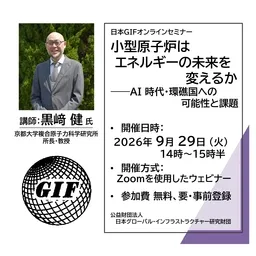
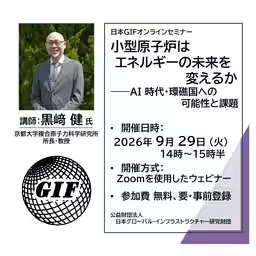
The Japan Global Infrastructure Foundation (Japan GIF) is set to host an enlightening online seminar aimed at discussing the future of energy through small modular reactors (SMRs). On September 29, 2026, at 2:00 PM (JST), attendees will have the chance to hear from Professor Ken Kurozaki of Kyoto University on the topic, "Do Small Modular Reactors Change the Future of Energy — Possibilities and Challenges for AI Era and Island Nations?"
As the world strives to balance decarbonization with energy security, the increasing demand for electricity, driven by the proliferation of generative AI and data centers, becomes a pressing concern. In this context, SMRs, or small modular reactors, are garnering attention for their lower output and smaller scale compared to conventional reactors. This flexibility allows them to be implemented according to specific installation sites and purposes. They can be seen as a potential solution to global energy challenges that transcend national borders.
One key focus of this seminar will be the application of SMRs in island nations, where energy costs are high due to reliance on diesel and fuel transportation. As we explore the exciting possibilities SMRs hold, it is crucial to address the real-world hurdles associated with their implementation in these regions.
1. Understanding Nuclear Power Generation
Nuclear power utilizes the heat generated by the nuclear fission of uranium and plutonium to produce steam that drives turbines and generators—similar to traditional thermal power generation. While nuclear power does not emit CO₂ during generation, it does produce radioactive waste that must be managed appropriately.
2. Advantages of Nuclear Power
Nuclear energy offers stable and large-scale power supply with minimal CO₂ emissions during generation, making it a competitive option in the energy market. Globally, there is a growing initiative to reassess the value of nuclear energy, with countries like the UK and the US planning to expand their generating capacities by 2050. Japan also recognizes the potential rise in electricity demand tied to the proliferation of AI and data centers, with tech giants considering nuclear as a low-carbon power source.
3. Challenges Facing Nuclear Power
Despite its advantages, nuclear power carries significant challenges, including the catastrophic potential of accidents and the unresolved issue of high-level radioactive waste disposal, where Japan lags behind Nordic countries that are advanced in geological disposal strategies.
4. What is SMR?
SMRs represent a new category of nuclear reactor design focused on standardization, modularity, and factory fabrication. Typically rated at around 300,000 kW, SMRs are significantly smaller than large-scale reactors. This category includes various designs such as light-water reactors, high-temperature gas-cooled reactors, and fast reactors, tailored for smaller energy demand.
Currently, American projects are underway while Japanese companies are in the development stage of SMRs.
5. Potential Use of SMR in Islands and Atolls
Islands and atoll nations face unique energy challenges, with small power demands coupled with reliance on diesel power, leading to high electricity prices and vulnerabilities in fuel supply due to maritime conditions. The application of SMRs brings the promise of affordable, stable energy sources that reduce fuel transport frequency. Moreover, there exists potential for coupling SMRs with renewable energy sources, battery storage, desalination processes, and hydrogen production.
However, the small electricity demand in some islands could render initial investments and regulatory challenges greater, emphasizing the need to consider societal acceptance, emergency response mechanisms, and waste disposal issues.
To maximize the value of SMRs, it is critical to integrate them not just as power generators, but also into comprehensive island energy systems that include thermal use, hydrogen production, and desalination.
During the Q&A session post-lecture, attendees raised a variety of questions related to the utilization of nuclear power for data centers, safety comparisons between SMRs and conventional reactors, and the economic feasibility of implementing SMRs in island nations. The seminar concluded with positive feedback, as 90.9% of the 22 respondents indicated that they found the seminar insightful, particularly the segment focusing on the varieties and value of SMRs, which was highlighted as being especially accessible to those without a technical background.
Ken Kurozaki serves as the Director and Professor at the Kyoto University Reactor Research Institute. Born in 1973 in Tokushima, he graduated from Osaka University with a degree in nuclear engineering and has held various academic positions. He became a full professor at Kyoto University in 2019 and has served as the institute's director since 2023.

Seminar Background
As the world strives to balance decarbonization with energy security, the increasing demand for electricity, driven by the proliferation of generative AI and data centers, becomes a pressing concern. In this context, SMRs, or small modular reactors, are garnering attention for their lower output and smaller scale compared to conventional reactors. This flexibility allows them to be implemented according to specific installation sites and purposes. They can be seen as a potential solution to global energy challenges that transcend national borders.
One key focus of this seminar will be the application of SMRs in island nations, where energy costs are high due to reliance on diesel and fuel transportation. As we explore the exciting possibilities SMRs hold, it is crucial to address the real-world hurdles associated with their implementation in these regions.
Key Points of Discussion
1. Understanding Nuclear Power Generation
Nuclear power utilizes the heat generated by the nuclear fission of uranium and plutonium to produce steam that drives turbines and generators—similar to traditional thermal power generation. While nuclear power does not emit CO₂ during generation, it does produce radioactive waste that must be managed appropriately.
2. Advantages of Nuclear Power
Nuclear energy offers stable and large-scale power supply with minimal CO₂ emissions during generation, making it a competitive option in the energy market. Globally, there is a growing initiative to reassess the value of nuclear energy, with countries like the UK and the US planning to expand their generating capacities by 2050. Japan also recognizes the potential rise in electricity demand tied to the proliferation of AI and data centers, with tech giants considering nuclear as a low-carbon power source.
3. Challenges Facing Nuclear Power
Despite its advantages, nuclear power carries significant challenges, including the catastrophic potential of accidents and the unresolved issue of high-level radioactive waste disposal, where Japan lags behind Nordic countries that are advanced in geological disposal strategies.
4. What is SMR?
SMRs represent a new category of nuclear reactor design focused on standardization, modularity, and factory fabrication. Typically rated at around 300,000 kW, SMRs are significantly smaller than large-scale reactors. This category includes various designs such as light-water reactors, high-temperature gas-cooled reactors, and fast reactors, tailored for smaller energy demand.
Currently, American projects are underway while Japanese companies are in the development stage of SMRs.
5. Potential Use of SMR in Islands and Atolls
Islands and atoll nations face unique energy challenges, with small power demands coupled with reliance on diesel power, leading to high electricity prices and vulnerabilities in fuel supply due to maritime conditions. The application of SMRs brings the promise of affordable, stable energy sources that reduce fuel transport frequency. Moreover, there exists potential for coupling SMRs with renewable energy sources, battery storage, desalination processes, and hydrogen production.
However, the small electricity demand in some islands could render initial investments and regulatory challenges greater, emphasizing the need to consider societal acceptance, emergency response mechanisms, and waste disposal issues.
To maximize the value of SMRs, it is critical to integrate them not just as power generators, but also into comprehensive island energy systems that include thermal use, hydrogen production, and desalination.
Q&A and Participant Feedback
During the Q&A session post-lecture, attendees raised a variety of questions related to the utilization of nuclear power for data centers, safety comparisons between SMRs and conventional reactors, and the economic feasibility of implementing SMRs in island nations. The seminar concluded with positive feedback, as 90.9% of the 22 respondents indicated that they found the seminar insightful, particularly the segment focusing on the varieties and value of SMRs, which was highlighted as being especially accessible to those without a technical background.
Webinar Details
- - Hosted by: Japan Global Infrastructure Foundation (Japan GIF)
- - Date: September 29, 2026
- - Time: 2:00 PM - 3:30 PM JST
- - Format: Zoom webinar
- - Speaker: Ken Kurozaki, Professor and Director of the Kyoto University Reactor Research Institute
- - Cost: Free
- - Video Link: Watch Here
Speaker's Biography
Ken Kurozaki serves as the Director and Professor at the Kyoto University Reactor Research Institute. Born in 1973 in Tokushima, he graduated from Osaka University with a degree in nuclear engineering and has held various academic positions. He became a full professor at Kyoto University in 2019 and has served as the institute's director since 2023.
Topics Energy)

【About Using Articles】
You can freely use the title and article content by linking to the page where the article is posted.
※ Images cannot be used.
【About Links】
Links are free to use.