



The Taru Stick Project: Transforming Local Resources into Unique Experiences
The Taru Stick Project: A New Way to Enjoy Spirits
The Itakura Laboratory at the Tokyo Metropolitan Institute of Technology (AIIT), located in Shinagawa, Tokyo, has been dedicated to regional revitalization through research since its inception. Under the leadership of Professor Hiroaki Itakura, the laboratory has engaged in various initiatives over the years focusing on Hinohara Village, a tranquil area rich in natural resources. Among the notable achievements of the past eight years are the excavation of village treasures, forest therapy development, and the creation of unique beverages made from local timber.
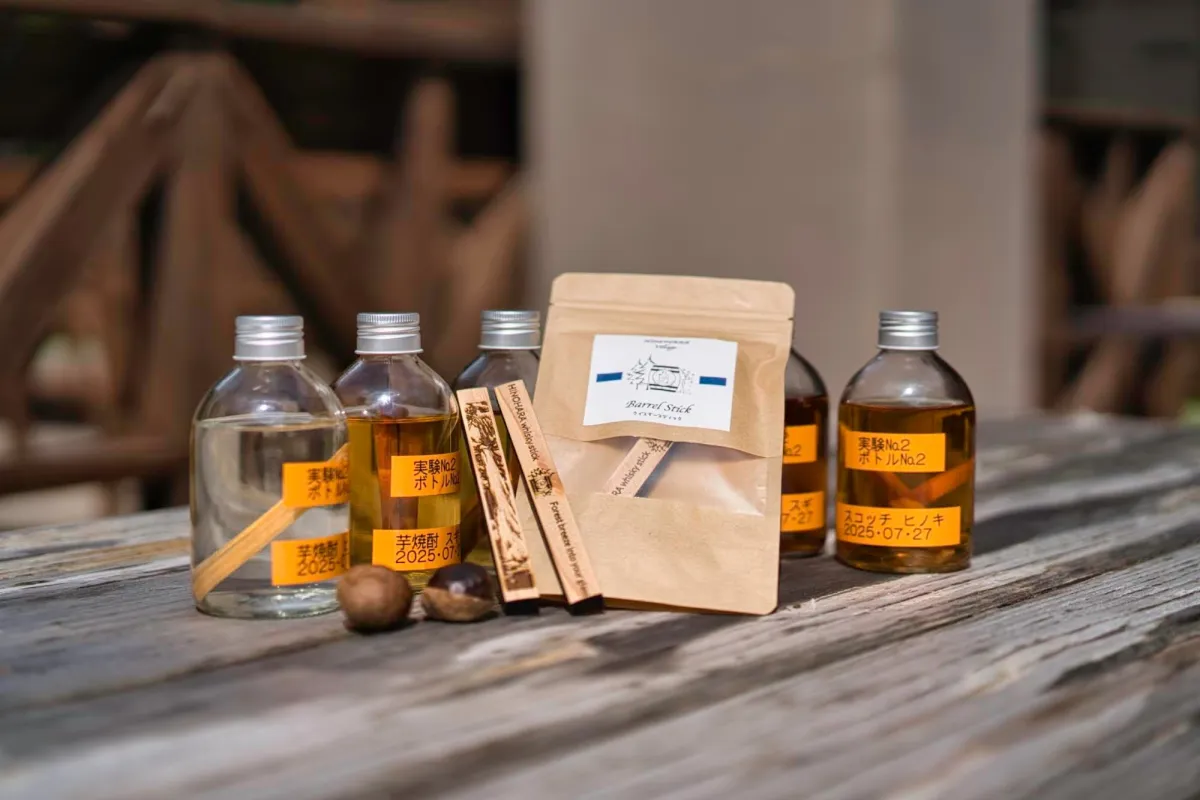
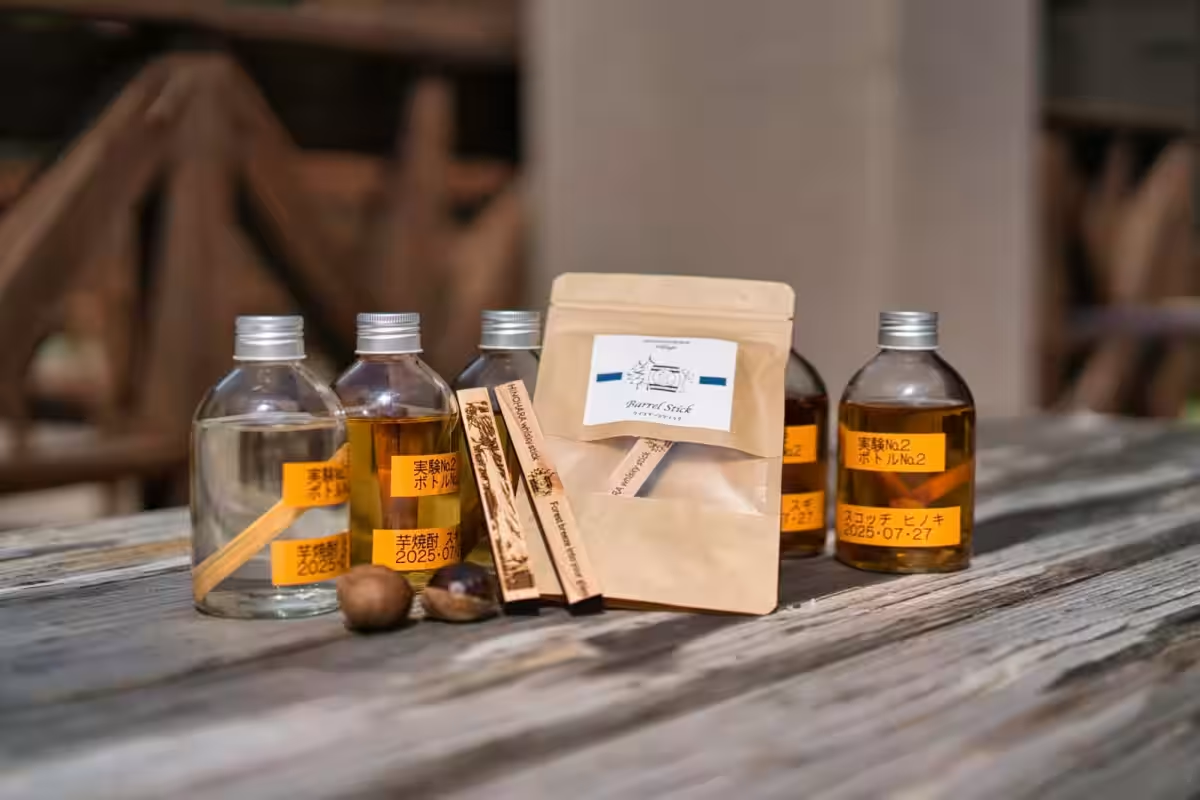
In 2025, the Itakura Laboratory's students launched the innovative "Taru Stick" project, designed to transform local wood resources into a delightful experience for spirits enthusiasts. This project involves crafting wooden sticks that can be infused into beverages like whiskey and shochu, allowing consumers to easily enhance flavors and aromas over time.
What is the Taru Stick?
Simply put, the Taru Stick is a product that innovatively condenses the process of barrel-aging into a single stick. Traditionally, whiskey undergoes a significant change in taste due to aging in wooden barrels. The Taru Stick lets drinkers experience this transformation at home – just place the stick into a bottle of spirit and let it sit for several days to weeks. Each type of wood imparts different flavors; for instance, oak tends to add smoothness and sweetness, while cedar provides a fruity note, and cypress carries a distinct aromatic signature that can polarize opinions.
This product not only offers an exciting new way to enjoy alcoholic beverages but also utilizes Japan's abundant wood resources. Though the market for Taru Sticks is still developing, there is a growing anticipation surrounding its potential as a product that invites consumers to explore the unique stories connected to each region's wood.

Activities by AIIT Students
Students at AIIT, many of whom are working professionals, dedicate their evenings and weekends to research. In their 2025 initiatives, they identified the abundant timber in Hinohara Village and conducted market research to determine the best ways to utilize it. This led to the focus on creating Taru Sticks from leftover wood and enlisting local collaborators to produce and test prototypes, evaluate flavor changes in whiskey, and overall consumer experience.
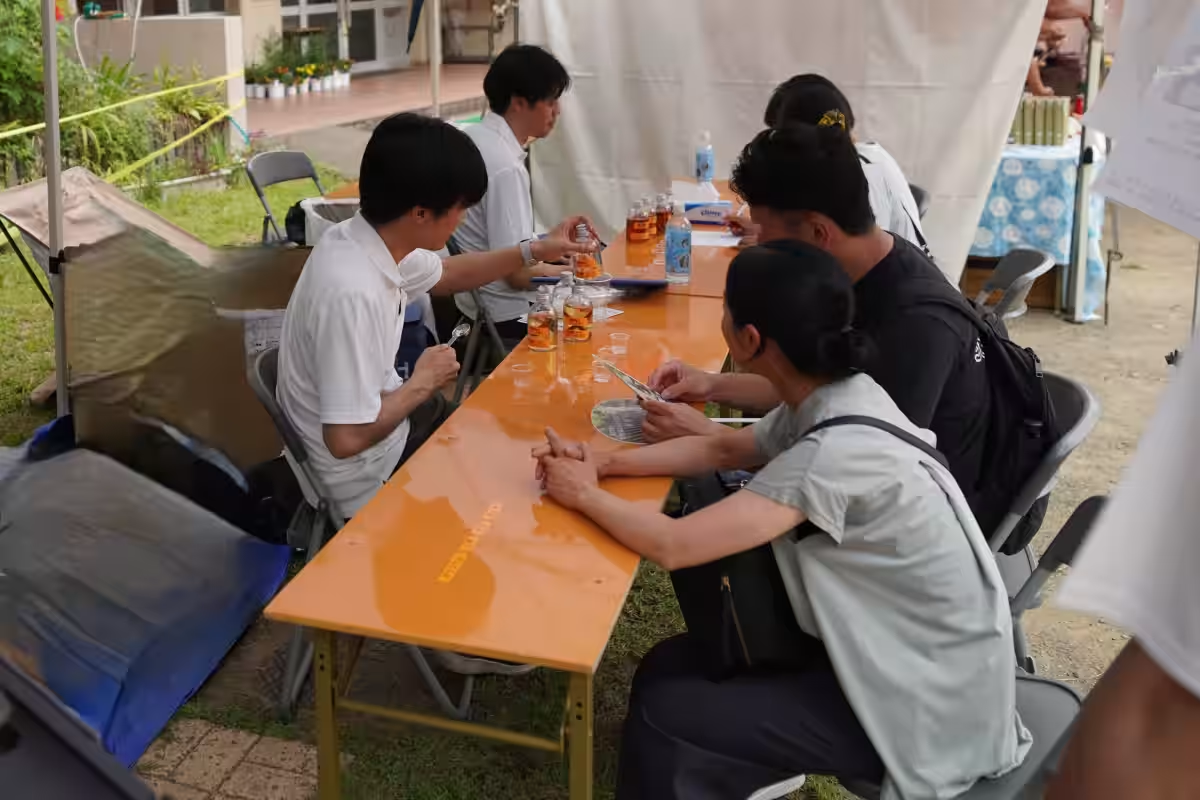
During the annual "Haru no Takis Summer Festival" in Hinohara Village, the AIIT team set up an experiential booth where visitors could sample Taru Sticks and provide much-appreciated feedback. Many attendees expressed enthusiasm, stating that the varied flavors offered by the different wood types allowed for multiple taste experiences. Comments included sentiments like, “The flavor changes dramatically with each wood type, offering numerous ways to enjoy!”
The detailed activities and research undertaken by the students can be found on their YouTube channel dedicated to the lab's projects.
Future Prospects
The forthcoming "4th Hinohara Forest Forum" will showcase progress on the Taru Stick project alongside presentations from local businesses and community initiatives. This event is scheduled for November 29, 2025, at the Hinohara Village Hall and aims to foster discussions on sustainable forestry and community revitalization.
With the intention of taking the Taru Sticks to market, efforts will expand to include local souvenir shops and online distribution channels alongside participation in tourism pathways such as airports. The Taru Stick development is not conclusively about creating a product; instead, it is about reigniting appreciation for the beauty of Hinohara Village's wooden heritage and raising awareness about its environmental significance.
AIIT is also planning to collaborate with local facilities to incorporate Taru Stick creation into woodworking experience programs for tourists, fostering deeper connections to the region.
The Itakura Laboratory's ongoing endeavors will be documented and shared on their official YouTube channel, keeping the public informed about novel developments and future updates.
For more information about the Taru Stick project and other activities, please visit the following links:
Topics Consumer Products & Retail)
【About Using Articles】
You can freely use the title and article content by linking to the page where the article is posted.
※ Images cannot be used.
【About Links】
Links are free to use.