



Understanding the Realities of Car-Sharing Users and Vehicle Owners in Japan
Exploring the Realities of Car-Sharing and Vehicle Ownership in Japan
In a dynamic era where urban lifestyles evolve, car-sharing has emerged as an attractive mobility solution for residents in Japan.
A recent investigation conducted by AtHome Corporation, a prominent real estate information service based in Ota City, Tokyo, surveyed a diverse group of 301 car-sharing users and 542 vehicle owners aged 18 to 59. The aim of the study was to understand their behaviors, preferences, and the information they seek from real estate companies.
Key Findings from Car-Sharing Users
Purpose of Use
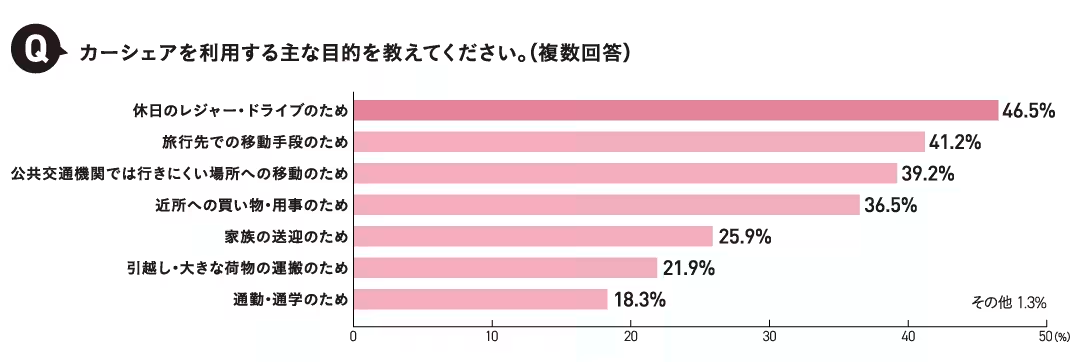
The primary motive for utilizing car-sharing services highlights the increasingly popular trend of leisure activities, with 46.5% of respondents indicating they use it for weekend outings and drives. This indicates a common reliance on car-sharing for transporting to remote holiday spots or locations challenging to access via public transit.
Accessibility of Car-Sharing Stations
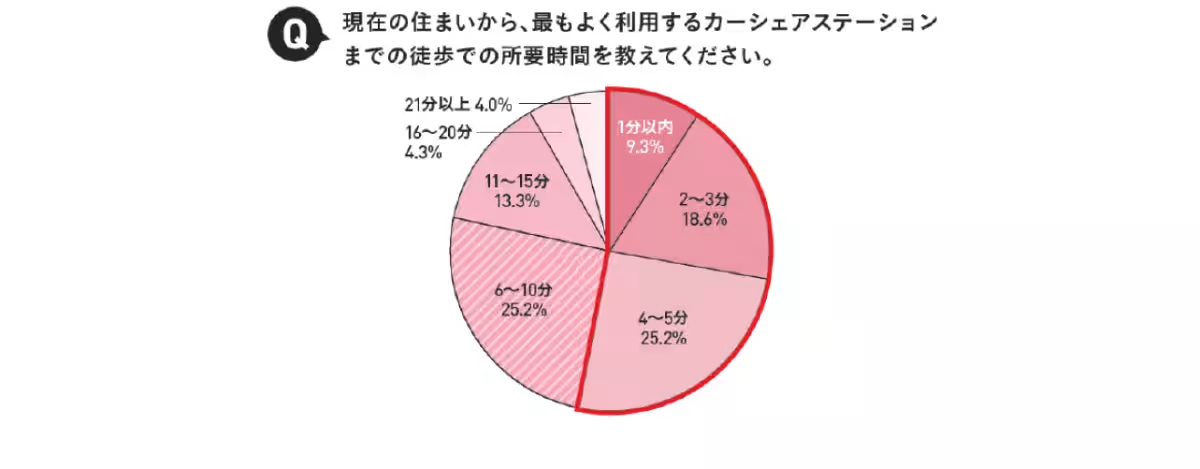
A noteworthy 53.1% of participants reported having a car-sharing station within a 5-minute walk from their residences. This proximity suggests that access to car-sharing services significantly influences housing choices, as most individuals prefer living close to such facilities.
Preference for C to C Services
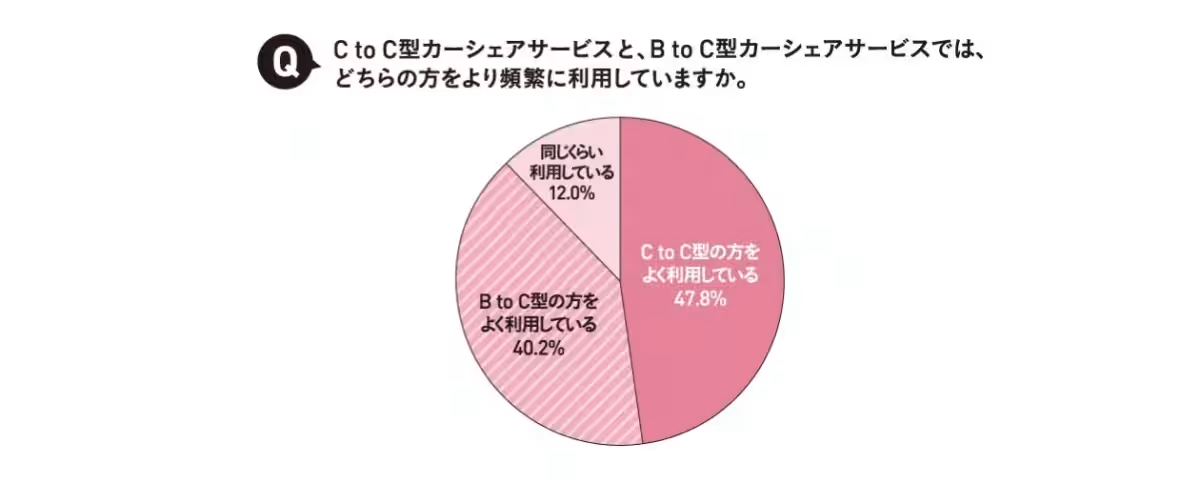
Among various car-sharing options, 47.8% favored C to C (consumer-to-consumer) models, highlighting a growing trend for peer-to-peer interactions. The convenience of booking directly with individuals has made C to C services increasingly popular among users seeking flexibility.
Interest in Location-Based Property Searching
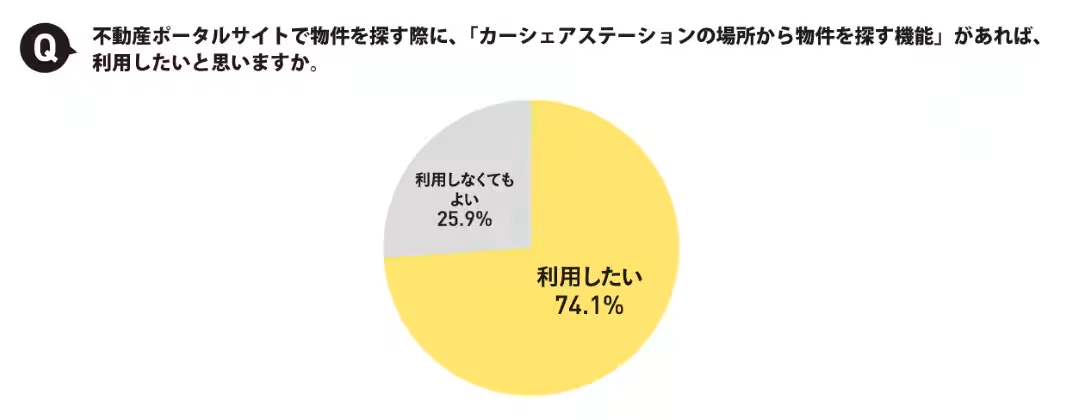
Over 74.1% of those surveyed expressed interest in features that allow them to search for properties based on the location of nearby car-sharing stations, reflecting a clear desire for informed house hunting that integrates transportation choices.
Insights from Vehicle Owners
Use of Property-Linked Parking
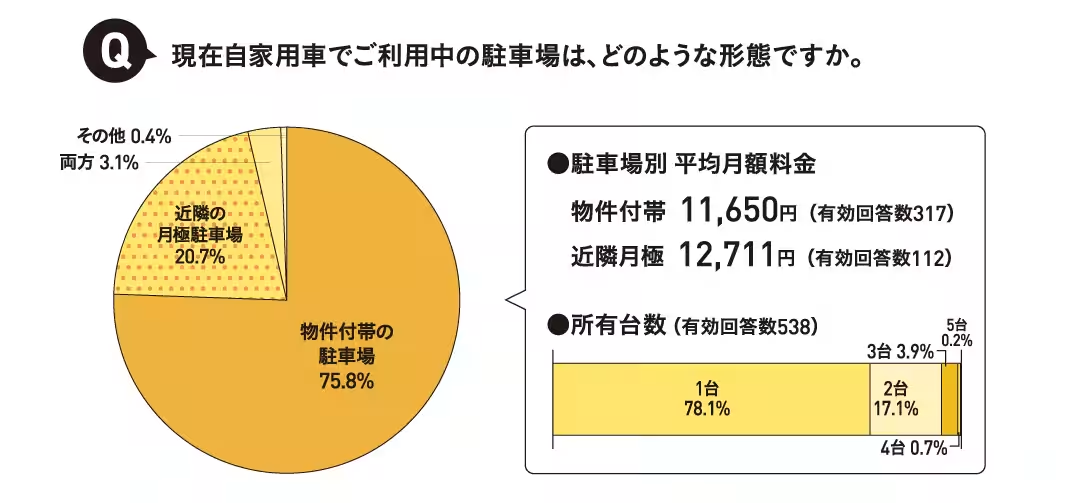
In contrasting trends, it was revealed that 75.8% of vehicle owners utilize parking spaces that are part of their rental properties. This finding underscores a strong preference for secure parking options provided directly with their living arrangements, minimizing the hassle of seeking outside options. The average monthly cost for property-linked parking stood at 11,650 JPY, closely comparable to 12,711 JPY for nearby monthly parking. Hence, owners perceive minimal financial differences between these choices.
Method of Finding Parking
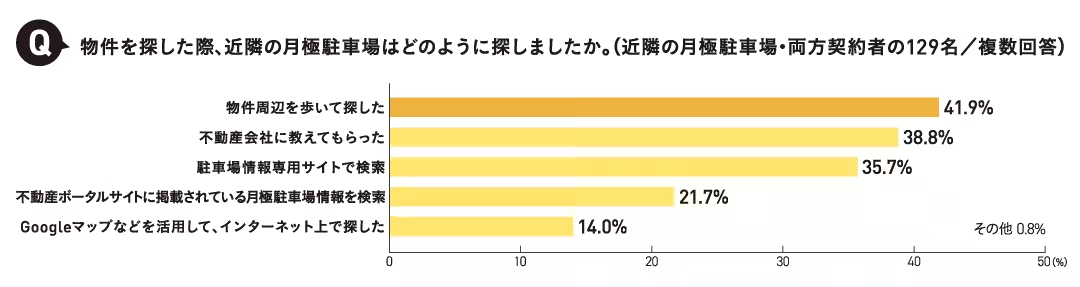
When asked how they discovered nearby monthly parking, a considerable 41.9% reported they simply walked around their neighborhoods. This inclination shows that many drivers are still reliant on traditional methods of searching, highlighting the mixed-use of both digital and in-person strategies in the housing market.
Benefits of Vehicle Ownership
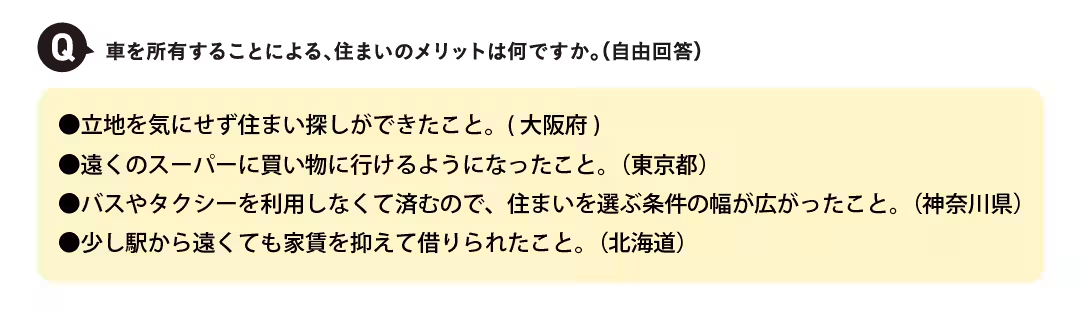
Many vehicle owners expressed that having a car makes their housing search easier, allowing them to be less concerned about specific location constraints. The freedom to live and work in different areas while maintaining a reliable transport option is a key advantage noted by respondents.
What Real Estate Companies Can Provide
Desired Information
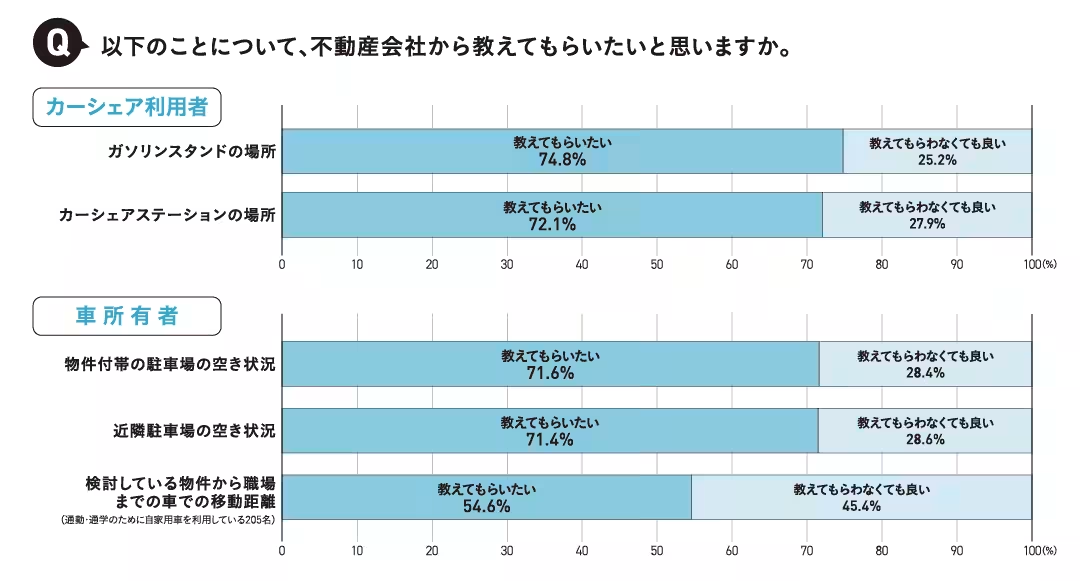
The study further investigated what information car-sharing users and vehicle owners hope to gain from real estate companies. A significant 70% of car-sharing users indicated they would like to know the locations of gas stations, while vehicle owners prioritized obtaining information about the availability of parking spaces associated with their properties. Additionally, individuals commuting for work or study expressed interest in more detailed information about driving routes and traffic conditions to their destinations.
Related Services by AtHome
Property Searching via Car-Sharing Stations
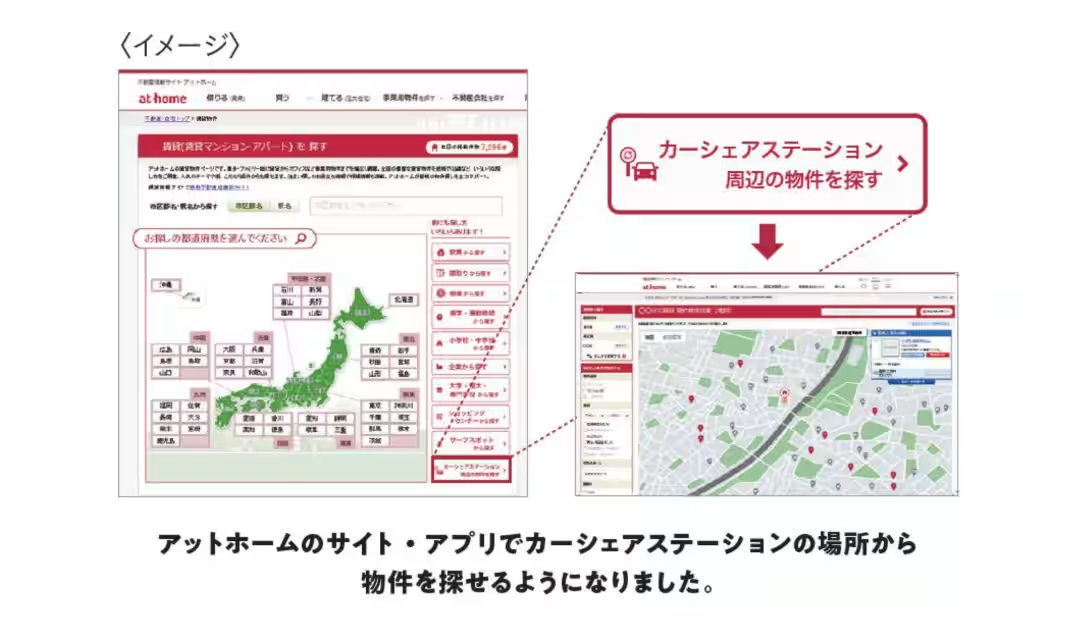
AtHome’s website and app now allow users to search for properties based on the proximity to car-sharing stations. This innovative feature aligns with the growing preference for integrated transportation options and living arrangements, marking a shift in how potential renters can effectively gauge their living situations.
Conclusion
These survey results provide a comprehensive view of the growing needs and desires of modern Japanese residents. As individuals increasingly adopt flexible living and commuting arrangements, understanding these preferences is crucial for both real estate companies and transportation providers to cater to the evolving lifestyle of urban dwellers.
For more insights and research findings on housing trends and car ownership in Japan, contact AtHome Corporation’s press and survey team.
Topics Consumer Products & Retail)





【About Using Articles】
You can freely use the title and article content by linking to the page where the article is posted.
※ Images cannot be used.
【About Links】
Links are free to use.