



Enhancing Governance: Money Forward Business Card Introduces Category-Based Restrictions for Risky Transactions
Enhancing Governance with Money Forward Business Card
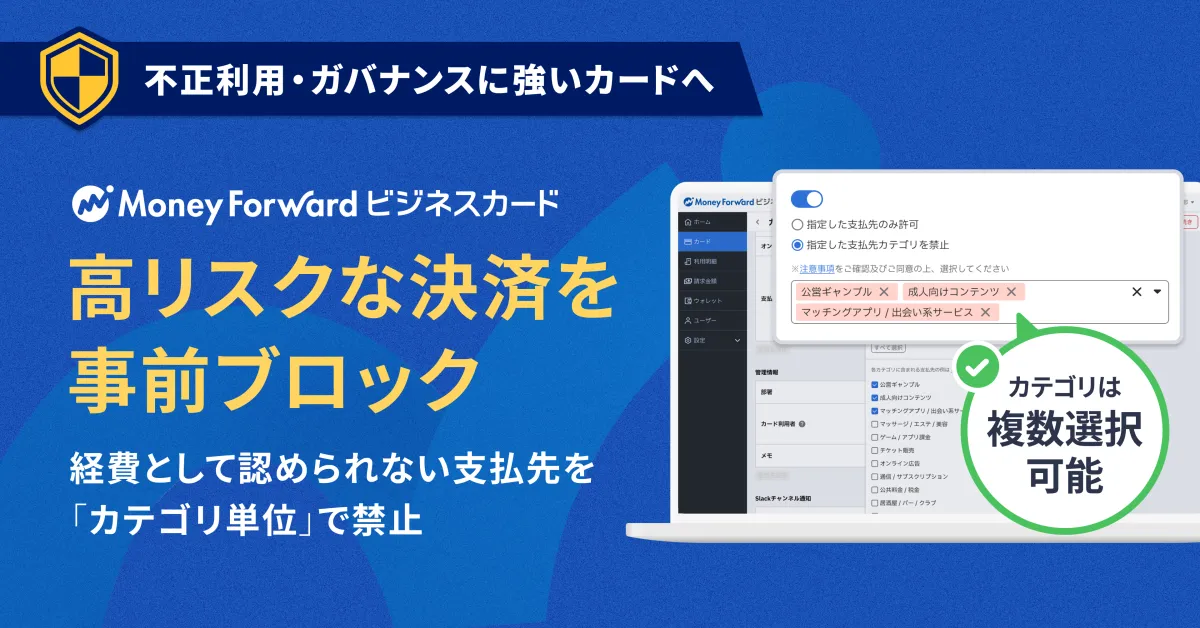
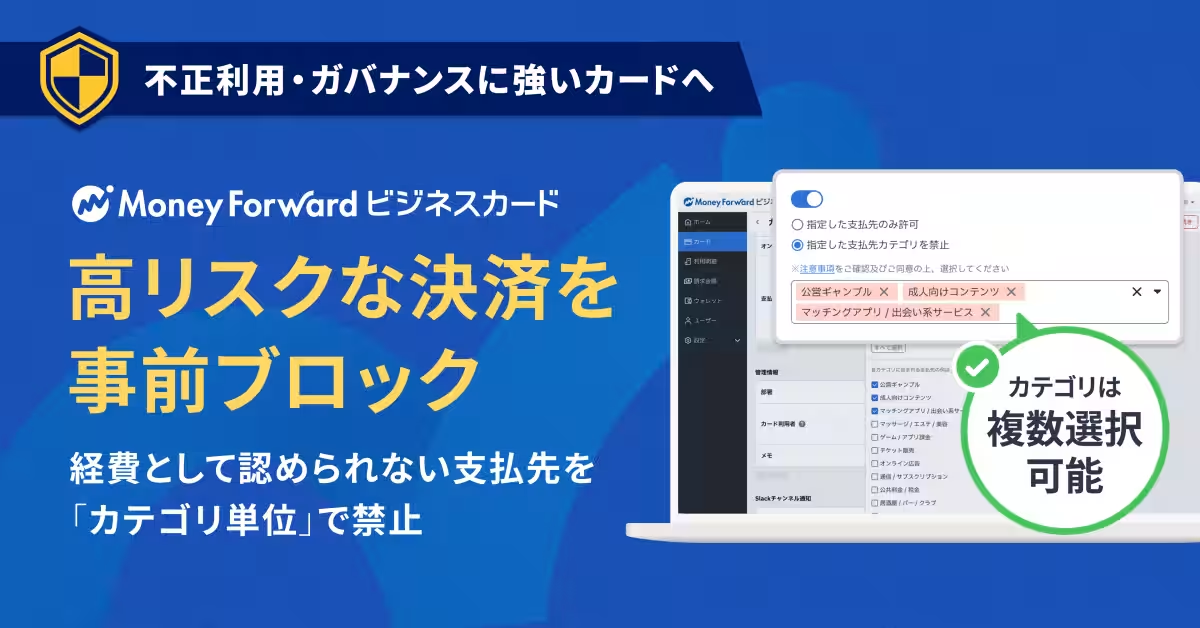
In a recent update, Money Forward, Inc. announced that its Money Forward Business Card has introduced a new feature allowing users to restrict payments based on categories. This capability is set to inhibit high-risk transactions, significantly enhancing governance and reducing the potential for fraud and misuse.
What’s New?
Previously, the option to set restrictions on user transactions was limited to individual merchants. This new update allows businesses to designate certain categories of merchants as off-limits, effectively streamlining the control process. This means that while real cards, which employees use for daily purchases, can still be utilized broadly, payments to specified high-risk categories can be pre-emptively blocked.
As organizations look to strengthen their internal controls while maintaining operational flexibility, this feature is a timely addition. By minimizing the burden of manual settings for specific merchants, especially with high-traffic expenditure categories, companies can now focus resources on more strategic areas.
The Need for Enhanced Governance
The Money Forward Business Card serves a critical role in managing daily company expenditures. While the convenience of real cards offers smooth transactional capabilities, it also opens the door for risks associated with private and unauthorized spending. Previously, users could only control payments on a merchant-by-merchant basis. This led to challenges in managing regular maintenance and updates for numerous merchants, especially in larger organizations where numerous transactions take place daily.
With feedback from users highlighting the need for an effective way to limit risky transactions without disrupting necessary corporate spending, Money Forward has developed this innovative solution. It allows businesses to navigate the fine line between ensuring employee access to necessary resources while protecting the company from possible misuse.
Features of Money Forward Business Card
The Money Forward Business Card has already established a solid reputation for safeguarding against fraudulent transactions with its sophisticated fraud detection system. Users had the ability to instantly lock their cards via the app and manage spending limits. Now, with the category restriction feature, Money Forward combines both flexible payment options with solid governance protocols.
This balance enables businesses to allow free spending in non-restrictive areas while safeguarding sensitive budget allocations. Companies can now adopt an easier ‘blacklist’ approach to restrictive payments while continuing their previously established ‘whitelist’ for necessary expenditures.
Flexibility Meets Control
Part of the strength of Money Forward’s offering is its integration with the Money Forward Cloud back-office SaaS, which allows for real-time data capture of transaction histories. This facilitates quicker monthly closes and expense management, significantly improving operational efficiency. With the ability to issue both real and virtual cards for employees, businesses maintain agility in expense processing. The option to make purchases with embedded spending limits as a “purchasing card” is also available, which appeals to various organizational needs.
Alongside its fraud detection capabilities and spending limit controls, the Money Forward Business Card has become a critical tool for internal control, allowing companies to manage financial resources effectively.
About Money Forward, Inc.
Founded in May 2012, Money Forward, Inc. is headquartered in Minato-ku, Tokyo. Under the leadership of Yoosuke Tsuji, the company focuses on platform service business solutions, driving innovation across the financial services sector. For further details and updates, please refer to Money Forward's official website.
In conclusion, the Money Forward Business Card's recent feature expansion demonstrates a forward-thinking approach to risk management, providing businesses with the tools needed to balance operational flexibility with necessary governance controls.
Topics Business Technology)
【About Using Articles】
You can freely use the title and article content by linking to the page where the article is posted.
※ Images cannot be used.
【About Links】
Links are free to use.