



Addressing the Risks of Aging Drivers: A New Solution for Family Communication and Safety
Addressing the Risks of Aging Drivers: A New Solution for Family Communication and Safety
As family members gather during the Obon holiday, conversations about driving safety can become crucial yet uncomfortable. With increasing concerns over road safety, a Fukuoka-based startup, Safe Ride, proposes an innovative solution aimed at encouraging parents to consider giving up their car keys while maintaining family bonds through gratitude.
1. The Reality Families Face: Risks Hidden in "I'm Still Okay"
As senior drivers become a growing concern, many children, particularly those in their 40s and 50s, hold a pervasive sense of false security regarding their parents' driving skills. Many think, "My parents are still capable of driving. They’re fine for now," even if they secretly worry. Statistics from the National Police Agency highlight that seniors aged 75 and above are nearly twice as likely to be involved in fatal accidents compared to younger drivers. Factors like cognitive decline and decreased vision can worsen over time, often unnoticed until it's too late.
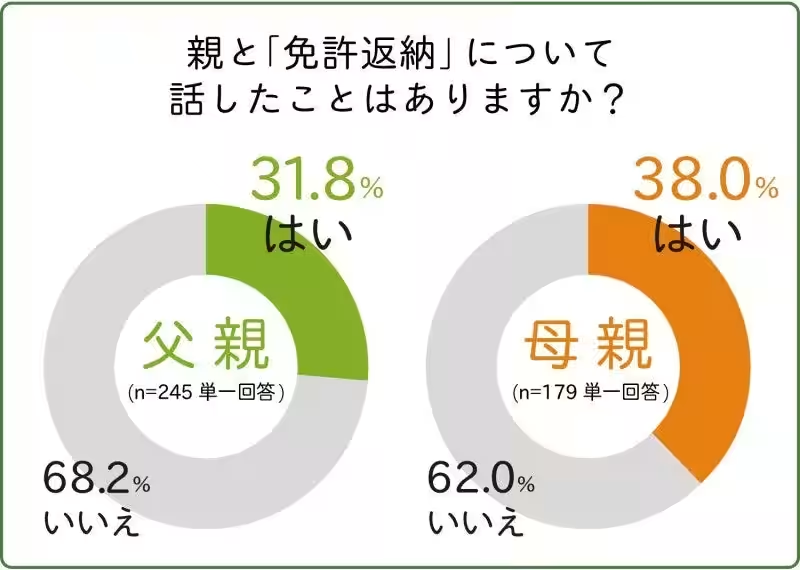
Moreover, there exists a troubling gap in communication between generations. According to a survey by NEXCO East, a large percentage of children admit to never discussing the issue of relinquishing a driving license with their parents—68.2% for fathers and 62.0% for mothers. This lack of conversation indicates a significant challenge: while driving represents not just a mode of transport but also independence and pride for many seniors, their children find it difficult to approach the topic with sensitivity.
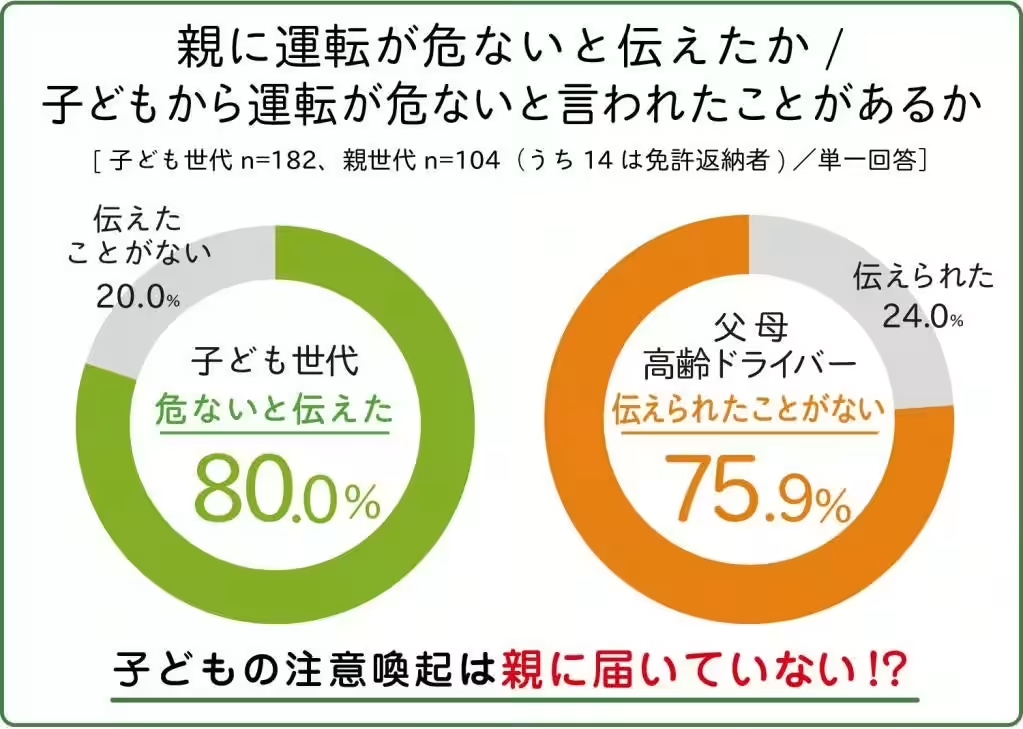
Surprisingly, even though 80% of adult children believe they have advised their parents about unsafe driving, 75.9% of elderly drivers claim they have never received such warnings. This cognitive gap often stems from parents' unawareness caused by years of safe driving, which leads them to dismiss their children's concerns as overreactions.
2. The Obon Holiday: A Prime Time for Families to Address Driving Risks
During family reunions like Obon, children can gain a clearer perspective on their parents' driving capabilities beyond just their words. The normalization bias, which leads children to believe their parents' reassurances—"I’m fine”—can create a dangerous oversight regarding their driving risks. Thus, observing changes directly during family visits offers a crucial opportunity to assess their driving situation objectively.
When visiting, consider four key areas:
- - Vehicle Condition: Check for scratches or dents on the bumper and side mirrors.
- - Driving Sensations During Rides: Remain vigilant about any hesitations or mistakes in lane changes and abrupt braking.
- - Everyday Response: Notice delays in responses during conversations or repeated questions, indicating possible cognitive decline.
Engaging in casual conversations about these observations can establish a proactive family dialogue about safety and may ultimately prevent potential accidents.
3. Real Voices from the Field: The Struggle Between Convenience and Emotional Attachment
One poignant testimony comes from a 40-something woman whose elderly mother still drives. She expressed her frustrations regarding the challenges older adults face in relinquishing their driving privileges, especially in areas where public transport options are limited.
"My mother, at 78, drives often because it’s inconvenient not to have a car in our rural area. After her hospitalization due to a back fracture, I hoped she might consider giving up driving. However, she perceives taxis as a luxury, which she hesitates to use. I recently discovered a taxi ticket service that allows children to gift taxi tickets to their parents, and I found it an excellent way to encourage her to use alternative transport without feeling she is wasting money."
This underscores the deep anxieties parents have about losing their independence and the perception of taxi rides as extravagant. Transforming this perception through a limited-time gift approach creates a positive motivation for parents to explore taxi services, allowing them to feel cared for while acknowledging that they may need assistance.
4. Safe Ride's Innovative Approach: Natural Transition from Driving to Using Taxis
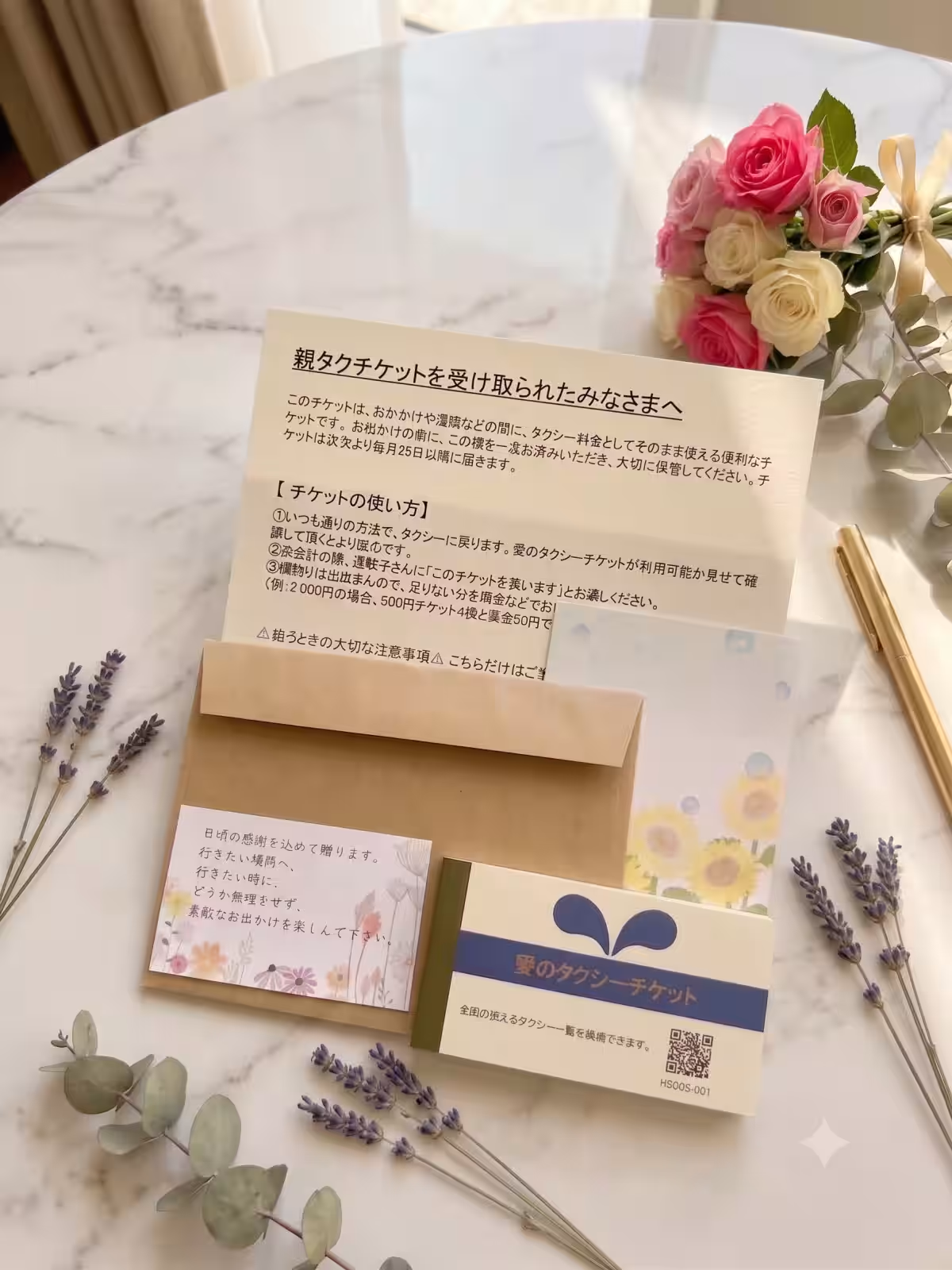
Safe Ride has developed a subscription service called the "Parent Taxi Ticket," where children can gift monthly taxi tickets in printed format to their parents, promoting gratitude while gently encouraging them to rethink their driving habits. Partnering with Love Taxi Co., the service is accepted by 92% of taxi operators nationwide.
This program focuses on generous gestures of appreciation, rather than direct confrontational approaches towards driving safety. By saying, "Thank you for everything, here's a way to travel comfortably," children can help parents transition away from driving while preserving their dignity and independence.
How the Service Works:
1. Children sign up through the website.
2. Parents receive taxi tickets along with a heartfelt message card.
3. Parents can utilize these tickets for daily errands such as medical appointments, shopping, or social activities.
- There is also a dedicated support line for queries and assistance.
This gradual process can significantly reduce reliance on driving, minimizing the risks of accidents while facilitating a gentle transition towards surrendering driving licenses.
Pricing Plans
In response to concerns about committing to ongoing subscriptions, an introductory plan is available:
- - First-Time Trial Plan: JPY 5,500, including JPY 5,000 worth of taxi tickets plus a message card.
- - Standard Subscription Plan: Starting from JPY 13,890 per month, with options for ticket values of JPY 10,000, JPY 20,000, JPY 30,000, or JPY 40,000 tailored to the family's needs.
For more information on the Parent Taxi Ticket service, visit Safe Ride.
Final Thoughts from Safe Ride's CEO, Sai Yamauchi
"Through conversations with families who have elderly drivers as loved ones, we understand how challenging it can be to assess driving safety from a distance. Many fear discussing license surrender until after an accident occurs. We've seen families deeply regret not having addressed the issue sooner. Being far apart doesn’t diminish the love and duty children feel towards their aging parents, and we hope this initiative helps foster warm family dialogues about their future safety."
For further details, visit Safe Ride's Official Site.


Topics Other)
【About Using Articles】
You can freely use the title and article content by linking to the page where the article is posted.
※ Images cannot be used.
【About Links】
Links are free to use.