



Survey Reveals Critical Toilet Challenges for Bus and Taxi Drivers
Survey on Toilet Accessibility for Bus and Taxi Drivers
In January 2026, Intronspace Inc., based in the Arakawa district of Tokyo, conducted a significant survey to explore the toilet accessibility issues faced by bus and taxi drivers. Using the web survey tool QiQUMO, they targeted 2,000 male respondents aged 20 and above, ensuring they were professional drivers before narrowing down to 117 individuals, comprising 63 bus drivers and 54 taxi drivers. The respondents were asked detailed questions about their working experiences related to toilet access.
Survey Methodology
The survey aimed to gather comprehensive data about the drivers' working conditions and the contexts in which toilet-related challenges occur. The questions covered various aspects:
- - Work Type: Identification between different bus services (local, highway, night, and sightseeing) and taxi services (corporate on-call, corporate wait, individual taxis, and hire services).
- - Work Area: Responses differentiated between metropolitan, ordinance-designated cities outside the metropolitan area, and local municipalities.
- - Age Groups: The survey spanned age ranges from 20s to 80s to capture a wide perspective on the issue.
Key Question Insights
Two primary questions were designed to uncover experiences with urinary urges during working hours.
1. Have you ever felt the urgent need to use the restroom while on duty? The options provided were:
- Yes (never leaked)
- Yes (have leaked)
- No
2. How often do you experience the need for a restroom? The frequency options included:
- Very often/frequently (daily/on duty often)
- More than once a week
- More than once a month
- Once or twice a year
- Other
Survey Findings
The findings reveal alarming statistics about the restroom struggles faced by drivers:
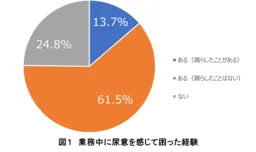
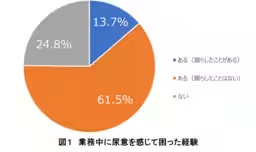
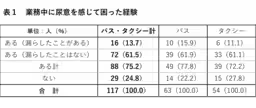
- - A considerable 75.2% of the 117 surveyed reported having experienced the need to use a restroom while on duty, with 13.7% admitting to having leaked.
- - Among bus drivers, 77.8% encountered difficulties concerning their toilet needs, out of which 15.9% reported leakage incidents, showing a higher percentage than taxi drivers, where 72.2% faced such issues and 11.1% had leaked.
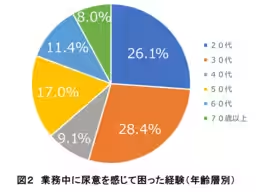
When analyzing the data by age groups, the most affected were drivers in their 30s, followed by those in their 20s and 50s. Furthermore, the type of service indicated a division in experiences: tourism and highway bus drivers indicated higher instances of challenges than local bus services, while corporate taxi drivers reported more such issues compared to individual taxi operators.
Frequency of Urinary Crises
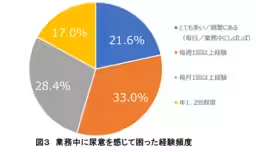
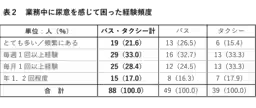
Out of the 88 individuals who reported needing to use the restroom, 33.0% noted they experienced this issue at least once a week, 28.4% did so monthly, and 21.6% faced this on a daily basis. Interestingly, 60% of bus drivers faced these challenges at least weekly, whereas taxi drivers showed a 33.3% occurrence for both weekly and monthly instances.
These statistics suggest that a significant number of drivers face urinary emergencies during their shifts, with drivers in their 20s and 30s particularly impacted.
Introducing Time Shift: A Solution for Male Drivers
In light of these revelations, the need for innovative products like Time Shift becomes apparent. Unlike traditional diapers or pads, Time Shift is designed to securely contain urine until the driver can access a proper facility. Its features include:
- - Made from ultra-soft, stretchy material to ensure comfort during wear.
- - It secures urine within the product, eliminating concerns about odor and skin contact.
- - With the assurance of odor neutrality, drivers can maintain professionalism even when carrying a full product during customer interactions.
This groundbreaking solution aims to ease the severe restroom accessibility crises identified in the survey and ultimately improve working conditions for bus and taxi drivers.


Topics People & Culture)

【About Using Articles】
You can freely use the title and article content by linking to the page where the article is posted.
※ Images cannot be used.
【About Links】
Links are free to use.