



Data Integration Impacts AI Success: A Study Unveils 19.2 Times Disparity
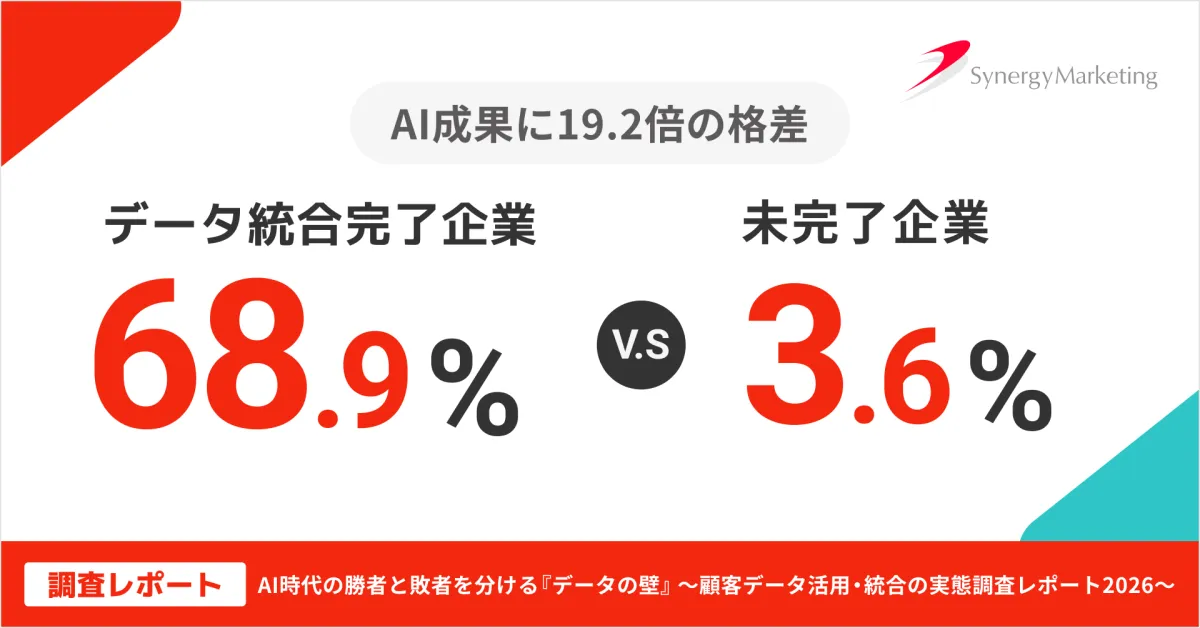
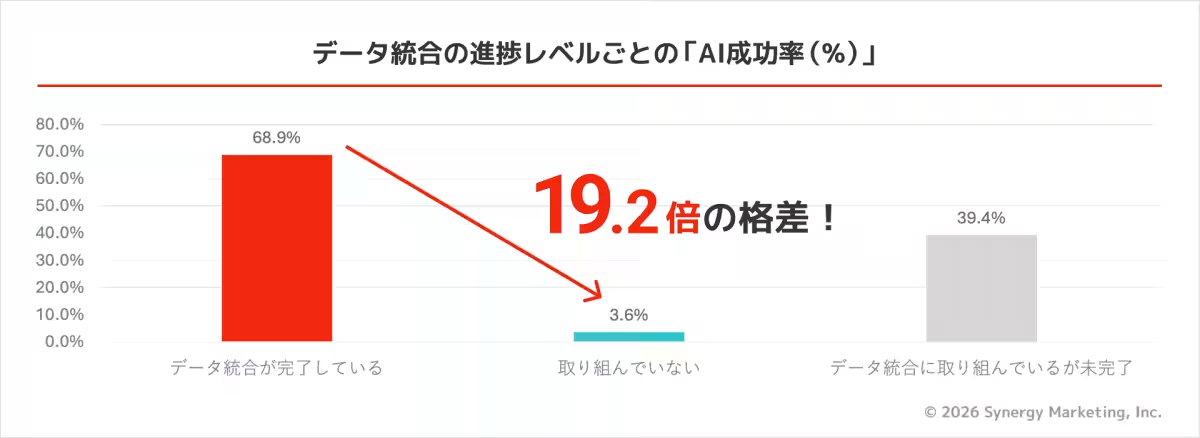
A recent study conducted by Synergy Marketing, based in Osaka, Japan, highlights a significant disparity in the effectiveness of AI adoption related to companies' data integration efforts. The investigation, titled "2026 Survey on Corporate Data Asset Utilization," engaged 1,000 business professionals involved in customer data management. What emerged from the analysis was a clear trend: firms that have completed data integration achieve an astounding success rate of 68.9% in realizing tangible outcomes from AI applications, while those that have not even embarked on data integration stand at a mere 3.6%. This stark contrast translates to a remarkable disparity of 19.2 times, underscoring the crucial role that well-structured customer data plays in the successful deployment of AI technologies.
The results reveal a fundamental challenge that many companies face as AI technology continues to proliferate. Despite the increasing urgency to harness AI for boosting sales and cutting costs, only 25.9% of surveyed organizations reported feeling the benefits of their AI investments. This low percentage indicates that many companies are struggling to see a return on their AI initiatives, thereby raising questions about the overarching effectiveness of AI solutions in practice.
Interestingly, the study illuminated that the principal factor separating successful AI implementations from failures was not the performance of the AI tools themselves. Instead, it was the state of customer data integration and preparation that significantly influenced outcomes. Companies lacking in this area find themselves at a distinct disadvantage.
Diving deeper into the data, it became evident that approximately 90% of organizations are still in the preliminary stages of data organization, significantly hindering their ability to leverage AI effectively. Only 8.8% of respondents indicated that their customer data was in an immediately usable state for AI applications, while a mere 11.9% confirmed the completion of data integration. This stagnation is a common theme as enterprises grapple with the foundational infrastructure needed to enable sophisticated AI strategies.
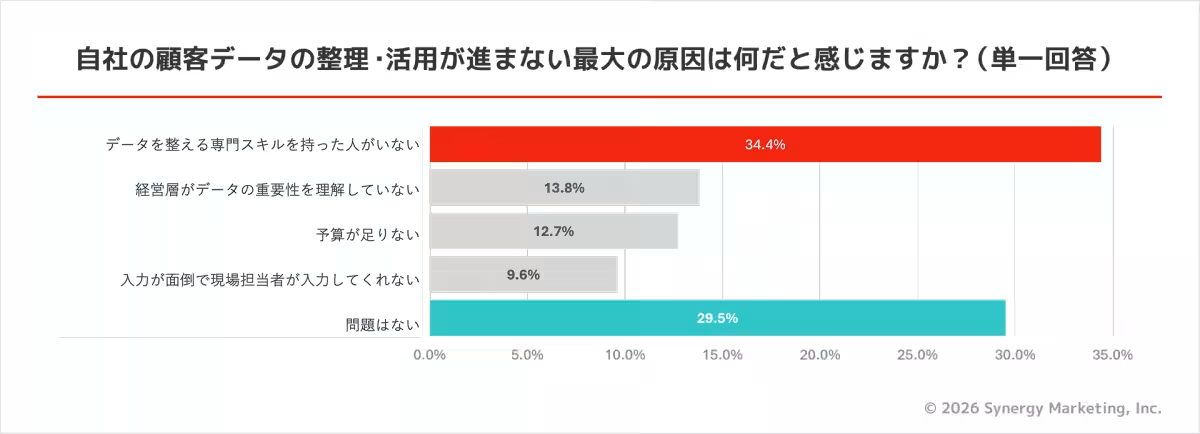
One of the primary obstacles noted in the report was the shortage of skilled personnel. Survey respondents indicated that 34.4% identified this as the biggest hurdle to advancing their data preparation efforts. This issue is particularly pronounced among companies that have started to integrate their data, where nearly half cited a lack of qualified personnel as a significant barrier to progress.
Moreover, organizations that are successfully applying AI are placing greater emphasis on developing a robust security framework and ensuring ease of use for tools, with percentages soaring to 58.3% and 36.3% respectively. This contrasts sharply with companies struggling to see results, suggesting that those who begin to realize AI's potential are not just seeking immediate returns; they are focusing on building sustainable operational environments that maximize their investments over the long term.
Naoyuki Wada, the product marketing director at Synergy Marketing, remarked on the findings, stating the increasing number of companies reaching out for assistance with AI implementations reflects their struggles. The startling 19.2 times disparity in AI success rates emphasizes that beyond the capabilities of the AI engine itself, the condition of the underlying data infrastructure is decisive. Many organizations intending to leverage advanced analytics often neglect the integration of their data, akin to constructing a house on shaky foundations. Consequently, Wada believes that companies must prioritize building a solid data foundation to transition from merely accumulating information to turning it into a dynamic asset that generates revenue.
In summary, the key to separating competitive companies in 2026 will not hinge on just adopting the latest tools and prompting techniques; rather, it will depend on three crucial aspects:
1. Data Integration for Centralized Management: Securing high-quality data to ensure AI functions effectively.
2. Operational Design to Overcome Skill Gaps: Establishing systems that minimize reliance on individual personnel to keep projects advancing.
3. Robust Security Infrastructure: Implementing measures to maintain outcomes and build trust with data stakeholders.
Only by aligning these pillars can organizations truly harness the power of data as a revenue-generating asset.
For those interested in obtaining comprehensive insights from this study, a detailed report is available for free download, outlining industry-specific trends and strategies. The report also discusses shifting strategies to overcome stagnation in customer acquisition costs (CPA).
Furthermore, Synergy Marketing will host an online seminar to dive deeper into the research findings and discuss actionable steps for maximizing AI potential. Participants can register for the event via the links provided in the report.
This extensive study and ensuing discussions will equip organizations with necessary insights to navigate the complexities of AI adoption effectively, ultimately defining their future success in the digital landscape.



The results reveal a fundamental challenge that many companies face as AI technology continues to proliferate. Despite the increasing urgency to harness AI for boosting sales and cutting costs, only 25.9% of surveyed organizations reported feeling the benefits of their AI investments. This low percentage indicates that many companies are struggling to see a return on their AI initiatives, thereby raising questions about the overarching effectiveness of AI solutions in practice.
Interestingly, the study illuminated that the principal factor separating successful AI implementations from failures was not the performance of the AI tools themselves. Instead, it was the state of customer data integration and preparation that significantly influenced outcomes. Companies lacking in this area find themselves at a distinct disadvantage.
Diving deeper into the data, it became evident that approximately 90% of organizations are still in the preliminary stages of data organization, significantly hindering their ability to leverage AI effectively. Only 8.8% of respondents indicated that their customer data was in an immediately usable state for AI applications, while a mere 11.9% confirmed the completion of data integration. This stagnation is a common theme as enterprises grapple with the foundational infrastructure needed to enable sophisticated AI strategies.
One of the primary obstacles noted in the report was the shortage of skilled personnel. Survey respondents indicated that 34.4% identified this as the biggest hurdle to advancing their data preparation efforts. This issue is particularly pronounced among companies that have started to integrate their data, where nearly half cited a lack of qualified personnel as a significant barrier to progress.
Moreover, organizations that are successfully applying AI are placing greater emphasis on developing a robust security framework and ensuring ease of use for tools, with percentages soaring to 58.3% and 36.3% respectively. This contrasts sharply with companies struggling to see results, suggesting that those who begin to realize AI's potential are not just seeking immediate returns; they are focusing on building sustainable operational environments that maximize their investments over the long term.
Naoyuki Wada, the product marketing director at Synergy Marketing, remarked on the findings, stating the increasing number of companies reaching out for assistance with AI implementations reflects their struggles. The startling 19.2 times disparity in AI success rates emphasizes that beyond the capabilities of the AI engine itself, the condition of the underlying data infrastructure is decisive. Many organizations intending to leverage advanced analytics often neglect the integration of their data, akin to constructing a house on shaky foundations. Consequently, Wada believes that companies must prioritize building a solid data foundation to transition from merely accumulating information to turning it into a dynamic asset that generates revenue.
In summary, the key to separating competitive companies in 2026 will not hinge on just adopting the latest tools and prompting techniques; rather, it will depend on three crucial aspects:
1. Data Integration for Centralized Management: Securing high-quality data to ensure AI functions effectively.
2. Operational Design to Overcome Skill Gaps: Establishing systems that minimize reliance on individual personnel to keep projects advancing.
3. Robust Security Infrastructure: Implementing measures to maintain outcomes and build trust with data stakeholders.
Only by aligning these pillars can organizations truly harness the power of data as a revenue-generating asset.
For those interested in obtaining comprehensive insights from this study, a detailed report is available for free download, outlining industry-specific trends and strategies. The report also discusses shifting strategies to overcome stagnation in customer acquisition costs (CPA).
Furthermore, Synergy Marketing will host an online seminar to dive deeper into the research findings and discuss actionable steps for maximizing AI potential. Participants can register for the event via the links provided in the report.
This extensive study and ensuing discussions will equip organizations with necessary insights to navigate the complexities of AI adoption effectively, ultimately defining their future success in the digital landscape.
Topics Business Technology)
【About Using Articles】
You can freely use the title and article content by linking to the page where the article is posted.
※ Images cannot be used.
【About Links】
Links are free to use.