



PharmaBlock Hosts Global Leaders to Push Green Chemistry in Pharmaceutical Manufacturing
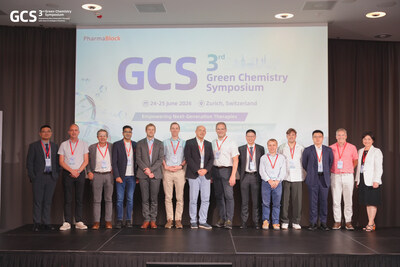
In response to a record-breaking heatwave across Europe this past June, PharmaBlock brought together top leaders from the pharmaceutical industry and academia at the 3rd Green Chemistry Symposium (GCS) in Zurich. This international event aimed to galvanize insights on how green chemistry can accelerate the decarbonization of pharmaceutical manufacturing processes.
The symposium served as a melting pot of ideas, featuring experts from major companies such as Novartis, Pfizer, Boehringer Ingelheim, Sanofi, AstraZeneca, and academic institutions like ETH Zurich and the University of Zurich. This diverse gathering provided a platform for discussing innovative approaches in green chemistry and its critical role in shaping a more sustainable future for the pharmaceutical sector.
Dr. Minmin Yang, the founder and CEO of PharmaBlock, emphasized that green chemistry is transforming from a mere environmental initiative to a significant driver of pharmaceutical innovation and competitiveness. He remarked, "By uniting world-class experts, we aim to expedite the adoption of viable technologies that will define the future of sustainable pharmaceutical manufacturing."
Throughout the symposium, it became evident that the industry is shifting focus from merely improving individual processes to completely rethinking pharmaceutical manufacturing with integrated green technologies. Discussions highlighted breakthroughs in continuous flow manufacturing, which enhances safety and efficiency while reducing carbon footprints.
Notable themes included the application of photochemistry and electrochemistry, along with AI-assisted process development, which are streamlining reactions and fostering innovation. Eco-friendly peptide production was also a focal point, with advancements in bio-based solvents, continuous synthesis, and enzymatic ligation showcasing practical pathways towards sustainability. Participants underscored the necessity of evaluating carbon footprints during the early stages of process development and emphasized collaboration across the supply chain to meet long-term sustainability goals.
In addition to the symposium discussions, PharmaBlock unveiled its integrated flow manufacturing platform. This innovative system combines reactor engineering, process chemistry, digital optimization, and manufacturing techniques. PharmaBlock also showcased its Continuous Flow Liquid Phase Peptide Synthesis (CF-LPPS) platform, indicating scalable solutions for greener pharmaceutical manufacturing techniques.
Prior to hosting the symposium, PharmaBlock officially launched its Swiss Center for Green Technology Innovation as a regional hub for advancements in continuous flow technologies and green chemistry. This center is poised to strengthen partnerships with European pharmaceutical companies and academic institutions, thereby accelerating the development and industrialization of sustainable manufacturing technologies.
Now in its third year, the Green Chemistry Symposium has evolved into a significant forum for connecting industry leaders and academics alike. This international gathering not only fosters the exchange of ideas but also accelerates technology adoption and promotes the transition towards a more sustainable pharmaceutical industry. As countries face increasingly severe climate challenges, initiatives like this illustrate the pharmaceutical industry's commitment to evolving its manufacturing practices for a better tomorrow.
The symposium served as a melting pot of ideas, featuring experts from major companies such as Novartis, Pfizer, Boehringer Ingelheim, Sanofi, AstraZeneca, and academic institutions like ETH Zurich and the University of Zurich. This diverse gathering provided a platform for discussing innovative approaches in green chemistry and its critical role in shaping a more sustainable future for the pharmaceutical sector.
Dr. Minmin Yang, the founder and CEO of PharmaBlock, emphasized that green chemistry is transforming from a mere environmental initiative to a significant driver of pharmaceutical innovation and competitiveness. He remarked, "By uniting world-class experts, we aim to expedite the adoption of viable technologies that will define the future of sustainable pharmaceutical manufacturing."
Throughout the symposium, it became evident that the industry is shifting focus from merely improving individual processes to completely rethinking pharmaceutical manufacturing with integrated green technologies. Discussions highlighted breakthroughs in continuous flow manufacturing, which enhances safety and efficiency while reducing carbon footprints.
Notable themes included the application of photochemistry and electrochemistry, along with AI-assisted process development, which are streamlining reactions and fostering innovation. Eco-friendly peptide production was also a focal point, with advancements in bio-based solvents, continuous synthesis, and enzymatic ligation showcasing practical pathways towards sustainability. Participants underscored the necessity of evaluating carbon footprints during the early stages of process development and emphasized collaboration across the supply chain to meet long-term sustainability goals.
In addition to the symposium discussions, PharmaBlock unveiled its integrated flow manufacturing platform. This innovative system combines reactor engineering, process chemistry, digital optimization, and manufacturing techniques. PharmaBlock also showcased its Continuous Flow Liquid Phase Peptide Synthesis (CF-LPPS) platform, indicating scalable solutions for greener pharmaceutical manufacturing techniques.
Prior to hosting the symposium, PharmaBlock officially launched its Swiss Center for Green Technology Innovation as a regional hub for advancements in continuous flow technologies and green chemistry. This center is poised to strengthen partnerships with European pharmaceutical companies and academic institutions, thereby accelerating the development and industrialization of sustainable manufacturing technologies.
Now in its third year, the Green Chemistry Symposium has evolved into a significant forum for connecting industry leaders and academics alike. This international gathering not only fosters the exchange of ideas but also accelerates technology adoption and promotes the transition towards a more sustainable pharmaceutical industry. As countries face increasingly severe climate challenges, initiatives like this illustrate the pharmaceutical industry's commitment to evolving its manufacturing practices for a better tomorrow.
Topics Health)
【About Using Articles】
You can freely use the title and article content by linking to the page where the article is posted.
※ Images cannot be used.
【About Links】
Links are free to use.