



Shift Vision and Waseda University Start Collaborative Research to Overcome Innovation Barriers
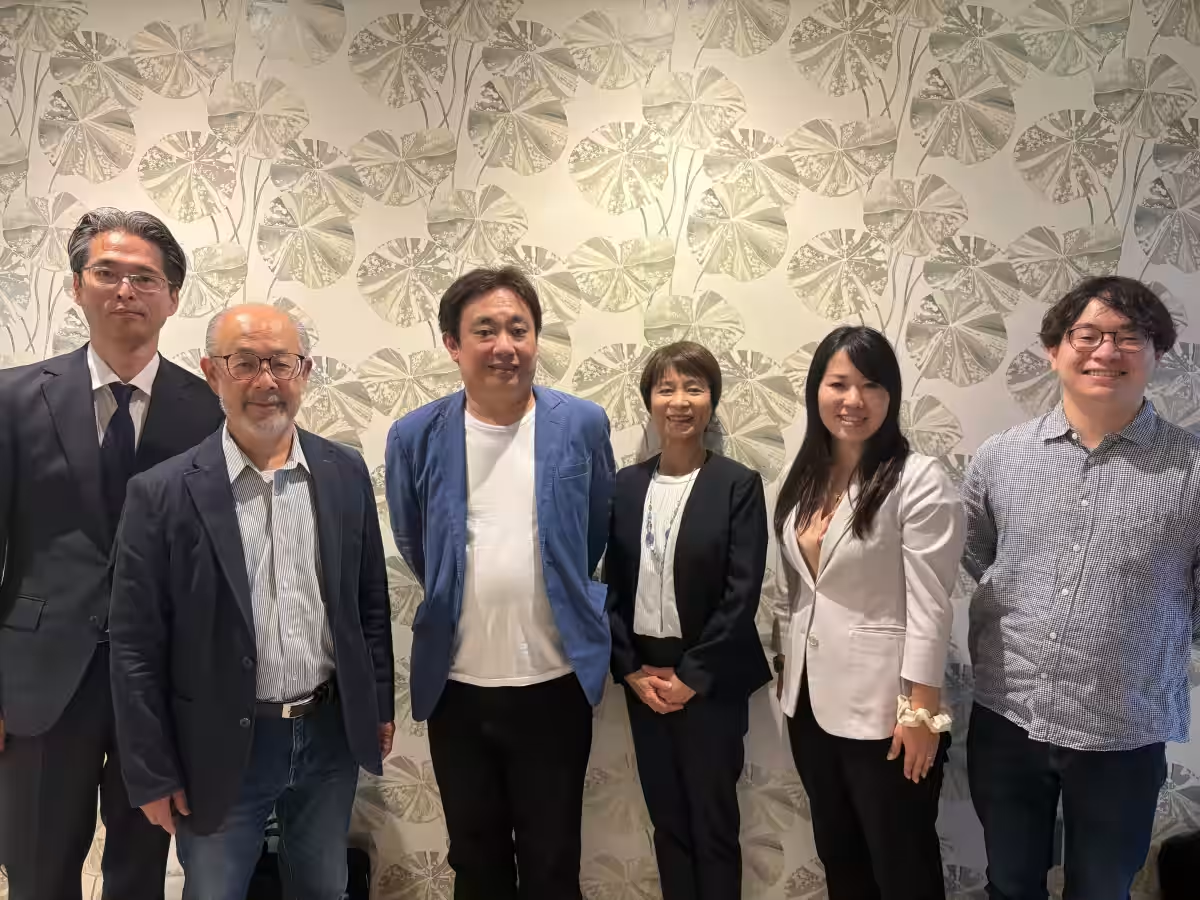
On July 1, 2025, Shift Vision Co., Ltd., represented by its Chairman, Reiji Otaki, and President, Yoshiko Taguchi, embarked on a collaborative research program with Kanetaka Maki, an Associate Professor at Waseda University Business School. This initiative aims to improve the success rates of innovation in Japan's SMEs by integrating novel management techniques designed to foster growth and increase revenue.
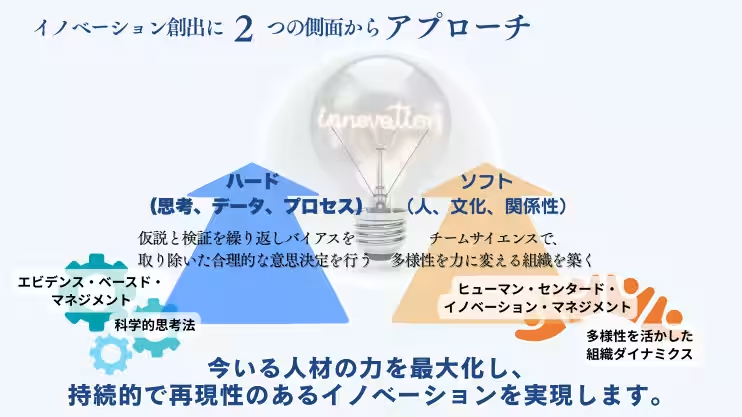
The venture seeks to overcome human biases that hinder innovation through a dual approach encompassing both hard and soft aspects. By merging 'Human-Centered Innovation Management,' 'Scientific Thinking,' and 'Evidence-Based Management,' the focus will be on developing innovative management practices.
Hard Aspects: The strategy involves iterative hypothesis testing, aimed at making rational decisions free from biases. Scientific thinking is emphasized to ensure that intuitions or experiences do not overshadow logical judgments. This approach allows for decisive actions based on empirical evidence, which in turn clarifies the relationship between initiatives and outcomes, leading to reproducible results.
Soft Aspects: The initiative also aims to nurture diverse organizational dynamics. By understanding unconscious biases, organizations can tackle their assumptions and enhance team composition, maximizing the potential of diversity within.
Through the synthesized practical program, the research intends to promote field experimentation and cross-organizational analyses, ultimately offering valuable insights back to society. This will create a structured education on managing innovation in a way that is resilient and applicable across various sectors.
Despite the recognition of innovation as vital, many Japanese firms encounter significant obstacles. Notably, they often lack a human-centered perspective in their decision-making processes. This oversight can lead to relying on cognitive biases, particularly in uncertain conditions, which makes it difficult for executives to make sound judgments.
Additionally, insufficient testing of scientific evidence related to causal relationships stymies actionable and repeatable strategic planning. This disconnect underscores the necessity for Japanese firms to adopt solutions focused on overcoming biases and driving data-informed decision-making processes.
Ultimately, these cumulative efforts will promote sustainable and reproducible innovation.
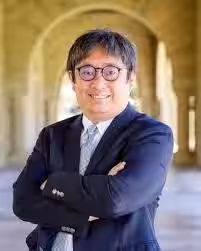
Associate Professor Kanetaka Maki heads the Science Technology and Entrepreneurship Research Institute at Waseda University. He earned his Ph.D. in Management from the University of California, San Diego in 2015 and has held various prestigious educational roles, contributing significantly to research and development of human resources in STEM and entrepreneurship. His expertise spans technology management, innovation policy, and scientific experimentation, tying deeply into Japan's innovation framework.
To celebrate the commencement of this collaboration, a special seminar will be held on October 22, 2025. The event will address critical industry questions surrounding innovation in Japanese companies, showcasing an introduction to new innovation programs that integrate both hard and soft approaches for maximizing existing talents.
- Time: 15:30 - 18:00
- Location: AP Akasaka Green Cross 4F, Tokyo
The seminar will feature a discussion on why innovation struggles persist in Japan, lessons from overseas successes, and the relationship between human biases and innovation.
Speakers:
Kanetaka Maki (Waseda University Business School), Naohiro Nishiguchi (Startup Genome Japan), Reiji Otaki (Shift Vision).
Registration: Free seminar participation is available, and online attendance options will be provided.
Objectives of the Research
The venture seeks to overcome human biases that hinder innovation through a dual approach encompassing both hard and soft aspects. By merging 'Human-Centered Innovation Management,' 'Scientific Thinking,' and 'Evidence-Based Management,' the focus will be on developing innovative management practices.
Hard Aspects: The strategy involves iterative hypothesis testing, aimed at making rational decisions free from biases. Scientific thinking is emphasized to ensure that intuitions or experiences do not overshadow logical judgments. This approach allows for decisive actions based on empirical evidence, which in turn clarifies the relationship between initiatives and outcomes, leading to reproducible results.
Soft Aspects: The initiative also aims to nurture diverse organizational dynamics. By understanding unconscious biases, organizations can tackle their assumptions and enhance team composition, maximizing the potential of diversity within.
Through the synthesized practical program, the research intends to promote field experimentation and cross-organizational analyses, ultimately offering valuable insights back to society. This will create a structured education on managing innovation in a way that is resilient and applicable across various sectors.
Challenges Faced by Japanese Companies
Despite the recognition of innovation as vital, many Japanese firms encounter significant obstacles. Notably, they often lack a human-centered perspective in their decision-making processes. This oversight can lead to relying on cognitive biases, particularly in uncertain conditions, which makes it difficult for executives to make sound judgments.
Additionally, insufficient testing of scientific evidence related to causal relationships stymies actionable and repeatable strategic planning. This disconnect underscores the necessity for Japanese firms to adopt solutions focused on overcoming biases and driving data-informed decision-making processes.
Ultimately, these cumulative efforts will promote sustainable and reproducible innovation.
Profile of Kanetaka Maki
Associate Professor Kanetaka Maki heads the Science Technology and Entrepreneurship Research Institute at Waseda University. He earned his Ph.D. in Management from the University of California, San Diego in 2015 and has held various prestigious educational roles, contributing significantly to research and development of human resources in STEM and entrepreneurship. His expertise spans technology management, innovation policy, and scientific experimentation, tying deeply into Japan's innovation framework.
Special Seminar to Commemorate the Research Start
To celebrate the commencement of this collaboration, a special seminar will be held on October 22, 2025. The event will address critical industry questions surrounding innovation in Japanese companies, showcasing an introduction to new innovation programs that integrate both hard and soft approaches for maximizing existing talents.
- - Event Details:
- Time: 15:30 - 18:00
- Location: AP Akasaka Green Cross 4F, Tokyo
The seminar will feature a discussion on why innovation struggles persist in Japan, lessons from overseas successes, and the relationship between human biases and innovation.
Speakers:
Kanetaka Maki (Waseda University Business School), Naohiro Nishiguchi (Startup Genome Japan), Reiji Otaki (Shift Vision).
Registration: Free seminar participation is available, and online attendance options will be provided.
Topics Business Technology)

【About Using Articles】
You can freely use the title and article content by linking to the page where the article is posted.
※ Images cannot be used.
【About Links】
Links are free to use.