



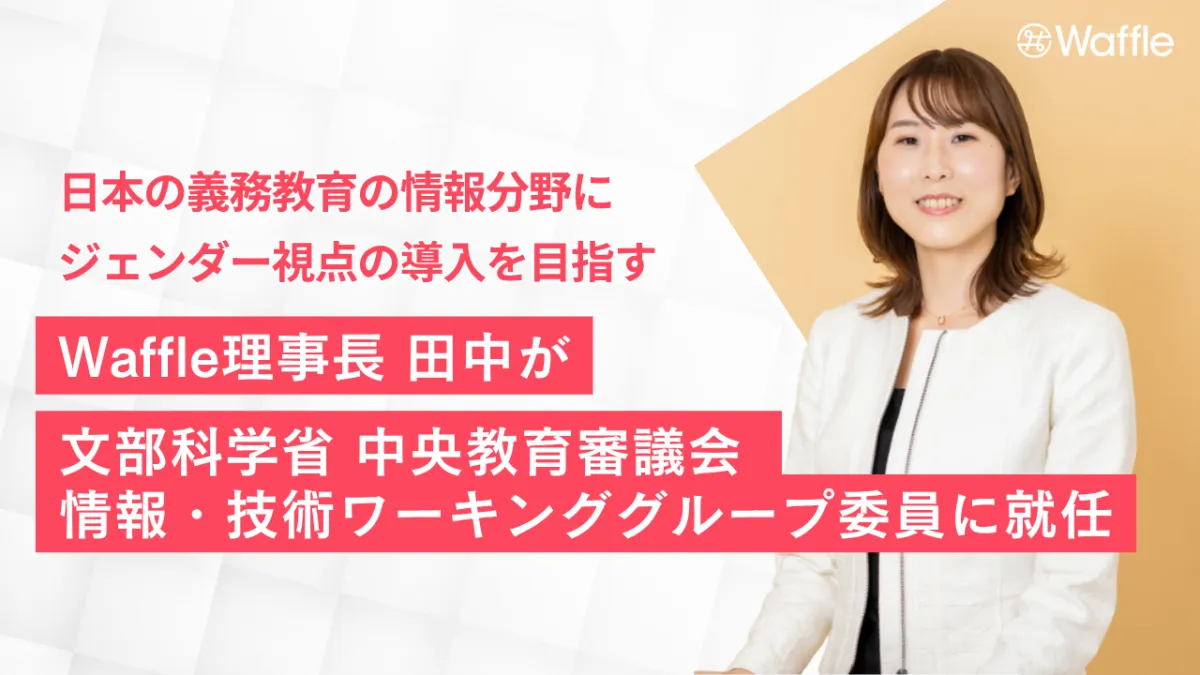
NPO Waffle's Chairperson Appointed to Japanese Education Council to Address Gender in Tech Education
NPO Waffle's Role in Redefining Tech Education in Japan
In a groundbreaking development, Sayaka Tanaka, the chairperson of NPO Waffle, has been appointed as a committee member of the Central Council for Education's Working Group on Information and Technology. This position presents a valuable opportunity to incorporate gender perspectives into Japan's technical education system, particularly in its compulsory education framework.
Waffle, based in Minato-ku, Tokyo, has been actively addressing the significant gender gap in the STEM (Science, Technology, Engineering, and Mathematics) fields in Japan. According to the World Economic Forum's Global Gender Gap Index, Japan ranks 118 out of 148 countries as of 2025, marking one of the lowest positions among developed nations. This is particularly evident in the fields of engineering and information technology, where the disparity between genders remains alarming. Among OECD countries, Japan records the lowest percentage of female university students in engineering disciplines, revealing a structural issue that inhibits young women from pursuing careers in technology.
The Importance of Integrating Gender Perspectives in Education
The Central Council for Education, an advisory body to the Minister of Education, Culture, Sports, Science and Technology, plays a crucial role in shaping the curriculum of primary and secondary education in Japan across the entire nation. Within this council, the Information and Technology Working Group specifically focuses on enhancing information and digital literacy from elementary through high school. This working group is currently discussing various reforms, including the establishment of new subjects dedicated to information studies in elementary schools and reconfiguring technology and home economics subjects in junior high schools.
The introduction of a gender perspective into the curriculum is not just about equalizing educational opportunities; it aims to fundamentally transform the persistent notion of “technology equals male-centric.” By doing so, Waffle seeks to encourage young women and non-binary individuals to recognize their potential in technology from an early stage, thereby nurturing a more inclusive environment.
A 2025 survey by Plan International Japan highlighted the disparity in interest after programming classes, revealing that 71.5% of male high school students expressed interest post-class compared to only 49.5% of female students. Although programming became a mandatory subject in 2020, the interest gap indicates that systemic changes are necessary to promote a genuine passion for technology among all students.
Comments from Sayaka Tanaka
In her remarks, Tanaka expressed her concerns over the dwindling number of girls pursuing programming in middle and high school since she founded Waffle in 2019. She emphasized that Waffle has been dedicated to providing programming and AI education to female and non-binary students, fostering a sense of connection to technology and its possibilities.
“In the current educational landscape, opportunities to learn programming are institutionally provided equally. However, the gap in connecting that learning to skill acquisition, career choices, and sustained interest shows significant gender disparities,” Tanaka noted. “By integrating a gender perspective into compulsory education and promoting it on a national scale, we aim to rectify the male-dominant structure in technology education. We envision a future where every child, including minorities, can enjoy the excitement of creation and utilize cutting-edge technology to improve society and generate new value.”
There is a sense of gratitude and responsibility in Tanaka's words as she embarks on this unique journey to discuss and implement gender perspectives in Japan's technical education framework. Waffle's various initiatives, including online courses for youth, support for international app development contests, and tech education programs for university students, all reflect its commitment to empowering girls in technology and advocating for necessary structural changes in society.
For more details, visit NPO Waffle.

Topics Other)
【About Using Articles】
You can freely use the title and article content by linking to the page where the article is posted.
※ Images cannot be used.
【About Links】
Links are free to use.