



MJS Implements Automated Payment Solutions Using Blockchain for Supply Chain Management
Revolutionizing Payment Systems with Blockchain
Miroku Information Service (MJS), a leading provider of financial and accounting solutions based in Shinjuku, Tokyo, recently made headlines with a successful experimental project aimed at automating payment processes through innovative technology. This project was conducted as part of the Invoice Chain Subcommittee of the Digital Currency Forum, which MJS has been a co-organizer of since its establishment in May 2024. The forum focuses on building cutting-edge financial infrastructure suited for the digital age, aiming to enhance economic efficiency and industry development.
Background of the Experiment
In the realm of business transactions between corporations, inefficiencies have become commonplace, often due to fragmented accounting and payment systems. Many companies still rely on manual processes to handle accounts receivable and payable, leading to the allocation of considerable human resources to reconcile discrepancies. The Invoice Chain Subcommittee aims to address these inefficiencies by examining the variances in business flow between companies that utilize EDI (Electronic Data Interchange) and those that do not, conducting activities tailored to their specific use cases.
This pilot project focused on automating accounts payable processes for companies not utilizing EDI. The initial phase saw the successful tokenization of commercial transaction data to improve payment efficiency. In this recent experiment, MJS expanded its focus to businesses that employ the distribution BMS (Business Management System), a standard in the retail sector, to explore end-to-end automation from ordering to payment reconciliation.
Details of the Experiment
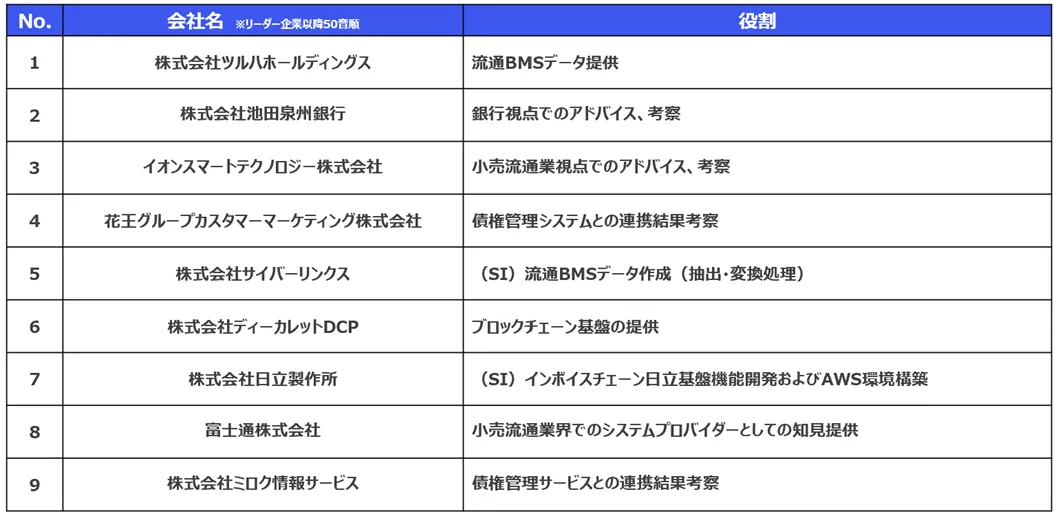
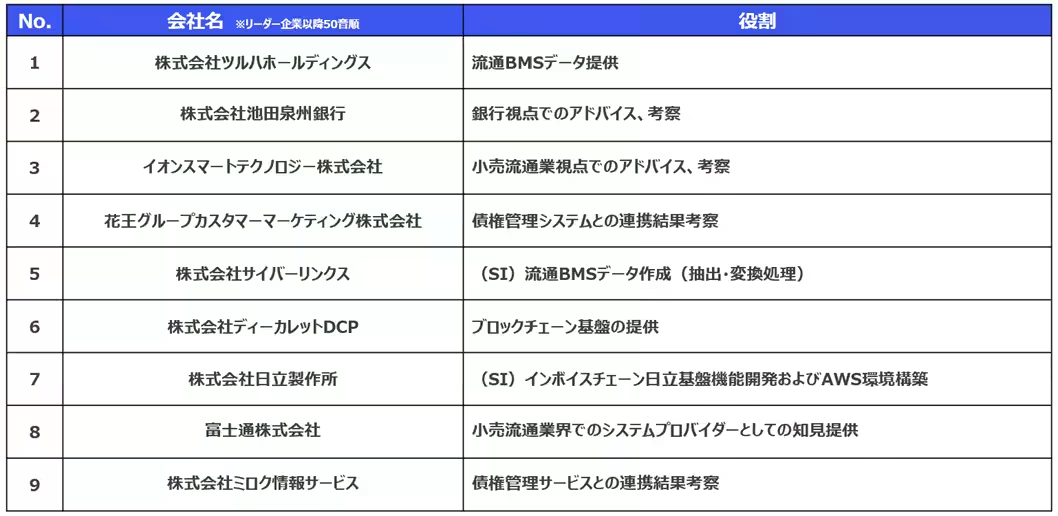
The objective of this experimental project was to use the distribution BMS to achieve a fully digital workflow encompassing everything from order placement to payment and reconciliation. In collaboration with firms such as Tsuruha Holdings, AEON Smart Technology, Ikeda Senshu Bank, Kao Group Customer Marketing, Cyberlinks, and Decurret, MJS explored automated payment processes utilizing tokenized deposits designed to facilitate seamless transactions.
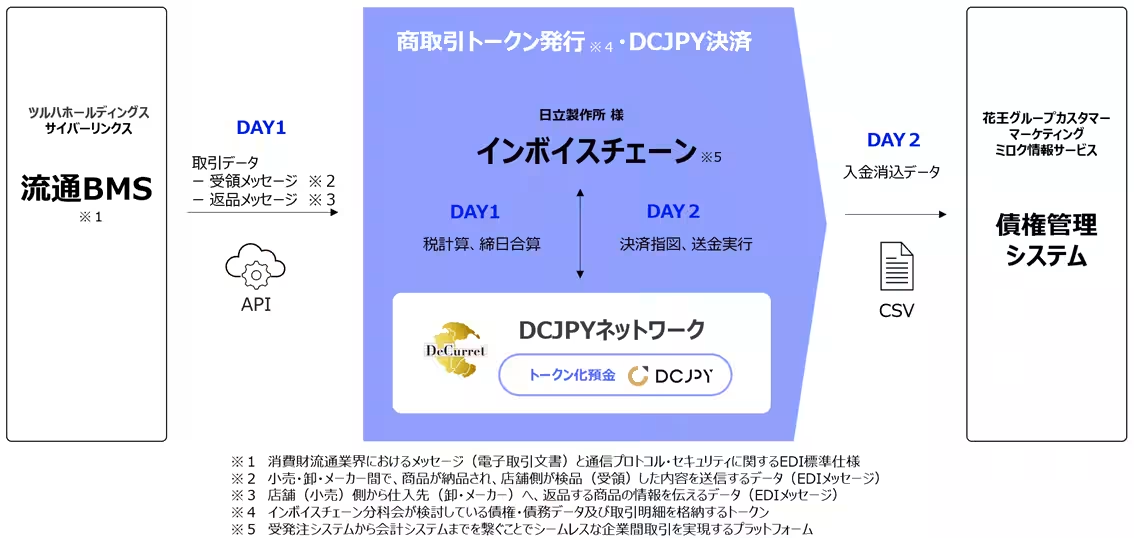
The process began with the extraction of relevant data, including receipts and return messages, from Tsuruha Group related to Kao Group. This data was then transmitted to the Invoice Chain, where it served as the basis for generating commercial transaction tokens that enabled payment via DCJPY, a programmable currency pegged to the Japanese yen.
Additionally, a reconciliation file was created to match against the accounts receivable data within the management system, verifying that the automated payment process operated without issues.
Findings from the Experiment
- - Payments via DCJPY: The merging of receipt and return data allowed for the generation of cumulative data by a specified cutoff date, confirming successful payment completion using DCJPY.
- - Generation of Reconciliation Data: A reconciliation file for the accounts receivable system was produced post-payment, consisting of essential elements needed for processing.
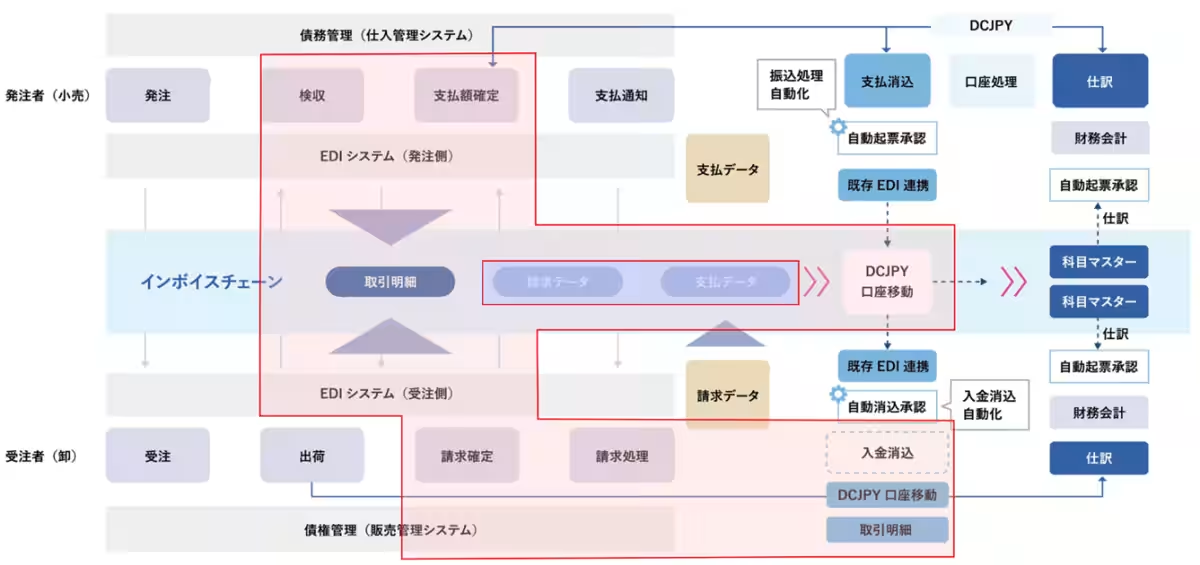
- - System Integration Validation: The reconciliation file contained the necessary components for entry into the accounts management system, confirming that processing could be conducted seamlessly.
The results indicated that by employing the existing commercial flow systems to manage direct payment processing using tokenized deposit DCJPY, it is feasible to link reconciliation files to accounts management systems, confirming the potential for efficient, one-stop processing. This integration is expected to significantly reduce burdens on accounting departments, leading to substantial efficiency improvements and headcount reduction.
Future Prospects
Based on the results of this experiment, MJS plans to implement immediate efficiency improvements in payment and reconciliation for both sellers and buyers, aspiring to automate previously manual tasks. Long-term aims include a transformative shift toward complete computerization of workflows and enhanced treasury functions in financial operations. MJS intends to continue refining their solutions by addressing the various functionality challenges faced by EDI-utilizing companies and engaging in further discussions to facilitate social implementation of these innovations.
Additional Resources
To learn more about the Digital Currency Forum, visit the official website: Digital Currency Forum
Find out more about Miroku Information Service and its offerings at MJS Official Website.
Topics Consumer Technology)

【About Using Articles】
You can freely use the title and article content by linking to the page where the article is posted.
※ Images cannot be used.
【About Links】
Links are free to use.