



New Framework Unveils the Concept of Societal Extinction in Species Conservation
Unveiling Societal Extinction: A Wake-Up Call for Conservation
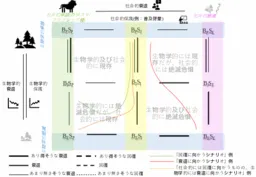
In recent years, the world has witnessed alarming rates of biodiversity loss, prompting urgent discussions on how we select endangered species for conservation efforts. Traditionally, extinction risks have been evaluated from a biological standpoint, focusing on population numbers and distribution ranges. However, a crucial aspect has often been overlooked: the relationship between species and human society. This oversight raises a significant question: What happens to a species that exists in nature but becomes virtually 'invisible' to society? This phenomenon is termed "societal extinction."
Concept of Societal Extinction
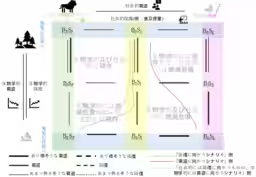
Societal extinction refers to the condition where a species, while still present in the ecosystem, loses societal interest and recognition. Even though the species exists, if it is no longer discussed or acknowledged by people, it can be considered socially extinct. This concept sheds light on the alarming disconnection between biological existence and societal awareness.
In a notable study conducted by Takafumi Ohsawa and Takeshi Osawa from Tokyo Metropolitan University, a novel quantitative assessment framework for societal extinction has been proposed. By employing Google Trends data to analyze the social recognition of 1,155 species listed in the 2020 Japanese Red List, they discovered that over half of these species are in a critical state of societal extinction.
Study Insights: Google Trends Analysis
Over a four-year span, the researchers extracted Google Trends data to gauge public interest in various species. Their findings were striking: many endangered species recorded minimal to nonexistent search volumes over this period. Specifically, more than 200 weeks reflected a search frequency of zero. Such results indicate that these species are not just neglected but are effectively forgotten by society.
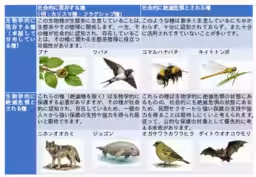
Interestingly, the analysis revealed that species with higher public recognition often receive better conservation support from businesses and organizations. These species typically appear as mascots, in popular media, or are recognized as desirable culinary or tourism resources. In contrast, species that are both biologically and socially critical often struggle to receive adequate support, highlighting a concerning imbalance in conservation efforts.
Integrating Societal Recognition into Conservation Strategies
The findings underline the need for an integrated approach to conservation that factors in societal recognition. By recognizing societal extinction, conservation strategies can be more effectively prioritized and resource distribution improved. The pressing need for governmental involvement and support in preserving species that are socially neglected has become more apparent.
The framework developed by Ohsawa and Osawa allows for a broader understanding of extinction, pushing conservation discussions to include social dynamics. This could lead to the identification of species previously overlooked in conservation efforts, ideally fostering a more equitable distribution of limited conservation resources.
Importance and Future Directions
This research not only broadens the perspective on extinction but also utilizes readily available data—Google Trends—to inform the general public about biodiversity issues. It opens a pathway for broader awareness and understanding of the critical state of many species.
However, the study is not without its challenges. While Google Trends serves as a valuable metric for societal presence, it does have limitations. A score of zero does not unequivocally indicate no searches occurred; it simply reflects extremely low interest levels. Further research is needed to capture a more holistic view of societal extinction, including media mentions and other forms of public engagement.
Looking ahead, expanding the evaluative metrics to include various media forms can enhance the accuracy of societal extinction assessments. As awareness grows, it is hoped that conservation initiatives will advance, ultimately leading to more effective strategies to protect our planet's biodiversity.
Conclusion
The innovative framework introduced by Ohsawa and Osawa signifies a critical advancement in understanding extinction dynamics. By merging societal recognition with biological assessments, the conservation community can better prioritize efforts to save not only the species that are known but also those that are quietly disappearing from our collective consciousness.
- ---
Original Research Publication: This research was published in the journal Conservation Biology on October 27, 2026, and received funding from JSPS Grant Number 26K25610.
Topics Environment)

【About Using Articles】
You can freely use the title and article content by linking to the page where the article is posted.
※ Images cannot be used.
【About Links】
Links are free to use.