



Research Reveals Soil pH's Role in Stink Bug-Bacteria Symbiosis for Sustainable Pest Control
Uncovering the Impact of Soil pH on Pests and Symbiotic Bacteria
Introduction
A pioneering study has unveiled the intricate relationship between soil pH and the symbiotic relationship between the stink bug, specifically the brown marmorated stink bug, and essential gut bacteria. Conducted by researchers from the National Institute of Advanced Industrial Science and Technology and the University of the Ryukyus, this research highlights the crucial role soil pH plays in regulating pest populations and provides a new perspective on agricultural pest management.
Background
The brown marmorated stink bug is notorious in rice paddies for causing significant damage to both yield and quality, traditionally controlled using chemical pesticides. However, increasing environmental concerns surrounding pesticide use have prompted the exploration of alternative pest management strategies. Recent studies suggest that certain insects, including stink bugs, rely on symbiotic bacteria obtained from the soil for their growth and reproduction, making soil health a potential avenue for integrated pest management.
Key Findings
The research team focused on the gut bacteria Burkholderia, essential for the growth and reproduction of the stink bug. Here are the critical insights drawn from their experiments:
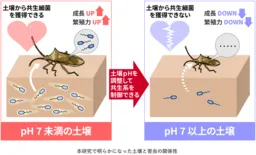
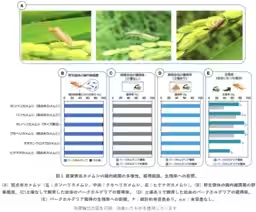
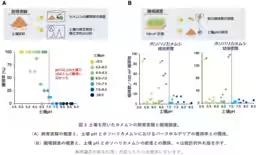
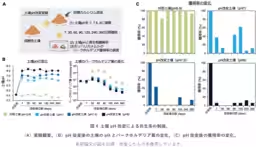
1. pH Dependency - The researchers discovered that the brown marmorated stink bug can efficiently acquire Burkholderia from soil with a pH level below 7, whereas soils with neutral or higher pH levels hinder this process. The inability to attain these bacteria from neutral soils correlates with a significant drop in the insect's growth and reproductive capabilities.
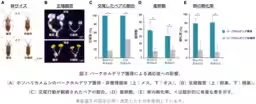
2. Impact on Growth and Reproduction - The experiments revealed that stink bugs reared in neutral or high pH soils exhibited stunted growth, smaller body size, and lower reproductive success, including reduced egg-laying rates and lower hatching success. These findings posit that the presence of Burkholderia is vital for the stink bug’s lifecycle, emphasizing the importance of soil pH.
3. Environmental Implications - The study suggests that adjusting soil pH through widely established agricultural practices, such as the application of lime, could lead to lower pesticide reliance and promote sustainable pest management strategies. By effectively managing soil pH, farmers may not only reduce the environmental impact of pesticides but also foster a healthier agricultural ecosystem.
Mechanistic Insights
Furthermore, the study explored how the movement of Burkholderia is affected by pH levels, providing insights into why stink bugs fail to acquire these bacteria in soils with altered pH. The bacteria's motility appeared to decrease significantly in neutral or alkaline soil, preventing them from reaching the symbiotic organ within the insect's digestive tract. This observation links soil chemistry directly to the biological processes that affect insect populations, shedding light on a critical factor in pest ecology.
Future Directions
The findings open numerous avenues for research, emphasizing the need to investigate how soil management practices can impact pest populations in broader agricultural contexts. Future studies will delve into the effects of soil pH on other pests and beneficial insects and how such knowledge can inform effective pest control strategies. Additionally, the optimization of existing soil pH adjustment materials and methods, combined with field trials, will be essential to validating the practical applications of this research.
Conclusion
Ultimately, this research bridges the gap between soil management and pest ecology, demonstrating how a straightforward adjustment in soil pH can disrupt pest-bacteria symbiosis, leading to more sustainable pest control solutions. The insights gathered highlight the importance of interdisciplinary approaches in addressing agricultural challenges and underscore the remarkable role of soil health in pest management. As farmers and researchers further explore these relationships, they can pave the way toward more environmentally friendly agricultural practices that benefit both crops and ecosystems alike.

Topics Consumer Products & Retail)
【About Using Articles】
You can freely use the title and article content by linking to the page where the article is posted.
※ Images cannot be used.
【About Links】
Links are free to use.