


Investigating Asian Black Bear Movement Using Virtual Ecology Approaches
Investigating Bear Movement in Akita Prefecture
Recent research led by Akita University and Tokyo Metropolitan University, involving Takeshi Osawa, Kazuhiko Hoshizaki, and Naoki Ohnishi, has employed innovative virtual ecology methods to explore the movement patterns of the Asian Black Bear (Ursus thibetanus) in the forests of Akita Prefecture. By using computer-generated simulations, the researchers examined how these bears utilize their habitats across various environmental scenarios, particularly during the critical autumn months when food sources become scarce or plentiful.
Methodology
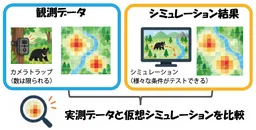
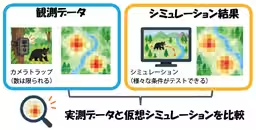
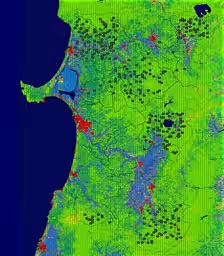
The study involved segmenting Akita Prefecture into a grid of 1 km squares, identifying diverse land cover types such as deciduous forests, broadleaf forests, and forest edges. The team constructed 90 hypothetical movement scenarios based on conditions favorable for bear movement. In these simulations, the researchers tested out different patterns, such as staying in areas with lower forest cover and moving toward zones richer in deciduous trees. They compared these simulation outcomes with data collected from camera traps set up over three years—2017, 2018, and 2019, each reflecting varying abundance of essential food sources like acorns and beech nuts.
The findings revealed that in years of abundant food supply, such as 2018, there was minimal correlation between the observed bear movements and the simulation projections. In contrast, during the years when food was scarce (2017 and 2019), the model outputs showed a significant alignment with observed patterns of bear movement, particularly towards areas rich in deciduous trees and near forest edges.
Seasonal Movements and Behavioral Patterns
The shift in bear behaviors in relation to food availability underscores the adaptability of these creatures. The study noted that during years when acorn production was low, bears tended to expand their movement range and significantly increased encounters with human habitats. Such interactions typically escalate during autumn, where bear foraging intensifies as they prepare for hibernation.
The research team's findings indicate that understanding how bears navigate their landscape can lead to better strategies for minimizing human-wildlife conflicts. Notably, while the camera trap sites varied yearly, the consistent patterns observed during food scarcity point to a shared behavioral strategy among these mammals.
Implications of the Findings
The study illustrated the utility of virtual ecology as a robust tool for understanding animal behavior, especially when direct observation is challenging. This can pave the way for more refined wildlife management strategies and could be instrumental in developing plans that mitigate human-bear encounters. As urban development encroaches on traditional wildlife habitats, understanding movement patterns can help inform conservation efforts.
The relevance of this research transcends just one species. The techniques applied can be adapted for various large mammals where GPS tracking isn't feasible. By continuously refining these virtual ecology approaches, researchers hope to enhance the precision of wildlife behavior assessments and craft proactive measures to ensure coexistence between ever-expanding human populations and wildlife.
Conclusion
As we move forward, the ongoing collection of observational data paired with virtual modeling can lead to meaningful insights into wildlife behavior, particularly as environmental conditions fluctuate with climate change. The virtual ecology framework employed in this study serves as a promising avenue for future wildlife research, potentially yielding data that can be crucial for effective conservation practices and sustainable management of large mammals like the Asian Black Bear.
Published Research
This research has been officially published in the international journal "Global Ecology and Conservation" on November 11, 2026. The work was supported by the Japan Environmental Restoration and Conservation Agency under the general promotion fund (JPMEERF20254002). The significance of this study lies in its novel approach to wildlife exploration, marrying technological innovation with ecological observation to create a comprehensive understanding of bear movements in an ever-changing environment.
Topics Environment)

【About Using Articles】
You can freely use the title and article content by linking to the page where the article is posted.
※ Images cannot be used.
【About Links】
Links are free to use.