



The Impact of AI Implementation on Small Business Workforce Strategies in Japan
AI Implementation and Workforce Strategy in Japan
As Japan faces a growing workforce shortage exacerbated by an aging population, small businesses are challenged to rethink their human resource strategies. In this landscape, a recent survey conducted by Happy Cars Co., Ltd. sheds light on how AI integration is transforming the employment landscape.
Background of the Survey
Happy Cars, headquartered in Kamakura, Kanagawa, focused its survey on small business owners across three key sectors: IT and software, construction (including manufacturing), and services (including accommodation and food services). This study aimed to assess attitudes towards personnel allocation and management decisions in the AI era.
This survey took place from June 9 to 11, 2025, utilizing internet questions through PRIZMA, with responses from 1,007 small business leaders in the relevant sectors.
The backdrop of this research highlights not just a prevailing human resources dilemma but a pressing need for business reforms and a redefinition of workforce roles.
Workforce Shortage: A Common Concern
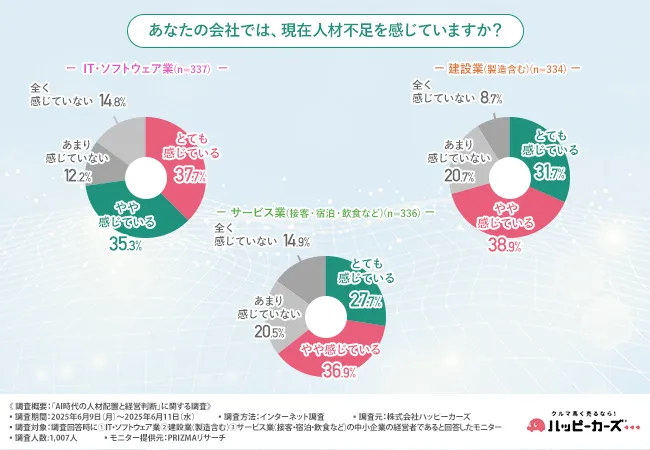
The survey asked, "Are you feeling the current labor shortage?" among business owners in three sectors. The responses indicated:
- - IT and Software: 73% felt a significant labor shortage.
- - Construction: 70% expressed similar sentiments.
- - Services: Approximately 64% acknowledged workforce challenges.
AI's Role in Addressing Workforce Shortages
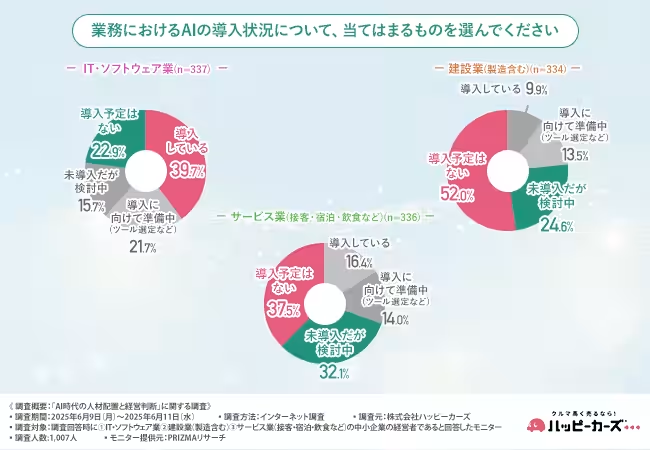
With labor shortages pressing these sectors, it’s clear that interest in AI as a supplement to workforce challenges is growing. The survey further investigated how AI is currently being utilized:
- - IT and Software: 61% are either using or preparing to integrate AI.
- - Construction: A mere 23% are on a similar path, revealing a significant lag.
- - Services: 30% indicated they are actively implementing AI or preparing to do so.
AI and Job Roles: Automation Trends
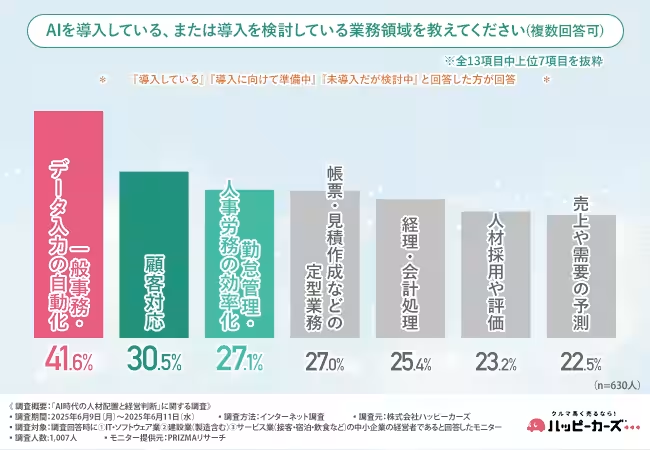
To delve deeper, the survey queried companies already using or considering AI on the specific roles impacted. Notably:
- - Data Entry: 41.6% reported using AI for automating this task.
- - Customer Service: 30.5% followed.
- - HR and Payroll Management: 27.1% used AI to streamline these functions.
Looking Ahead: Expectations for AI Utilization
As the survey results demonstrate, there’s a strong conviction toward AI’s potential:
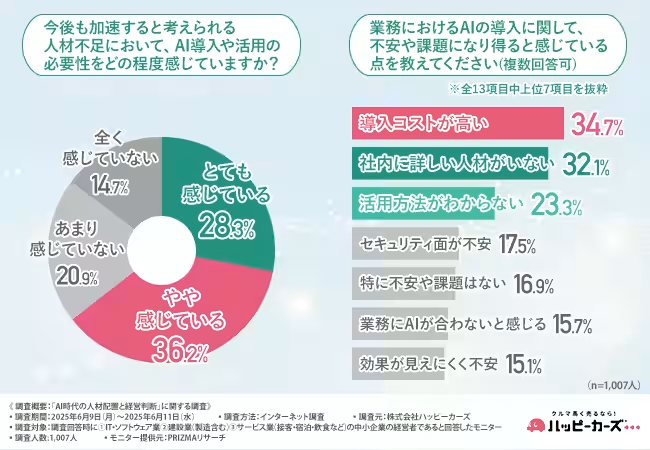
- - Over 64% of respondents noted a significant need for AI integration as workforce shortages worsen.
Unique Human Skills Unmatched by AI
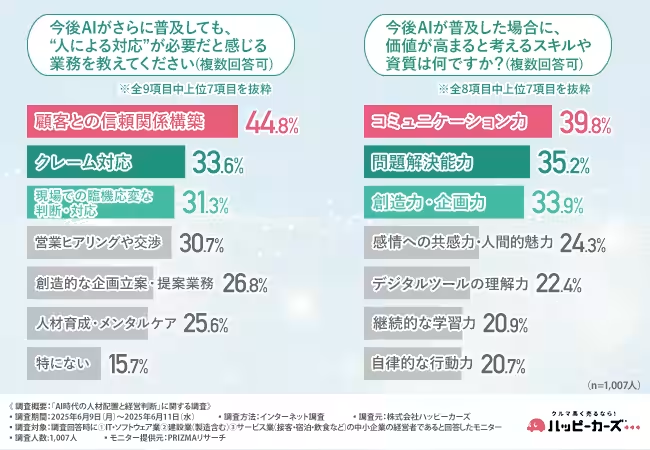
While AI shows potential to fill many gaps, certain core aspects of human capability remain irreplaceable. For instance, the need for human interaction is still paramount.
- - Building Trust with Clients: 44.8% indicated this is an area requiring human oversight.
- - Handling Complaints: 33.6% believe humans are vital in these situations.
- - Adapting on the Spot: 31.3% valued human judgment for complex decision-making.
Required Skills for the Future Workforce
As respondents reflected on the competencies that will be vital in an AI-driven workplace, key skills identified included:
- - Communication Skills: 39.8%
- - Problem-Solving Abilities: 35.2%
- - Creativity and Planning Skills: 33.9%
Conclusion: The Future of Workforce Strategy
The results from Happy Cars reveal a dual narrative: While the wave of AI implementation presents opportunities, it simultaneously raises restructuring challenges across small businesses. As sectors grapple with workforce shortages, understanding the balance between automation and human capabilities is vital. This transformation underscores the need for a continuous adaptation of both operational strategies and personnel roles to foster sustainable business growth. The future beckons for leaders to innovate in harnessing both AI capabilities and human skills for a thriving workforce environment.



Topics Business Technology)
【About Using Articles】
You can freely use the title and article content by linking to the page where the article is posted.
※ Images cannot be used.
【About Links】
Links are free to use.