



Next Light Inc.: Pioneering Environmental Ventures and Circular Economy in Japan
Empowering a Sustainable Future: Next Light Inc.'s Journey
In the realm of green business ventures, Next Light Inc., based in Okayama, has garnered attention by overcoming significant challenges from its inception in 2018. Following the devastating western Japan floods that destroyed their headquarters and products, the company chose to rise from the ashes. By engaging in community support activities, they have demonstrated resilience and a commitment to creating sustainable solutions in the circular economy sector.
Next Light has gained recognition for its innovative projects, including diesel particulate filter (DPF) systems, catalysts, and the recycling of electric vehicle batteries. Their mission focuses on redefining the relationship between the environment and society, illustrating that sustainability can be an integral part of our lives. Over the past seven years, Next Light has steadily built a track record of implementing unique solutions that address challenging environmental issues.
Addressing the Circular Economy Challenge
Despite the growing urgency for decarbonization and resource circulation, infrastructure aimed at bridging manufacturing, logistics, and recycling remains inadequately developed. Next Light has identified significant bottlenecks, particularly related to the geographical dispersion of operations that hinder efficient processing of used parts back into the market.
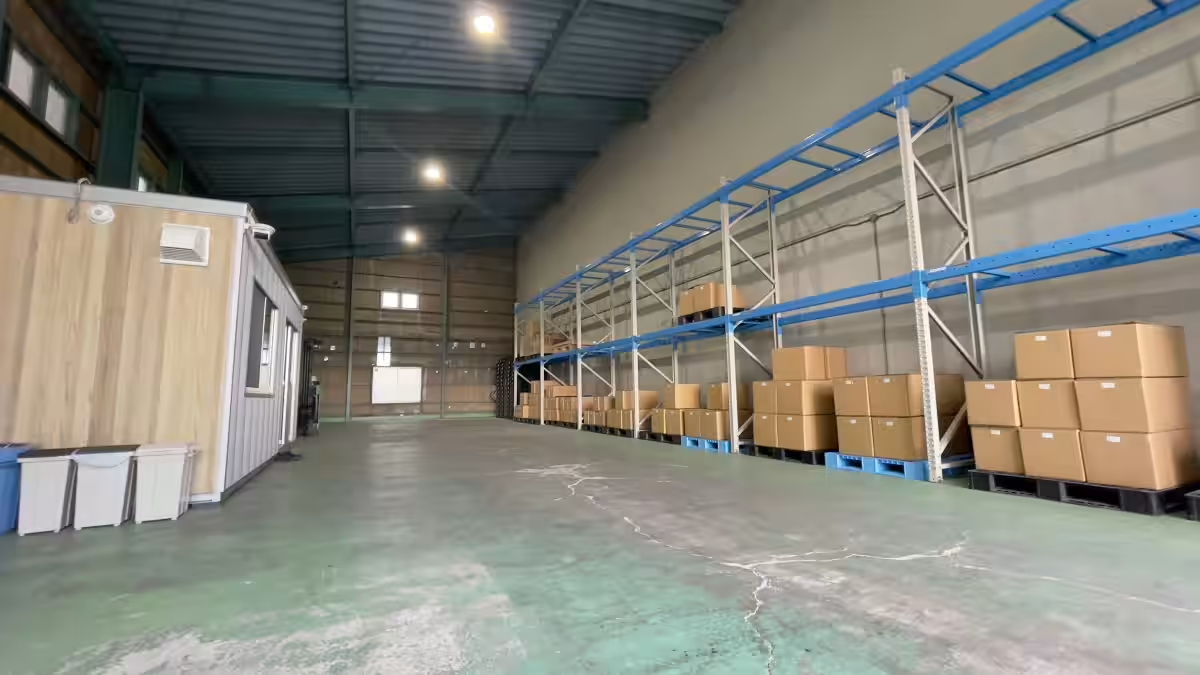
To break through these barriers, they are pioneering a new model that closely intertwines manufacturing facilities with logistics operations. In a significant move, Next Light established new operational bases in Tokyo's Shinagawa Ward and Saitama's Iruma City, focusing on combining time, cost, and environmental impact improvements to create a more effective circular supply chain.
Objectives of the New Bases
The establishment of these new facilities has several key aims:
1. Building Circular Infrastructure: By integrating the processes of recycling used parts and materials, as well as transporting them, Next Light seeks to minimize time, costs, and environmental burdens.
2. Accelerating Inter-company Collaboration: Leveraging the geographical advantages of the Tokyo metropolitan area, the company aims to enhance response times, increase inventory turnover, and optimize the entire supply chain.
3. Balancing Social and Economic Value: The company is committed to visualizing quantitative metrics such as CO₂ reduction, logistics efficiency, and reuse rates in collaboration with corporate partners to amplify their social impact.
A Unique Workspace Reflecting Vision
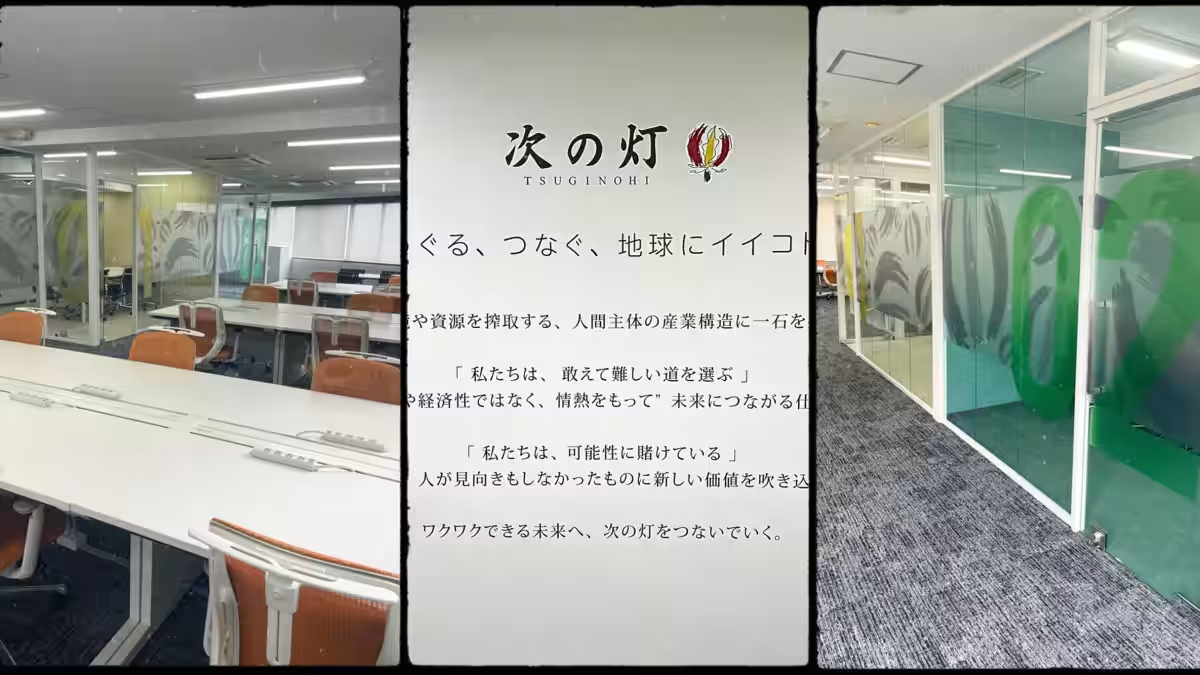
Next Light's Tokyo office serves as a physical representation of their ethos and worldview. Designers have incorporated brand statements in the workspace, ensuring that team members are consistently reminded of their purpose and motivation in their daily tasks. The office features glass partitioning adorned with company logos, maximizing natural light and fostering an open environment conducive to communication.
The color scheme throughout the space reflects the company’s brand, emphasizing warmth and challenge, inviting visitors to experience the spirit of Next Light immediately.
Future Development Plans
Going forward, Next Light intends to collaborate with universities, local governments, and businesses to establish models for implementing environmental and recycling technologies in communities. By working closely with municipalities to enhance waste recycling and partnering with academic institutions for the development of new material reutilization technologies, they aim to bridge effective real-world practices with broad social acceptance.
The knowledge gained through these collaborations will help accelerate the creation of circular resource networks domestically and internationally. By circulating valuable waste, such as automotive components and batteries, as

Topics Other)
【About Using Articles】
You can freely use the title and article content by linking to the page where the article is posted.
※ Images cannot be used.
【About Links】
Links are free to use.