




Preserving Wealth: Lessons from Europe's Affluent Families on Asset Management and Social Contribution
Understanding Wealth Management through European Lenses
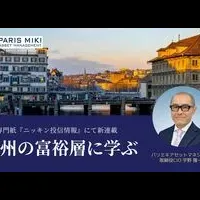
The new column series titled "Learning from Europe's Affluent Families" by Ryuuichirou Uno, Chief Investment Officer at PMAM, launched in the financial publication, Nikkin Toushin Joho, on October 12, 2026. This series intends to demystify the sophisticated art of wealth management practiced by storied European families, showcasing their methodologies for preserving wealth, ensuring generational transition, and contributing to society.
In Japan, amid rising concerns over financial insecurity due to inflation and market volatility, there has been an increasing call for a balanced approach—one that not only focuses on wealth growth but equally on protection. Traditional financial products targeted at the rich have often been misunderstood as solutions solely for asset accumulation. However, the essence of European wealth management extends far beyond mere speculation.
Learning from Europe's Historical Context
The evolution of financial practices among Europe’s affluent families is deeply rooted in their tumultuous historical experiences—wars, regime changes, and economic upheavals have necessitated strategies for self-preservation of family fortunes. This has led to a comprehensive understanding of wealth management that encompasses not just investment, but also taxation, inheritance planning, estate transition, family governance, and philanthropic efforts.
For example, the Wurth family in Germany, known for their thriving hardware empire, illustrates the importance of long-term strategic planning in preserving and growing their wealth. Similarly, the Agnelli family of Italy, the founders of Fiat, have successfully navigated generations of change while maintaining their family’s influence and wealth. These families show Japanese households and small business owners the value of fortified asset defense strategies today, especially in uncertain economic climates.
The Foundation of PMAM's Approach
PMAM, as a firm with over 90 years of heritage, practices a philosophy they refer to as 'Ainori Investment,' where fund managers willingly invest their own capital into company funds, aligning risks and rewards directly with their clients. This method is not just about achieving high returns quickly; it is about ensuring that their clients' investments are safeguarded against market downturns.
To provide a modern interpretation of European wealth management, the first column discusses the misconceptions surrounding terms like private banking, family offices, and wealth management. It is crucial to discern the distinct roles these functionalities play—each contributes differently to overarching financial planning strategies. The aim is to clarify how holistic approaches ensure the sustainability of wealth across generations, safeguarding family interests while adapting to changing economic climates.
Bridging Knowledge Gaps
In upcoming articles, Ryuuichirou Uno will explore pertinent topics like the transnational aspects of wealth management relevant in Europe and how crises affect investment approaches, such as the Swiss multi-asset approach that withstands market volatilities. Insights from family offices that manage over $100 million in assets will also be shared, encouraging Japanese investors to think through similar setups.
Through this series, PMAM seeks to equip families and small enterprises in Japan with the insights needed to navigate potential financial pitfalls while focusing on legacy planning—what it means to pass on wealth not only to the next generation but also to society by supporting charitable endeavors.
Engaging with PMAM’s Community
Furthermore, to celebrate the column’s initiation, PMAM will host an intimate discussion series named 'Platto Ginza.' This special event will allow participants to engage with Uno and other executives in an informal setting, offering an opportunity to understand the realities of asset management and the European perspective on wealth preservation. The first gathering, scheduled for November 4, 2026, will feature discussions about best practices picked up from travels around Europe, along with strategies that can be implemented in the Japanese context.
PMAM will also launch online resources to further educate the public about effective wealth management strategies. Their collaborations will focus on addressing the anxieties of average households regarding financial planning in an era marked by inflation and market unpredictability.
As the dialogue continues, PMAM remains committed to reinforcing a framework where wealth doesn't just grow but is sustainly managed and cultivated for future generations. Together, individuals can learn to not only preserve their financial legacies but can also contribute meaningfully to society, making wealth management a collaborative journey rather than an isolated pursuit.

Topics Financial Services & Investing)
【About Using Articles】
You can freely use the title and article content by linking to the page where the article is posted.
※ Images cannot be used.
【About Links】
Links are free to use.