



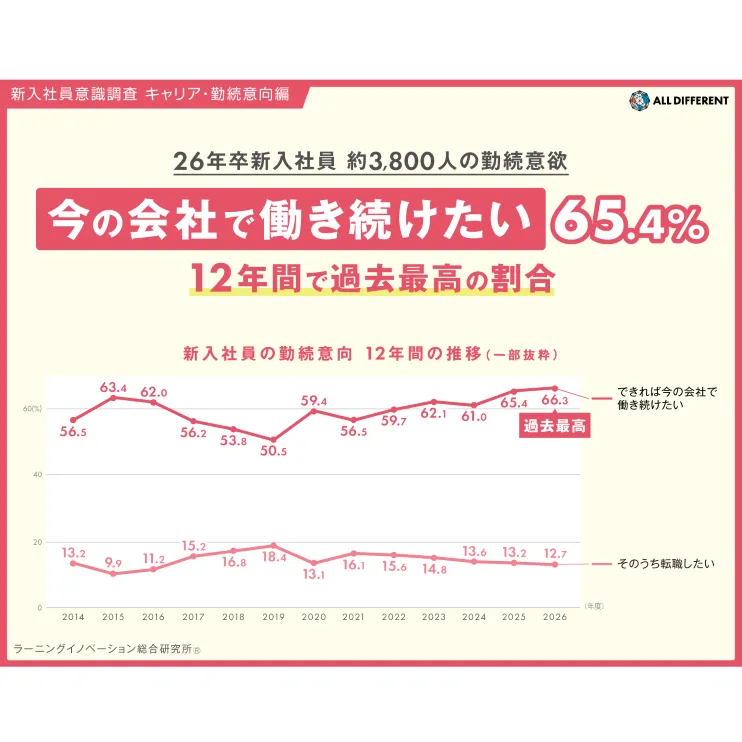
2026 New Employees Show Record Career Commitment and Aspirations
Overview
A survey conducted by ALL DIFFERENT Co., Ltd., and the Learning Innovation Research Institute shows promising results for the career commitment of new employees graduating in 2026. With a substantial sample size of 3,849 participants, the findings demonstrate the evolving mindset and aspirations of today's workforce.
Key Findings
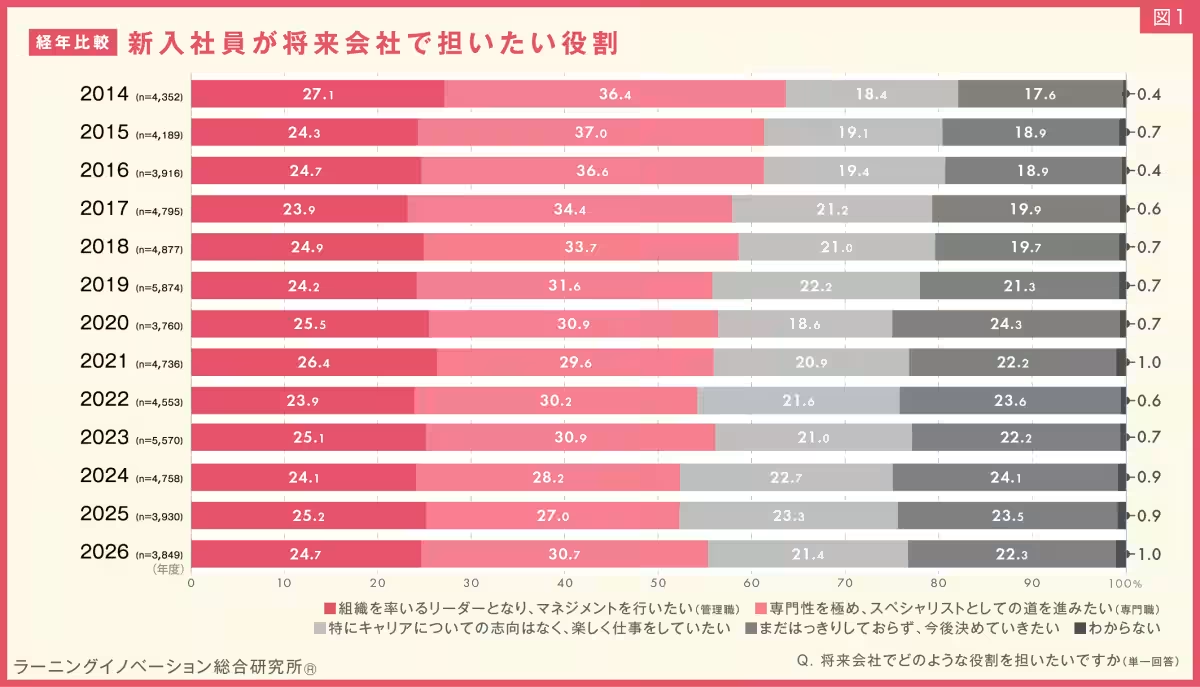
- - Career Aspirations: Approximately 30% of respondents expressed a desire to become specialists, while around 25% aimed for management positions.
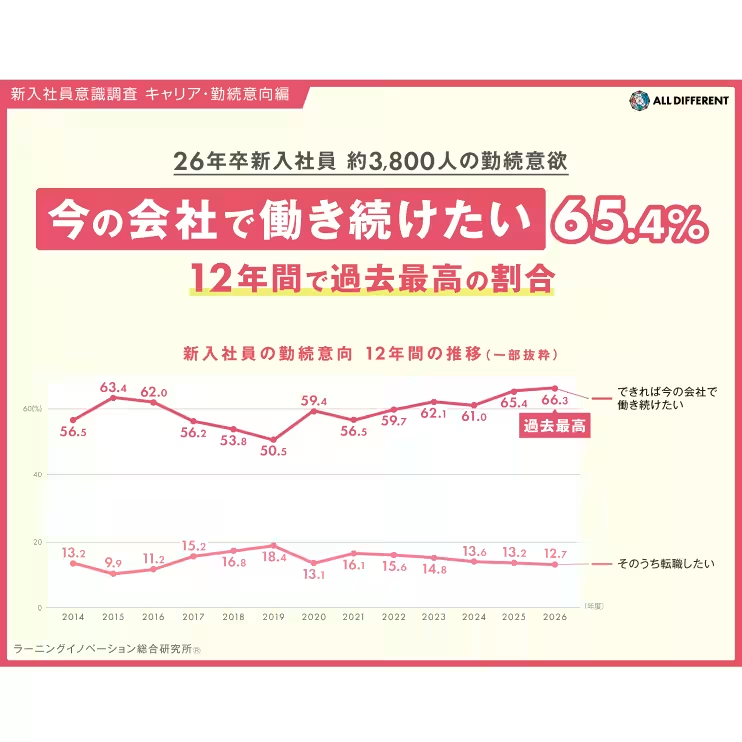
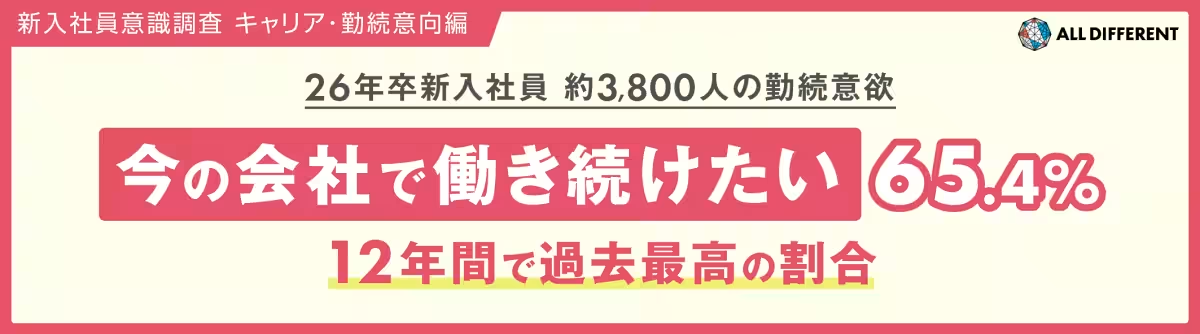
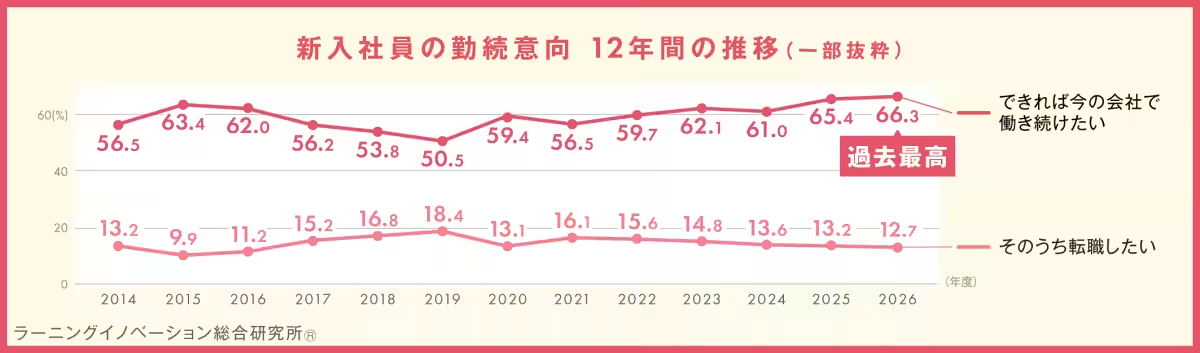
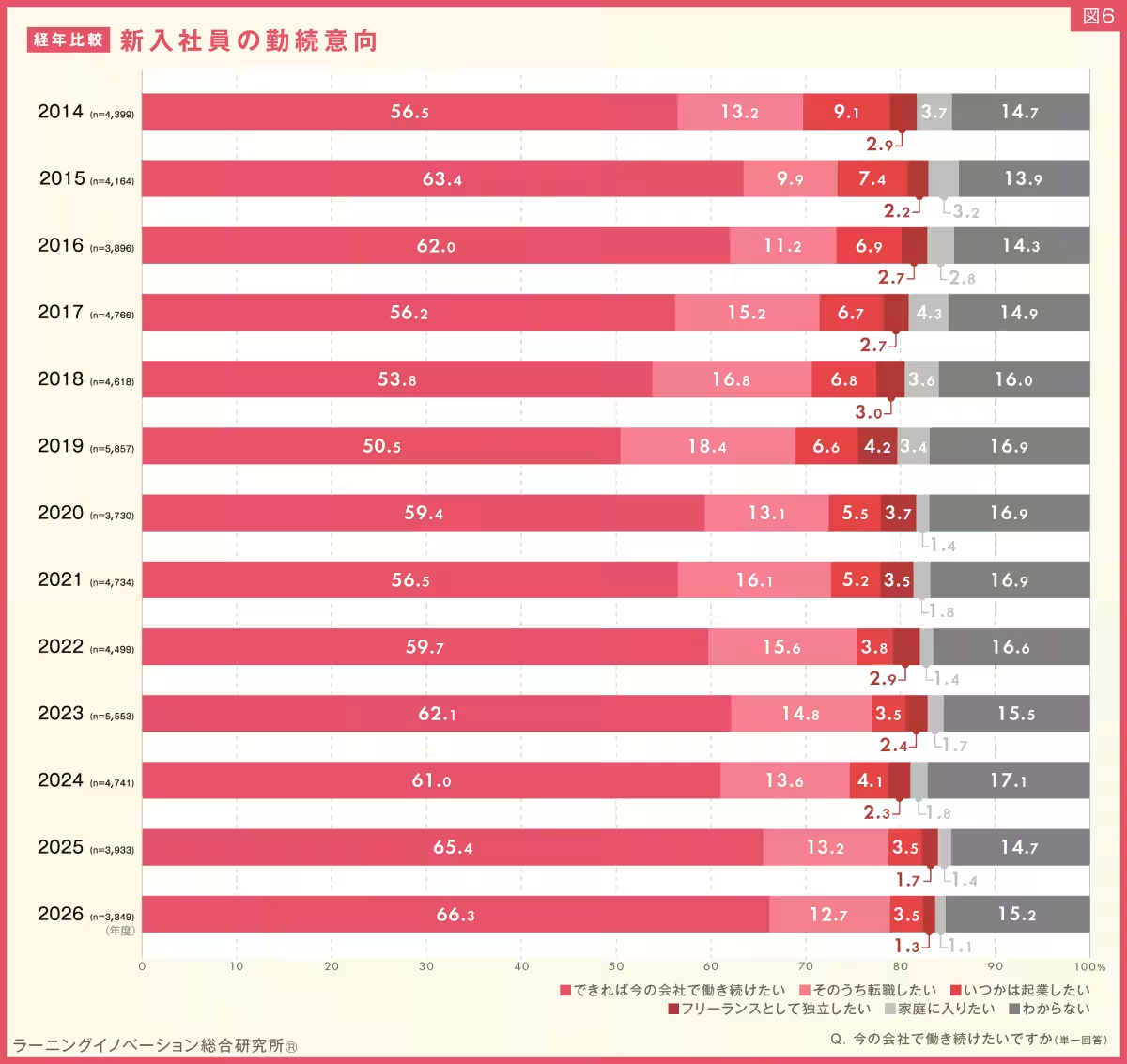
- - Desire to Continue with Current Employers: A remarkable 66.3% of new hires indicated that they would like to stay with their current companies, the highest percentage recorded in the last 12 years.
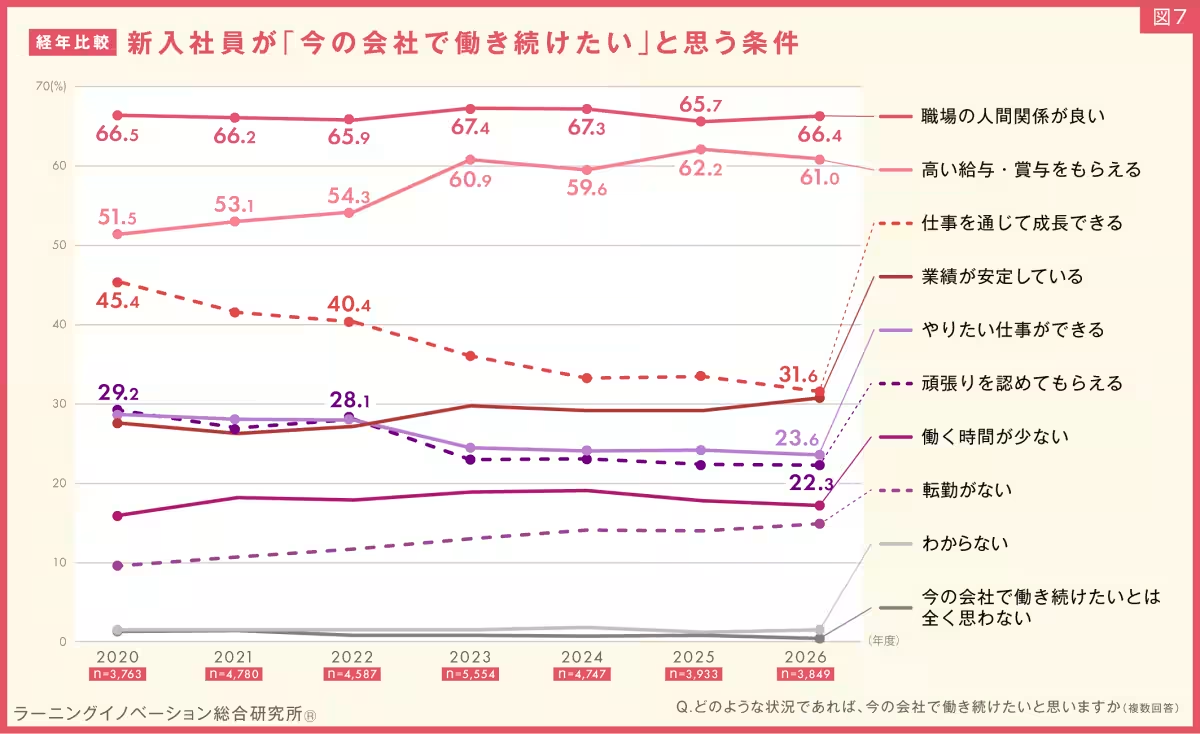
- - Workplace Environment: The two most significant factors influencing their decision to remain are positive workplace relationships and competitive compensation.
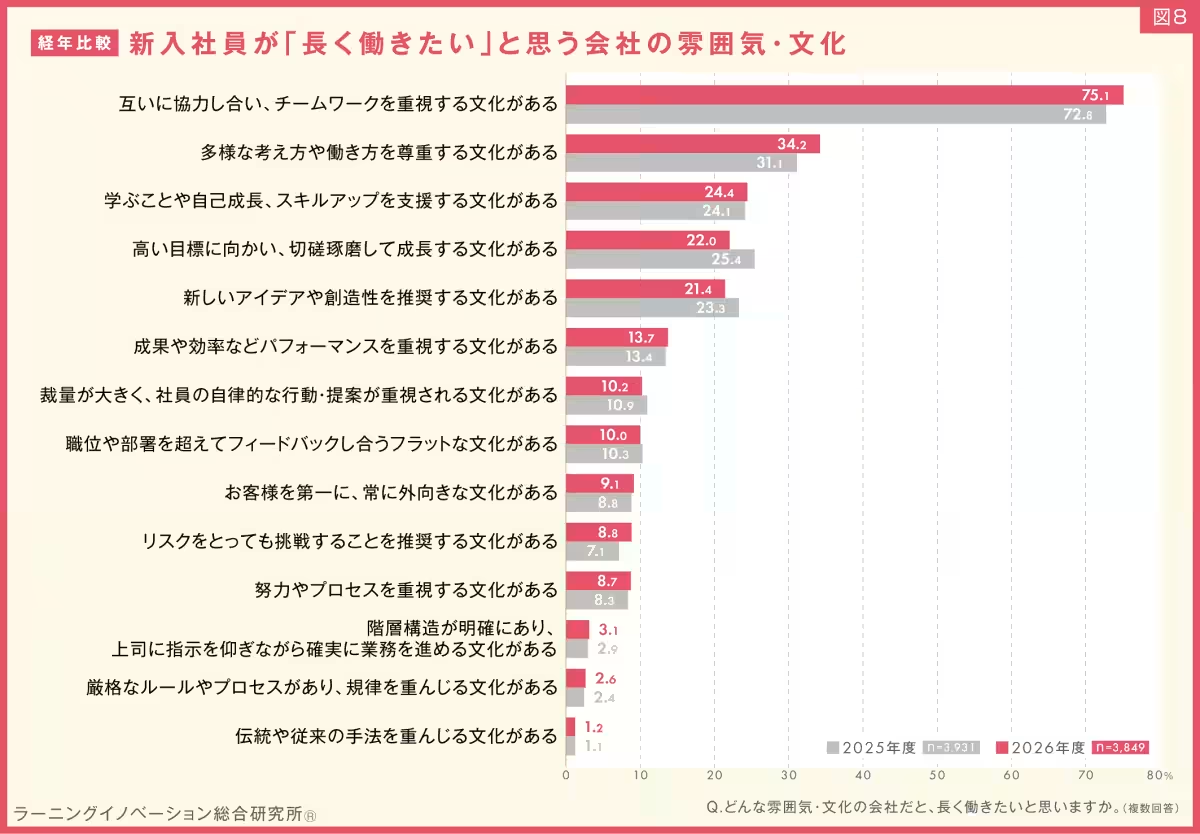
- - Team-Oriented Culture: A notable 75.1% of participants emphasized the desire for a teamwork-oriented work culture as a critical part of their long-term employment outlook.
Career Aspirations Explored
The study highlights a shift in career preferences among new employees. With the backdrop of an unpredictable job market and diverse working styles, the traditional views on lifetime employment and seniority can no longer be the only guiding principles. Today’s new hires are markedly prioritizing personal fulfillment and clear career paths.
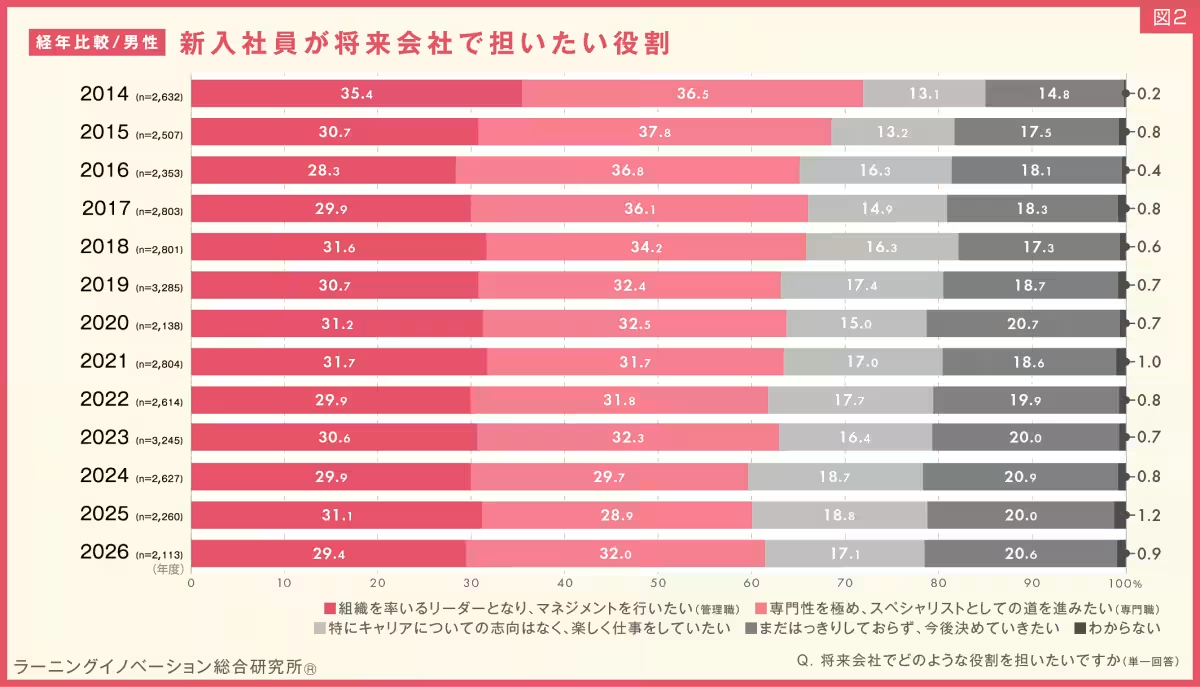
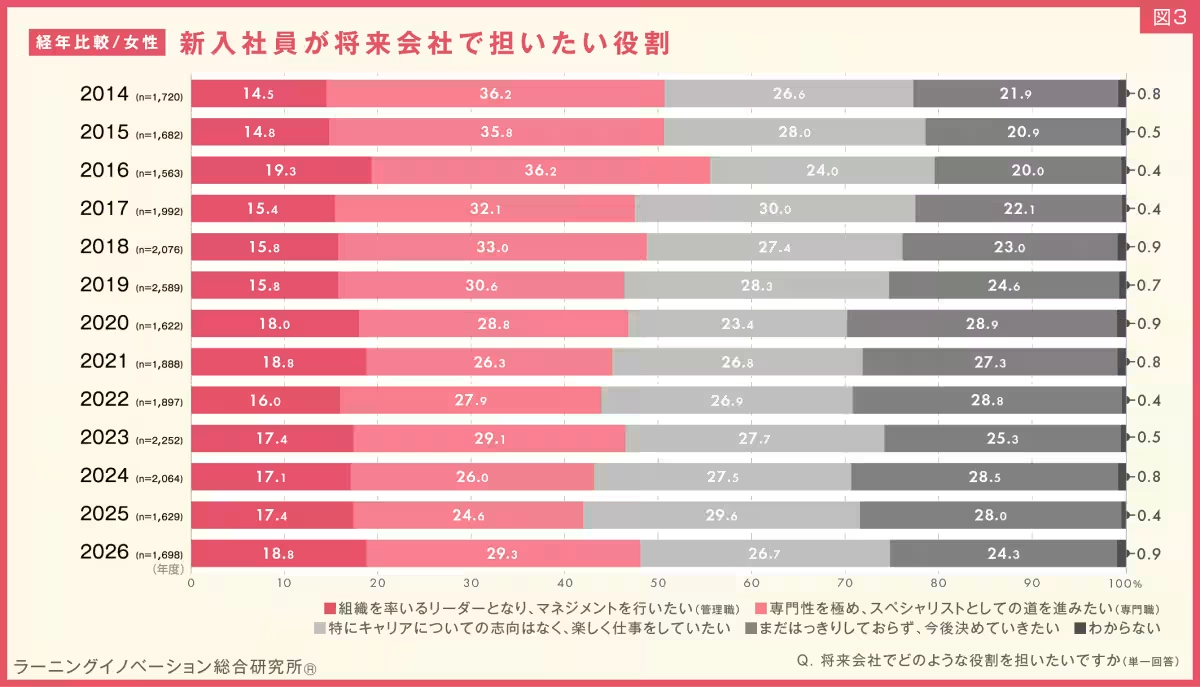
When asked about their career aspirations, approximately one-third (30.7%) expressed a strong preference for pursuing career paths as specialists. This was followed by those who aspire to leadership roles within organizations. It’s curious to note that a significant number of new employees remain uncertain about their career paths, reflecting a potential hesitance in decision-making amidst an abundance of options.
As the analysis of the data unfolds, a longitudinal comparison to previous years reveals a slight decline in those gravitating towards ambiguity in career decisions, showing that new employees are becoming more confident in their aspirations.
Reasons for Management Aspirations
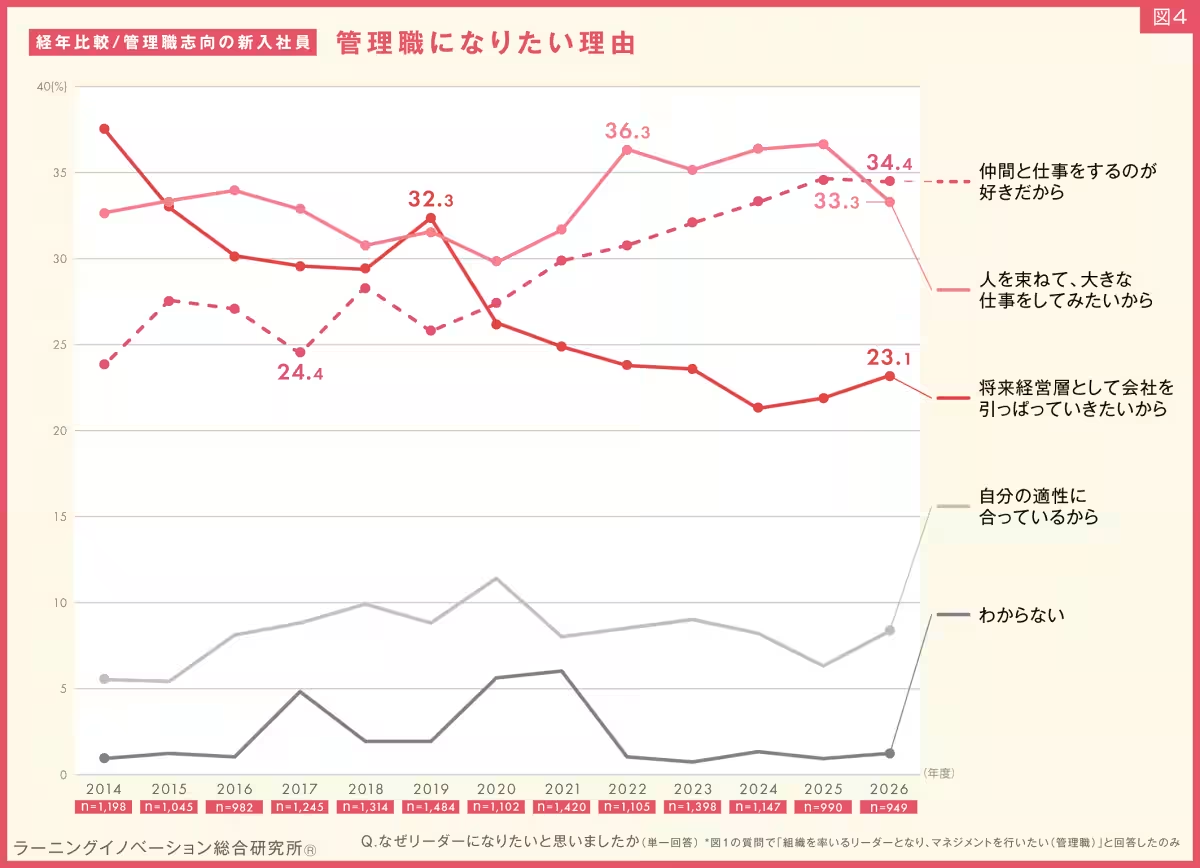
Among those keen on leadership roles, 34.4% stated a profound pleasure in working collaboratively with colleagues as their primary motivation, indicating a notable shift towards valuing camaraderie over merely climbing the corporate ladder.
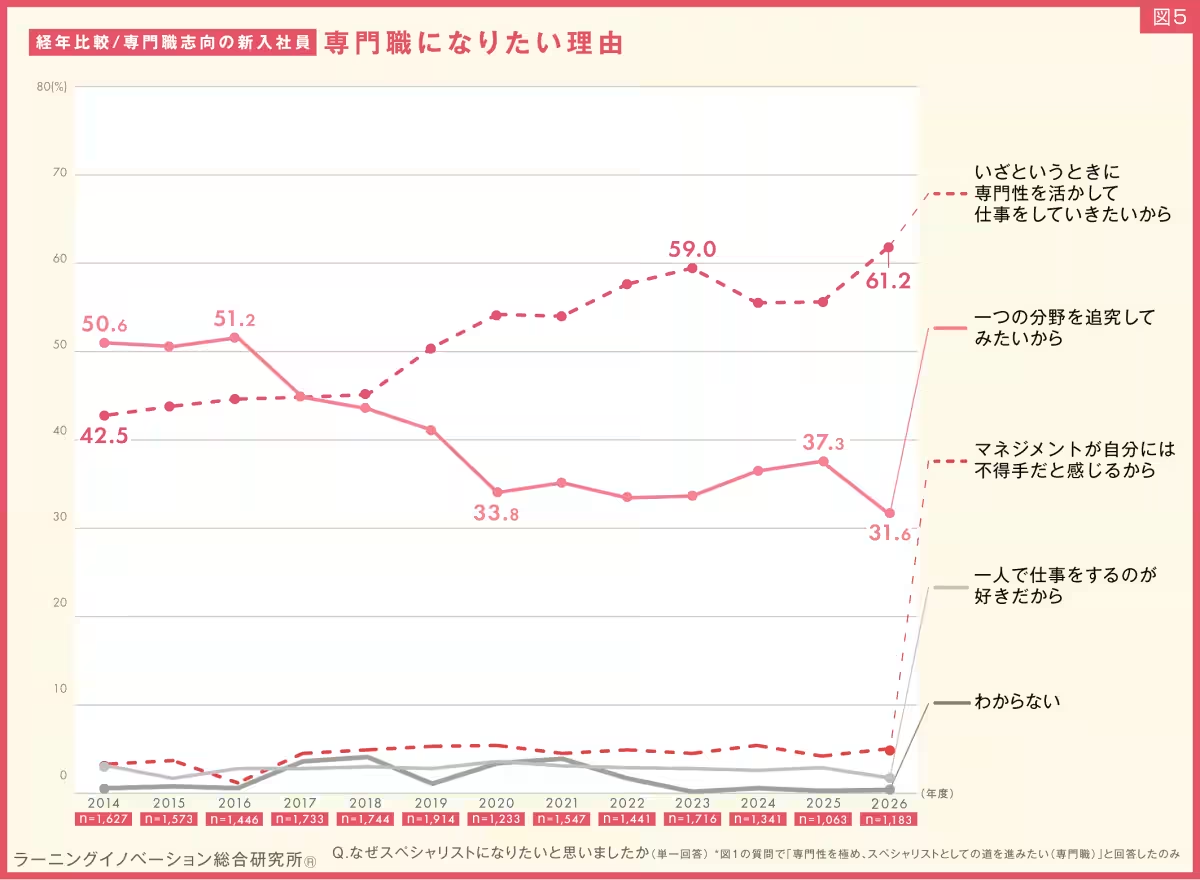
In contrast, the prevalent rationale for the inclination towards specialist roles, resonating with 61.2% of respondents, was the desire to leverage their expertise effectively when critical situations arise. This statistic embodies a clear inclination towards harnessing specialized skills.
High Commitment to Current Employers
Following the trends in career aspirations, the survey then delved into the new hires' intentions to stay at their current organizations. The results were notable: 66.3% expressed a commitment to remaining, showcasing a significant change in workforce stability over the years, especially post-pandemic.
Key Factors for Longevity
The report further specified that favorable interpersonal relationships (66.4%) and high salaries (61.0%) were paramount in influencing their desires to remain at their institutions. Interestingly, opportunities for personal growth through work or achieving desired job roles showed declining appeal compared to previous years.
Cultural Expectations
The cultural dynamics within companies have become increasingly important. A resounding 75.1% of survey participants indicated a preference for an environment characterized by teamwork and collaboration. Other cultural aspects such as valuing diverse perspectives and supporting skill development also featured prominently in their responses.
Support in Career Development
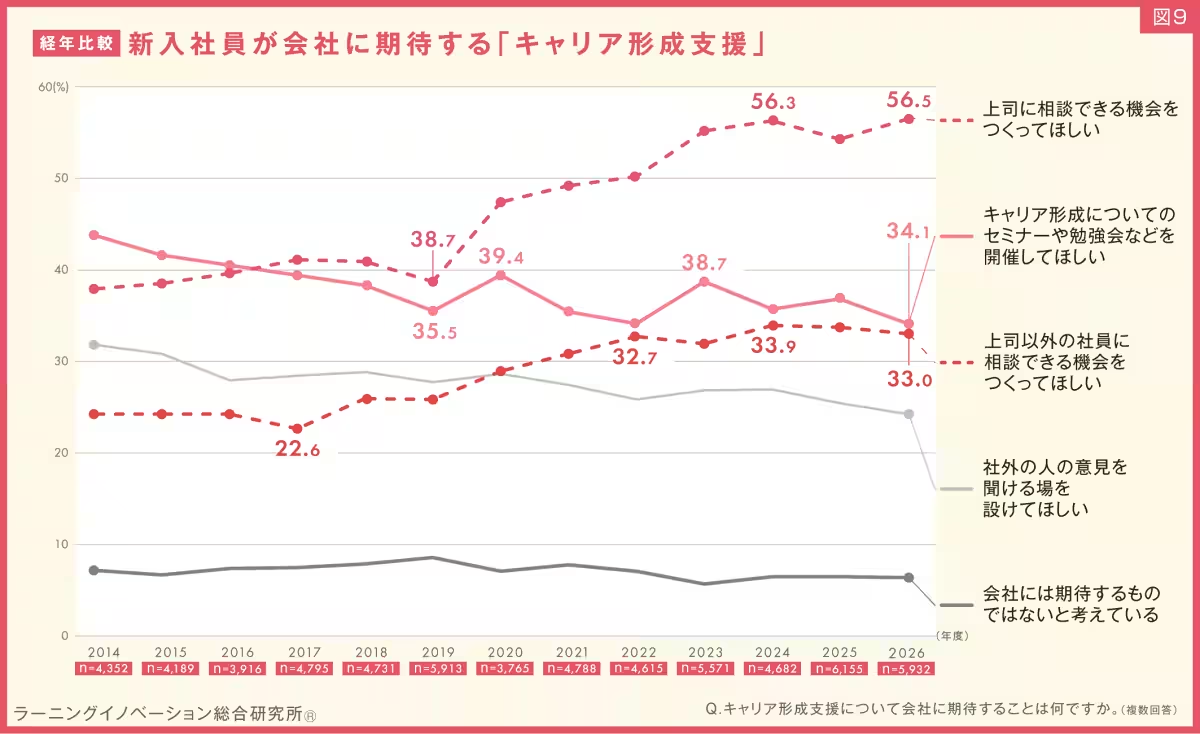
A fundamental aspect of the survey also focused on what new employees expect from their companies to foster their career development. The majority indicated a need for accessible communication with their supervisors, judging the quality of existing mentoring opportunities.
Conclusion and Insights
The survey reveals a compelling narrative about the prospective workforce’s aspirations and expectations. As the dynamics of employee commitment and career perspectives evolve, organizations must adapt to provide environments where collaboration thrives, and clear communication about growth opportunities is prioritized. Furthermore, initiatives that foster a culture of teamwork and a positive working environment may enhance retention rates among new hires.
Overall, the results signify a need for companies to cultivate supportive atmospheres, which prioritize both personal and professional growth to ensure sustained engagement among new employees. By focusing on collaborative efforts and clear career pathways, organizations can nurture a new generation of committed and competent employees who contribute to long-term organizational success.


Topics People & Culture)

【About Using Articles】
You can freely use the title and article content by linking to the page where the article is posted.
※ Images cannot be used.
【About Links】
Links are free to use.