




LobbyAI Officially Launches Comprehensive Municipal Document Search Tool for Over 1.2 Million Public Records
LobbyAI's Innovative Tool to Transform Public Data Access
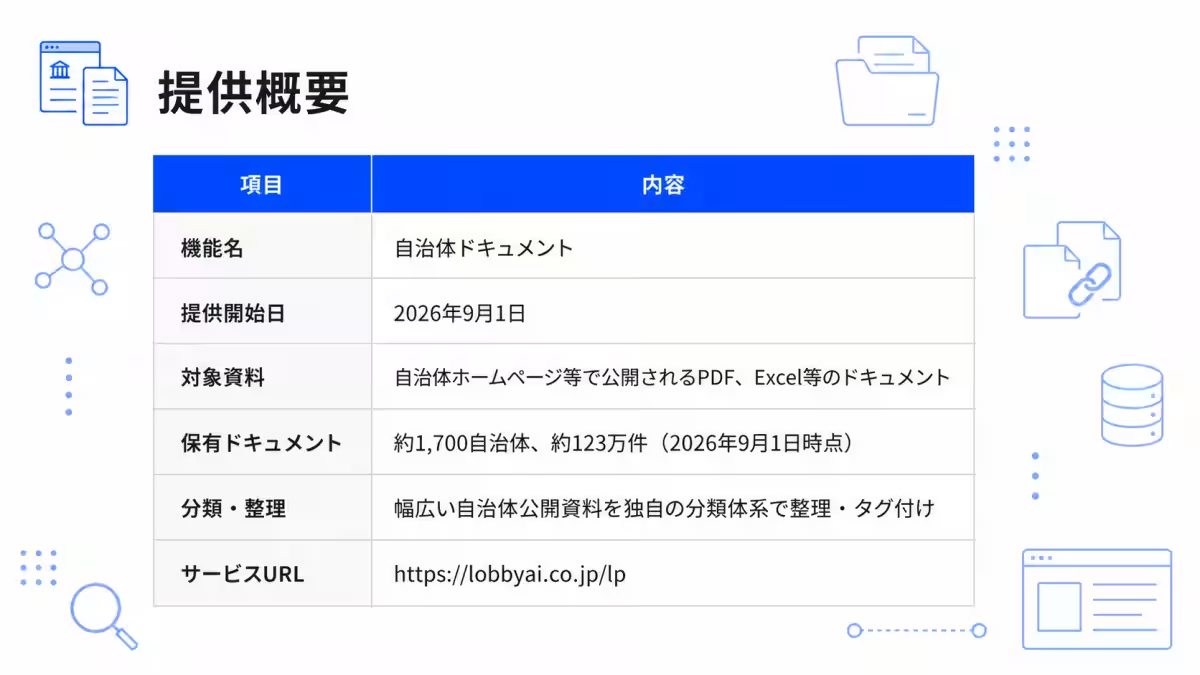
LobbyAI Inc., based in Minato, Tokyo, has officially introduced a powerful new feature called 'Municipal Documents,' revolutionizing how citizens and organizations access public records. This tool enables users to perform extensive searches across approximately 1,700 municipalities, covering more than 1.2 million publicly available documents including PDF and Excel files. The aim is to streamline the research process for users interested in municipal affairs, making it significantly easier to find specific policy documents, council meeting minutes, or budget plans.
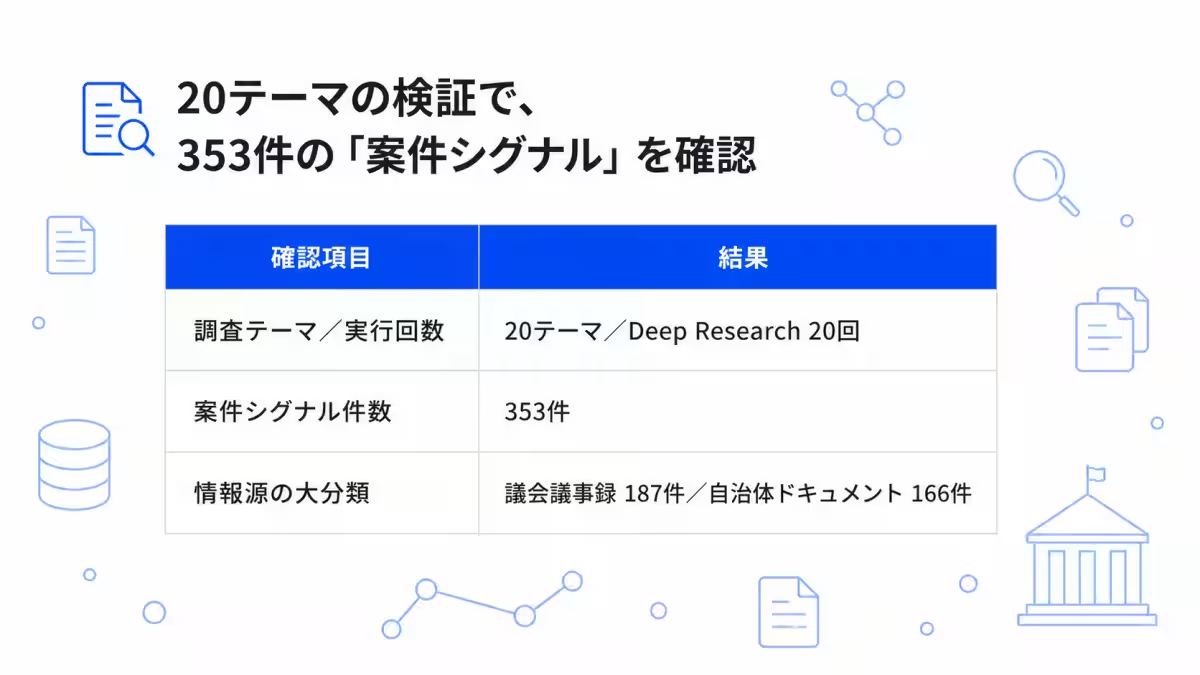
To put it in context, the 'Municipal Documents' feature compiles and classifies data from various local government entities, resulting in a comprehensive database that includes policy documents, planning materials, financial reports, and procurement specifications. This wealth of information culminated as of September 1, 2026, with about 1.23 million records. In an effort to verify the utility of this new feature, LobbyAI utilized its advanced Deep Research functionality to conduct real-time analyses on 20 different themes across 20 separate instances, leading to the identification of 353 distinct 'project signals' that could potentially guide private sector engagement with governmental projects.
Understanding the Need for Comprehensive Data Access
The challenge for those seeking information about municipal operations lies in the fragmented nature of the available resources. Relevant data points are often scattered across various sections of local government websites—within multiple departments, governance-related documentation, committee discussions, plans, and public reports. This necessitates a labor-intensive cross-referencing of documents to ascertain the status of initiatives, the alignment of policies, and the progress of budget allocations. For example, while a strategic plan might outline general objectives, detailed initiatives and discussions surrounding those directives are found in separate files, complicating access to relevant insights.
To remedy this, LobbyAI’s 'Municipal Documents' integrates all stages of the administrative process—from policy development to procurement—enabling users to follow the governmental workflow holistically. Specifically, the feature collects and sorts documents from budgetary notes, council discussions, and broader policy strategies, while broadening the information horizon to include indicators of potential new projects long before they materialize into formal tenders or contracts.
Key Features of the Municipal Document System
1. Holistic Administrative Process Coverage: The 'Municipal Documents' function encompasses all phases of administration, featuring relevant documents across various governmental stages from strategy formation to execution.
2. Unique Classification System: The system categorizes a diverse array of municipal documents based on their nature and relevance to the administrative process. This structured classification encompasses an array of resources—from budgets and planning materials to meeting minutes and evaluation documents—all housed within a singular database.
3. Centralized Information Portals: Users can navigate through this extensive array of documents based on categories or specific policy themes, enhancing the ability to evaluate and propose initiatives according to municipal priorities and timelines.
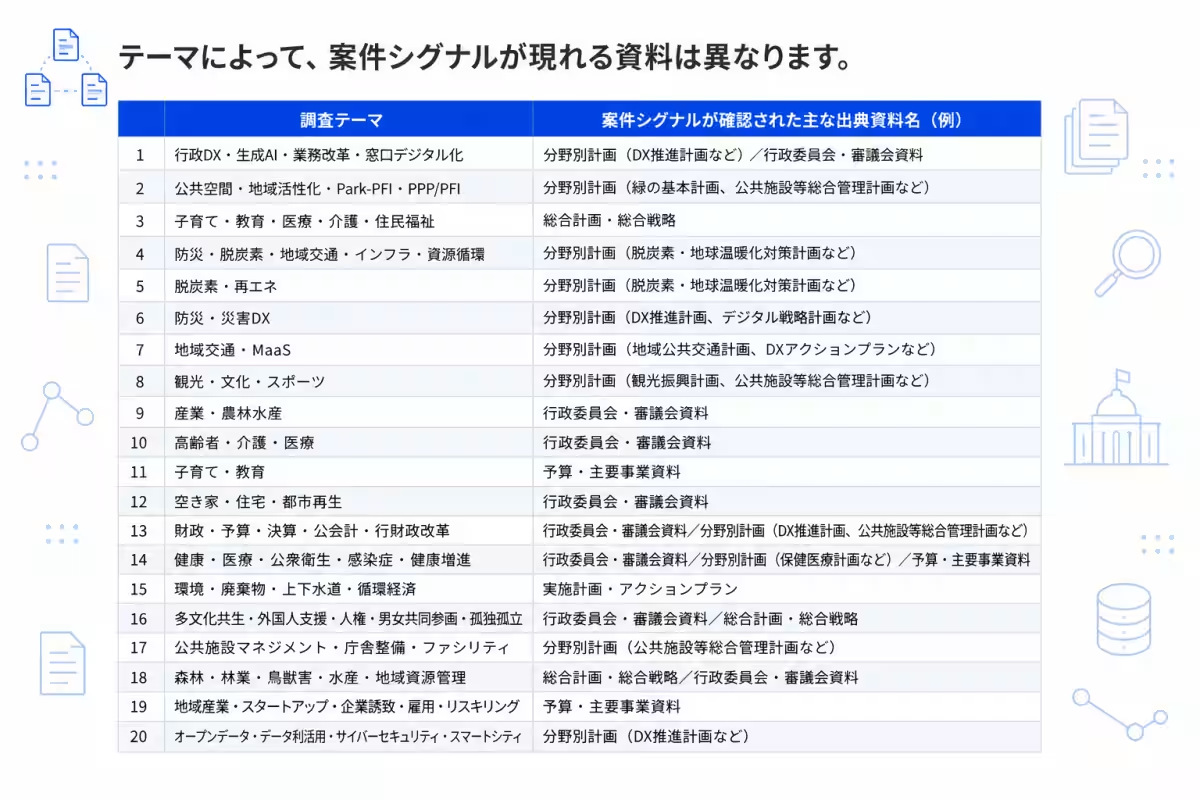
4. Deep Research Tool to Enhance Investigation: Utilizing AI technologies, the 'Deep Research' feature promotes thorough investigations across the accumulated municipal documents, helping users uncover project signals and verify their origins. During this validation phase, a wide variety of themes—such as administrative modernization, carbon neutrality, disaster prevention, and education—were scrutinized, showcasing the relevance and versatility of the platform.
The Verified Project Signals
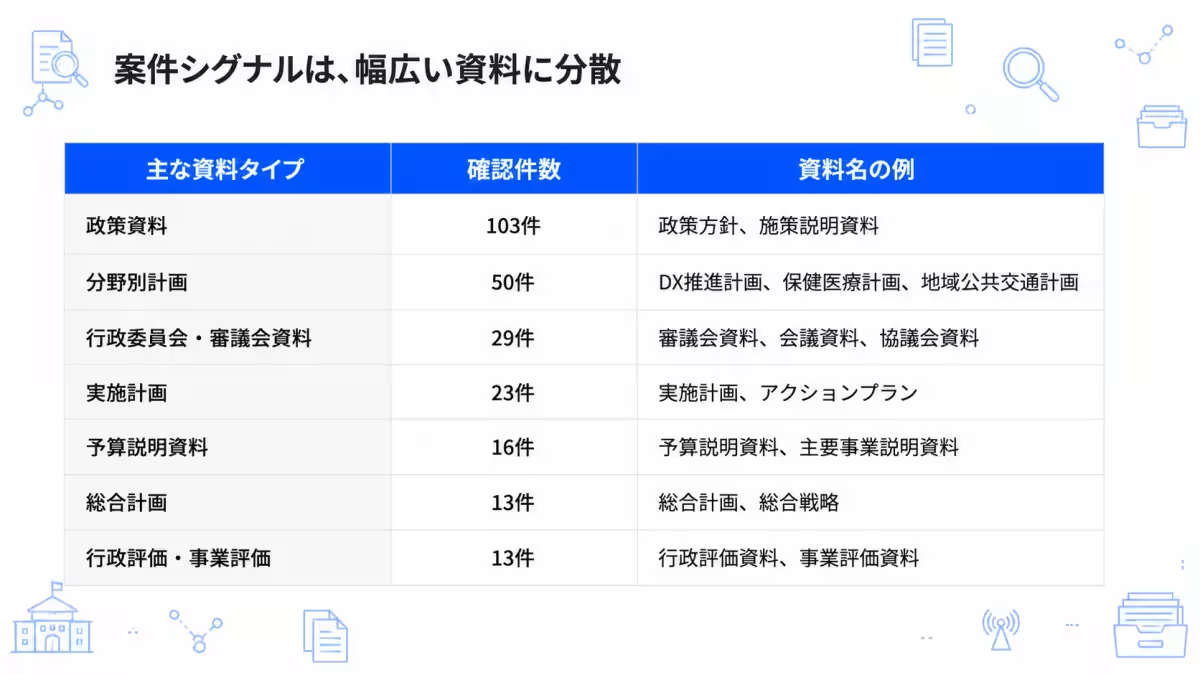
From the validation of 353 project signals identified during the analysis phase, important insights were gained into the source material responsible for these signals. The data reveal that 187 project signals were drawn from council minutes, while an additional 166 stem from the municipal documents themselves. These important signals, which point towards various potential opportunities, are primarily derived from diverse document types, including strategic plans, meeting minutes, budget evaluations, and more.
This diverse representation highlights that valuable information on potential government contracts is not limited to formal tender announcements. Instead, it can be sourced from preliminary documentation that hints at future engagement opportunities—as evidenced by the 20 themes under investigation during this research period.
Defining the Project Signals
It’s crucial to note that 'project signals' do not equate to finalized contracts or awarded projects. Instead, they represent actionable insights derived from documented proposals, discussions, project assessments, or potential partnerships. By recognizing the various layers of information—ranging from legislative proposals to budgeting phases—organizations can more efficiently navigate decision-making influenced by public data.
Anticipated Applications
Potential Use Cases of the Municipal Document Feature:
- - Sales to Local Governments: Leveraging the platform to identify promising initial points for proposals and engagement based on documented policy needs or budget allocations.
- - Business Development and Public-Private Partnerships: Facilitating thorough market research by cross-comparing several municipalities' strategies, policies, and budgetary decisions.
- - Policy Advocacy and Public Affairs: Understanding historical contexts and the stages of ongoing policy developments will shape better engagement strategies.
- - Proposal Preparation: Helpful in structuring proposal hypotheses based on the supporting documents, relevant initiatives, and developmental contexts of various municipalities.
The Technological Backbone: R1N4 and AI Classification
LobbyAI's data framework is driven by the next-generation data injection engine called 'R1N4'. This engine ensures the efficient extraction of documents from local government websites by preserving contextual relevance while minimizing server load through unique management techniques. Documents are then tagged using AI technologies, applying classifications relevant to their content, which maintains the integrity and ease of access to rich data streams.
According to CEO Kyotaro Takahashi, 'It’s essential to recognize that critical movements in public-facing documents often appear even before formal bids or contracts. This new tool makes previously fragmented data easily navigable. By doing so, we empower policy stakeholders to make informed decisions guided by comprehensive data analytics in a timely manner.'
Company Information
LobbyAI Inc., established with a mission to unify the access to public data, focuses on integrating AI solutions with municipal and governmental information-sharing frameworks. The company’s portfolio includes developing the 'LobbyAI' platform alongside tailored services aimed at facilitating effective stakeholder engagement in the public policy arena.
For additional insights on 'Municipal Documents' or inquiries related to LobbyAI, please reach out via their official website LobbyAI.

Topics Consumer Technology)
【About Using Articles】
You can freely use the title and article content by linking to the page where the article is posted.
※ Images cannot be used.
【About Links】
Links are free to use.