



Okabe Corporation Selected for Blue Carbon Demonstration Project by Japanese Ministry of the Environment
Okabe Corporation's Blue Carbon Initiative
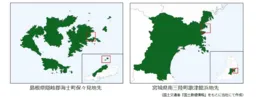
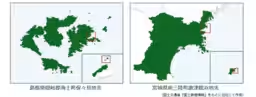
In a significant move towards advancing environmental sustainability, Okabe Corporation has been selected as the project leader for the large-scale Blue Carbon initiative, backed by the Japanese Ministry of the Environment. The project, which focuses on innovative carbon absorption strategies, will be conducted over three years, from the fiscal year 2026 to 2028, with its main testing grounds set along the coast of Ama Town in Shimane Prefecture.
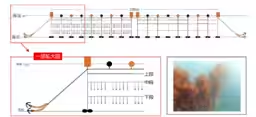
Okabe Corporation, established in 1917 and headquartered in Sumida, Tokyo, specializes in construction-related products and marine resources. The project will implement a unique multi-tier seaweed cultivation system, expanding traditional sea farming practices both horizontally and vertically. This innovative approach aims to optimize CO₂ absorption through the cultivation of various seaweed species such as Arame and Kame, effectively enhancing the carbon sequestration process while promoting biodiversity.
Project Overview
The Blue Carbon project is a part of broader efforts to address environmental challenges and contribute to climate change mitigation. The testing will occur in collaboration with local fisheries cooperatives and involves carefully nurturing seedlings derived from naturally occurring seaweed in the target marine areas. By leveraging Okabe's advanced seaweed cultivation technologies, the project is designed to create an optimal environment for marine life, ensuring that ecological balance is carefully maintained while achieving high-efficiency CO₂ fixation.
The multi-tier cultivation model, which was developed based on Okabe's previously introduced technology, aims to establish several layers of seaweed propagation bases, extending the cultivation depth to about 18 meters below the surface. This method not only increases the efficiency of CO₂ absorption but also supports the conservation of local biodiversity by using indigenous seaweed species. The project will exemplify a harmonious relationship between economic activity and environmental protection, fulfilling part of the United Nations Sustainable Development Goals, particularly Goal 14: Life Below Water.
Collaboration and Implementation
The implementation of this project will involve coordinated efforts from several stakeholders, notably the Ama Town Fisheries Cooperative and the Miyagi Prefectural Fisheries Cooperative. Their collaboration will ensure that local fishing communities are engaged and that the project aligns with regional ecological and economic interests.
Timeline and Goals
This initiative, projected to run from FY 2026 through FY 2028, is set to pave the way for further advancements in seaweed cultivation technology, potentially leading to scalable solutions for carbon absorption across various marine environments. The outcomes of this project will be closely monitored and evaluated to assess both its environmental impact and effectiveness in carbon sequestration.
Okabe Corporation is committed to protecting the environment through innovative practices. The company believes that this project represents a significant step forward not only in enhancing blue carbon strategies but also in fostering the growth of sustainable aquaculture practices that can benefit both the planet and local communities.
For more details about Okabe Corporation and their ongoing projects, visit their official website. This initiative highlights the vital role that private enterprises can play in addressing the pressing challenges posed by climate change, proving that economic development and environmental stewardship can coexist to create a more sustainable future.
Topics Environment)
【About Using Articles】
You can freely use the title and article content by linking to the page where the article is posted.
※ Images cannot be used.
【About Links】
Links are free to use.