



PFU and IHI Inspection Measurement Team Up Again for Lithium-ion Battery Detection Tests
Collaborative Experiment to Detect Improperly Disposed Lithium-ion Batteries
PFU Corporation and IHI Inspection Measurement are proudly announcing their second collaborative experiment in Machida City, aimed at detecting improperly disposed lithium-ion batteries. The experiment will be held at the Machida Bioenergy Center from August 25 to August 28, 2025, and follows a successful initial trial conducted in 2024.
Background of the Experiment
The increase in electronic devices utilizing lithium-ion batteries has raised significant concerns regarding their disposal. Often, these batteries are improperly discarded in non-flammable waste, bulky items, or plastic waste, creating hazardous situations in waste management facilities. Numerous incidents of fire and ignition related to incorrectly disposed lithium-ion batteries have surfaced, presenting serious societal challenges.
Through earlier collaboration with Machida City, PFU and IHI were able to identify the necessity of an effective detection system. This two-pronged experiment aims to improve the existing technologies based on feedback and data from the first test, focusing mainly on the detection rates and accuracies of the new prototypes developed since.
Overview of the Experiment
1. Experimental Objectives
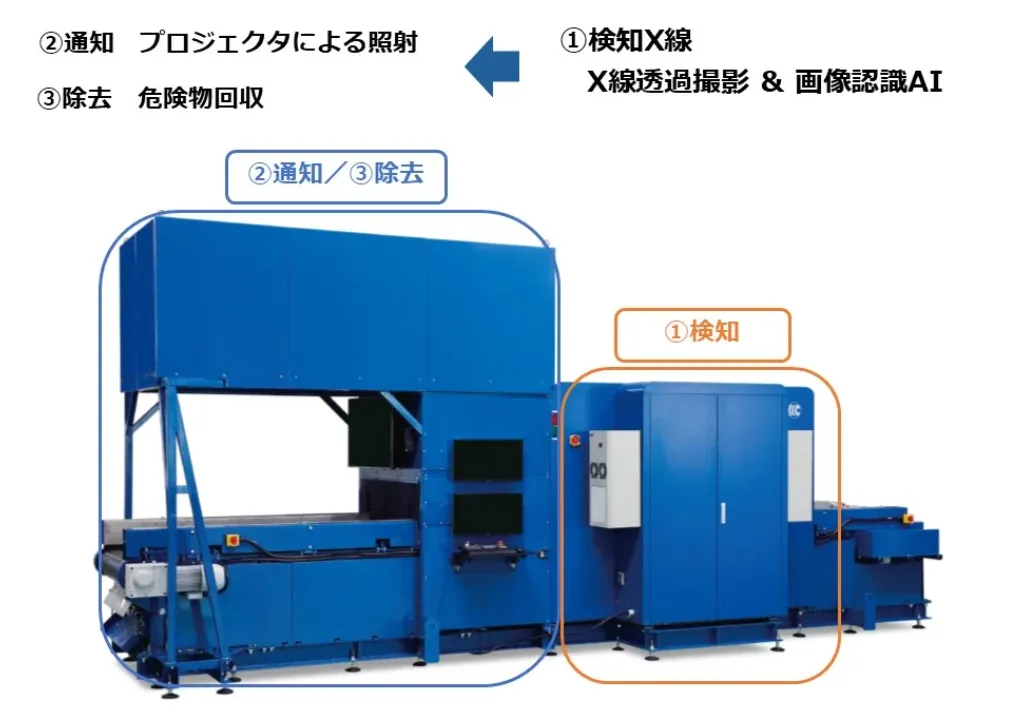
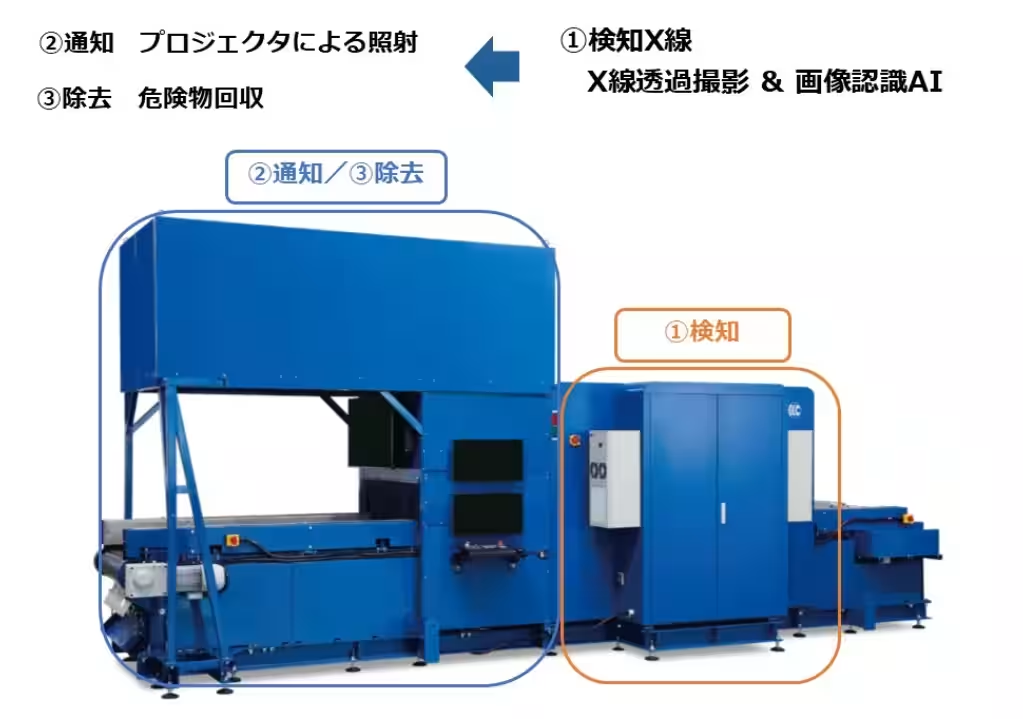
The goal is to utilize X-ray inspection sensors coupled with a custom AI engine designed for waste sorting to evaluate the effectiveness of the lithium-ion battery detection system (LiB detection technology).
- Lithium-ion Battery Contamination Assessment
- Investigate the types, quantities, and weights of products containing lithium-ion batteries mixed into non-flammable waste.
- Evaluation of Detection Accuracy and Effectiveness
- Measure the detection precision of the LiB detection system, assess the removal operations following detection of improper waste, and analyze the overall treatment and operational efficiencies.
- Consider varying waste types, shapes, treatment volumes, and environmental conditions, such as waterproofing and dust resistance, in the evaluation process.
2. Key Features of the Technology
- The AI engine, specialized for LiB detection, is built on advanced technologies cultivated through the development of the world’s leading document scanners.
- This system is versatile, capable of addressing various waste processing paths including non-flammable waste, plastics, and small appliances.
3. Experiment Location
- The experiments will take place at the Machida City Bioenergy Center.
4. Timeline
- The scheduled dates for the experiment are August 25 to August 28, 2025.
Significance and Future Prospects
The growing prevalence of lithium-ion batteries in consumer electronics underscores the urgency for improved waste disposal methods. This experiment not only aims to enhance detection rates but also strives to mitigate the risks associated with improper disposal. By refining the LiB detection system, PFU and IHI Inspection Measurement are set to contribute significantly to environmental safety and effective waste management practices.
For inquiries, please contact PFU Corporation's Next Generation Business Development Office at RAPTOR by email: [email protected]. All details mentioned in this press release are current as of the announcement date and may be subject to change without prior notice.

Topics Other)
【About Using Articles】
You can freely use the title and article content by linking to the page where the article is posted.
※ Images cannot be used.
【About Links】
Links are free to use.