



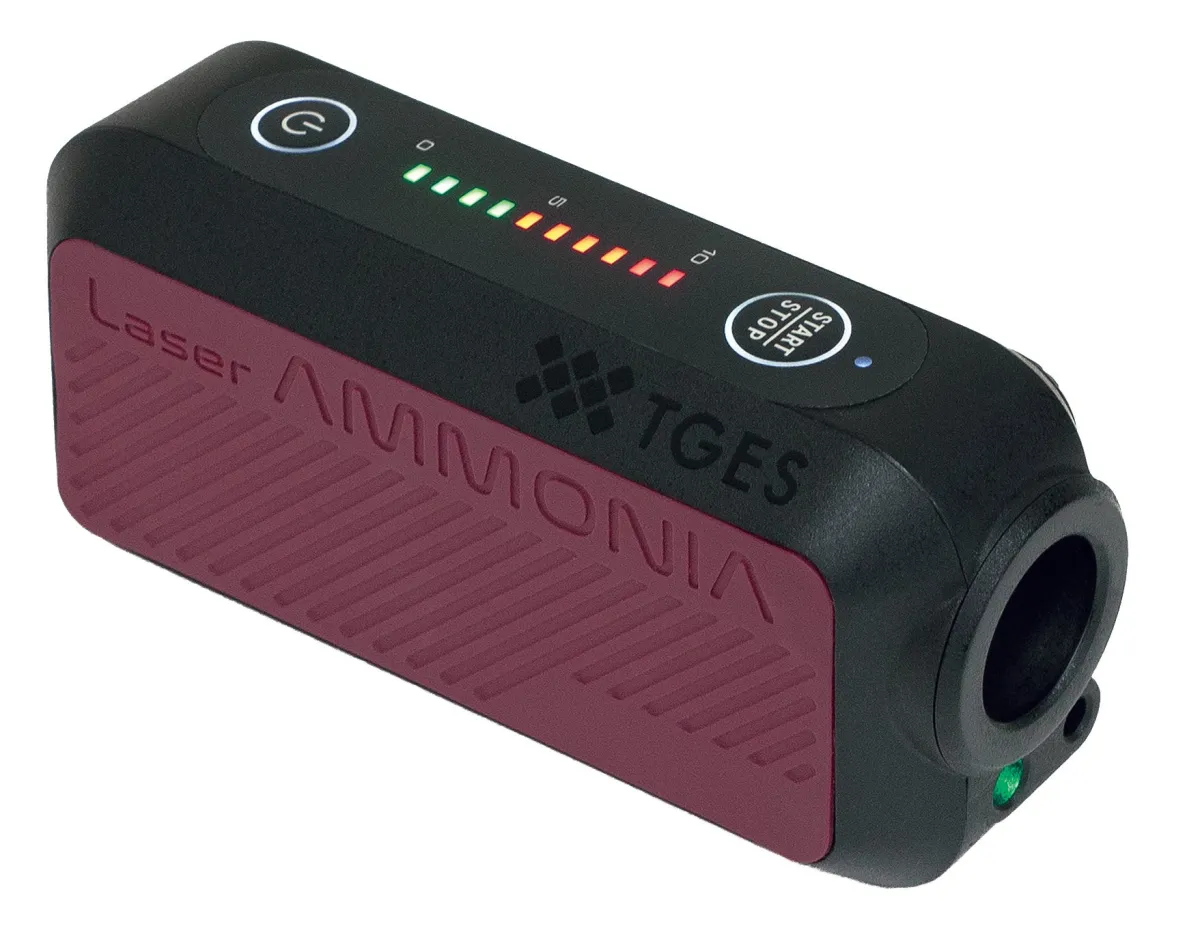
TGES Launches Innovative Laser-Based Ammonia Detector for Enhanced Safety
TGES Unveils High-Precision Laser Ammonia Detector
On September 16, 2025, Tokyo Gas Engineering Solutions Inc. (TGES) officially launched its latest product, the Laser Ammonia Detector, aimed at improving safety and operational efficiency in environments handling ammonia (NH3). This innovative detection technology promises to enhance safety management while streamlining equipment maintenance processes.
Features of the Laser Ammonia Detector
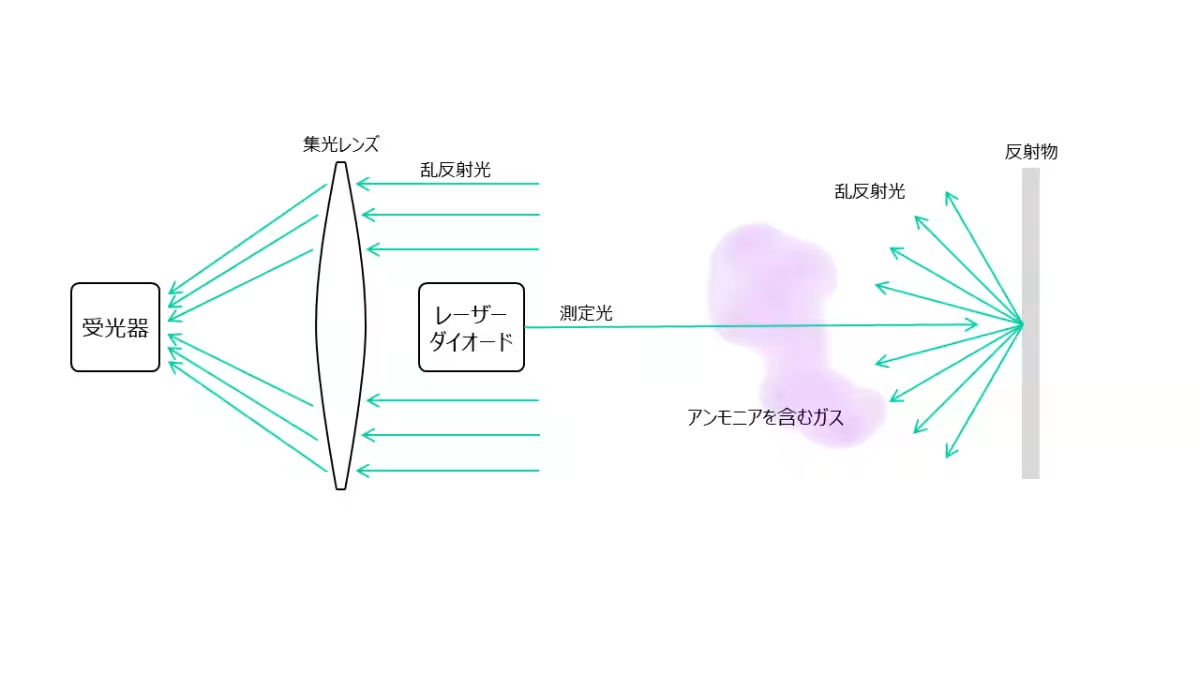
The Laser Ammonia Detector operates with impressive sensitivity, capable of detecting ammonia concentrations as low as 10 ppm·m from a distance of up to 30 meters. Unlike traditional gas detection methods that require gas sampling, this laser detector identifies ammonia by leveraging the absorption of specific wavelengths (1.49 μm) of light by ammonia molecules as the laser beam passes through ammonia-laden gases.
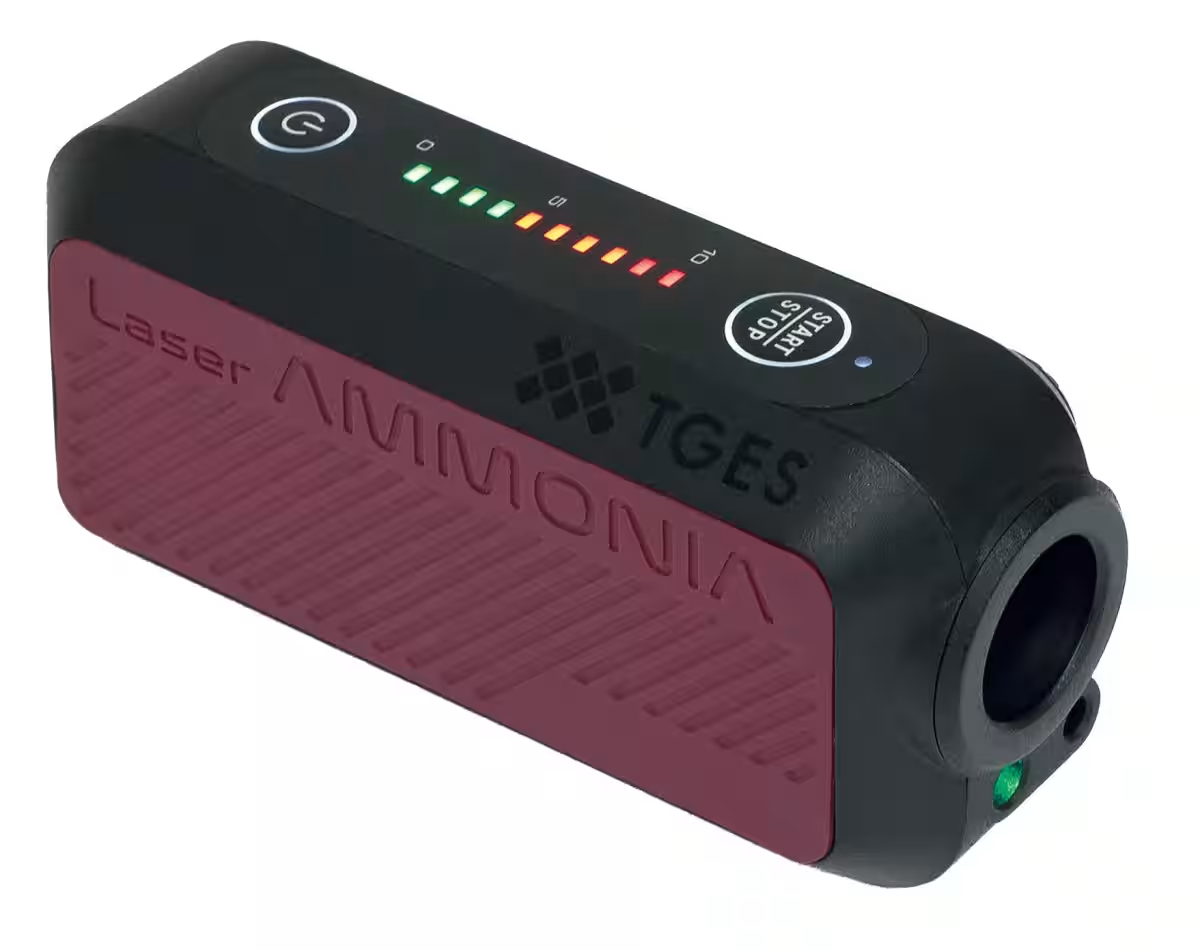
Furthermore, this device is compact and lightweight, designed to fit comfortably in one hand, and boasts a robust construction that withstands falls, along with being dust and water-resistant. The detector’s design incorporates proven technologies from TGES’s established Laser Methane Detector, ensuring high reliability and performance.
Understanding Ammonia's Role and Risks
Ammonia has long been recognized as a vital component in the manufacturing of fertilizers and chemicals, and as a refrigerant. Recently, its potential as a hydrogen carrier and carbon-free fuel has gained traction, signaling a growing market demand. However, ammonia is classified as a toxic substance, intensifying the necessity for effective safety management due to its environmental and health risks in the event of leaks.
Traditional gas detection methods commonly relied on suction-type detectors that extracted gas samples for analysis. This posed challenges, particularly in detecting leaks in remote or expansive areas, and required regular maintenance to prevent sensor contamination and corrosion due to direct contact with ammonia. The Laser Ammonia Detector alleviates these concerns by providing a non-contact detection solution, making it easier and more efficient to monitor ammonia levels.
Commitment to Safety and Sustainable Practices
TGES is committed to advancing gas detection technology and enhancing safety in areas where hazardous gases are present. The introduction of the Laser Ammonia Detector represents a step toward achieving a safer economy through innovative solutions. By improving efficiency in equipment management, TGES intends to support the push for the realization of smart safety initiatives that tackle aging infrastructure and labor shortages through public-private partnerships.
This approach aligns with a broader movement advocating for a safe and sustainable community. As TGES continues to develop and promote innovative gas detection solutions, they are eager to contribute to safer operational environments, ultimately playing a vital role in fostering a secure and sustainable society.
Technical Specifications
| Feature | Specification |
|---|---|
| ---- | ------------ |
| Product Name | Laser Ammonia Detector |
| Model Number | LA1N13N-TGA (Domestic) / LA1N03N-TGA (International) |
| Target Gas | Ammonia (NH3) containing gases |
| Detection Range | 1 to 50,000 ppm·m |
| Detection Accuracy | ±10% |
| Response Time | 0.1 seconds |
| Detection Distance | 0.5 to 30 meters |
| Power Supply | Built-in lithium-ion battery |
| Battery Capacity | 5,670 mAh |
| Continuous Operation Time | Approximately 8 hours (at 25℃, full charge) |
| Laser Safety | IEC60825-1:2014 (Class 3R and 1) outputs |
| Environmental Conditions |
| Operating humidity: 30% to 90% (no condensation) | |
|---|---|
| Dimensions & Weight | 137mm (W) x 67mm (H) x 44mm (D), 370g (including battery) |
This product promises a new era in gas detection, merging technological innovation with a strong commitment to safety and sustainability.
Topics Consumer Products & Retail)
【About Using Articles】
You can freely use the title and article content by linking to the page where the article is posted.
※ Images cannot be used.
【About Links】
Links are free to use.